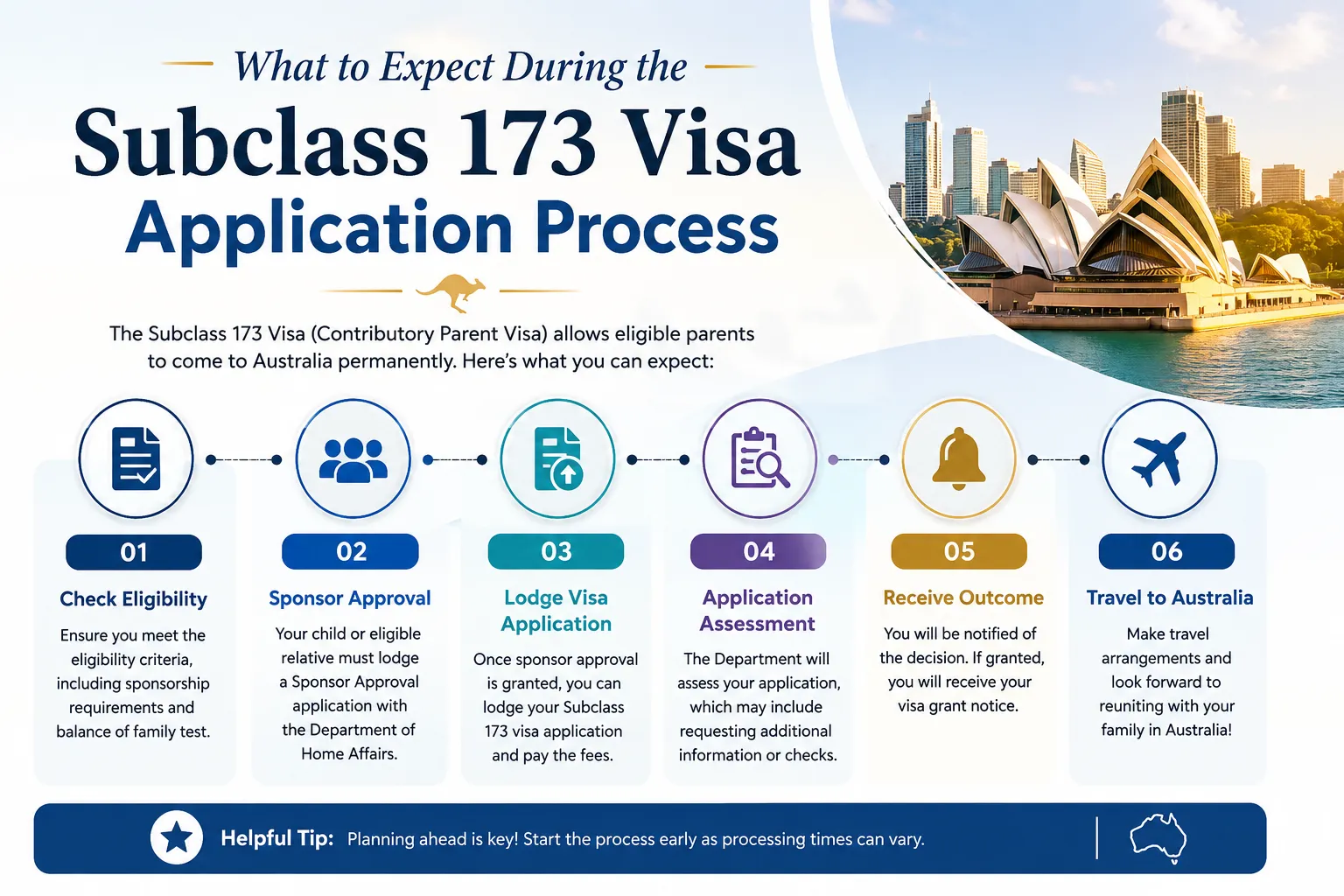

For many families, living apart from parents can be emotionally challenging, especially when children have settled permanently in Australia. The Subclass 173 Contributory Parent Visa provides an option for eligible parents to temporarily live in Australia while progressing toward permanent residency through the contributory parent visa pathway. Understanding the application process can help families prepare effectively and avoid unnecessary delays.
If you are considering applying for a Subclass 173 Visa, knowing what to expect at each stage can make the process smoother and less stressful.
What Is the Subclass 173 Visa?
The Subclass 173 Contributory Parent Visa is a temporary visa that allows eligible parents of Australian citizens, Australian permanent residents, or eligible New Zealand citizens to live in Australia for up to two years.
One of the key features of this visa is that it can serve as a pathway to the permanent Subclass 143 Contributory Parent Visa, allowing families to work toward long-term reunification in Australia.
Step 1: Confirm Eligibility
Before beginning the application process, it is important to determine whether all eligibility requirements are met.
Applicants generally need to:
- Be the parent of an eligible Australian sponsor
- Meet the balance-of-family test or qualify under specific exemptions
- Be sponsored by an eligible child
- Meet health and character requirements
- Satisfy all current visa criteria
Because immigration requirements can change, applicants should always review the latest official guidelines before lodging an application.
Step 2: Gather Supporting Documentation
One of the most important parts of the application process is preparing accurate and complete supporting evidence.
Commonly required documents may include:
Identity Documents
- Current passport
- Birth certificate
- National identity documents (where applicable)
Family Relationship Evidence
- Documents showing the relationship between parent and sponsoring child
- Birth certificates linking family members
- Family registration records where relevant
Sponsor Documentation
- Evidence of Australian citizenship
- Australian permanent residency documents
- Eligible New Zealand citizen documentation
Additional Supporting Evidence
- Marriage certificates (if applicable)
- Name change documents
- Other family-related documentation
Providing complete and accurate documentation can help support efficient processing.
Step 3: Lodge the Visa Application
Once all required documents have been gathered, applicants can submit their visa application according to current immigration procedures.
During this stage, it is important to:
- Complete all application forms accurately
- Provide truthful information
- Attach all required evidence
- Pay the applicable visa fees
Errors or missing information may result in delays or requests for additional documents.
Step 4: Sponsorship Assessment
A key component of the Subclass 173 visa process is sponsorship by an eligible child.
Immigration authorities will generally assess whether the sponsor:
- Meets sponsorship requirements
- Holds the appropriate residency or citizenship status
- Is eligible to support the application
Sponsors play an important role throughout the application process and may be required to provide additional information when requested.
Step 5: Health Requirements
Applicants are generally required to satisfy Australia's health requirements.
This may involve:
- Medical examinations
- Health assessments
- Additional specialist reports if requested
These assessments help ensure compliance with Australia's public health standards.
Step 6: Character Requirements
Applicants may also need to demonstrate that they meet character requirements.
This often includes:
- Police clearance certificates
- Character declarations
- Additional documentation if requested
Providing accurate character information is essential for visa assessment.
Step 7: Await Processing and Respond to Requests
After the application is lodged, immigration authorities may request further information or clarification.
Applicants should:
- Regularly monitor correspondence
- Respond promptly to requests
- Keep contact details updated
- Provide any additional documents within specified timeframes
Timely responses can help avoid unnecessary delays in processing.
Understanding Processing Timeframes
Visa processing times vary depending on factors such as:
- Application volumes
- Completeness of documentation
- Individual circumstances
- Government processing priorities
Applicants should be prepared for varying processing periods and remain patient throughout the assessment process.
Benefits of the Subclass 173 Visa
Once granted, the Subclass 173 visa offers several important benefits.
These may include:
- Temporary residence in Australia for up to two years
- Opportunity to live closer to family members
- Access to Australian communities and lifestyle
- Pathway to the permanent Subclass 143 Visa
- Ability to prepare for long-term settlement in Australia
For many families, these benefits provide valuable opportunities for family reunification.
Common Mistakes to Avoid
Several common issues can affect visa applications.
Applicants should avoid:
- Submitting incomplete documentation
- Providing incorrect information
- Failing to meet sponsorship requirements
- Delaying responses to immigration requests
- Overlooking health or character obligations
Careful preparation can significantly improve the overall application experience.
Final Thoughts
The Subclass 173 Contributory Parent Visa offers eligible parents an opportunity to reunite with their children in Australia while progressing toward permanent residency. Although the application process involves several stages, including sponsorship assessment, document preparation, health checks, and character requirements, thorough planning can help make the journey more manageable.
By understanding what to expect during the Subclass 173 visa application process and ensuring all requirements are met, families can approach the application with greater confidence and work toward building a future together in Australia.




























Sign in to leave a comment.