
A long road trip is an opportunity to explore new places, enjoy scenic routes, and spend more time outdoors. Whether you're driving across the country, planning a weekend camping trip, or travelling in an RV, packing the right essentials can make the journey safer, more comfortable, and less stressful.
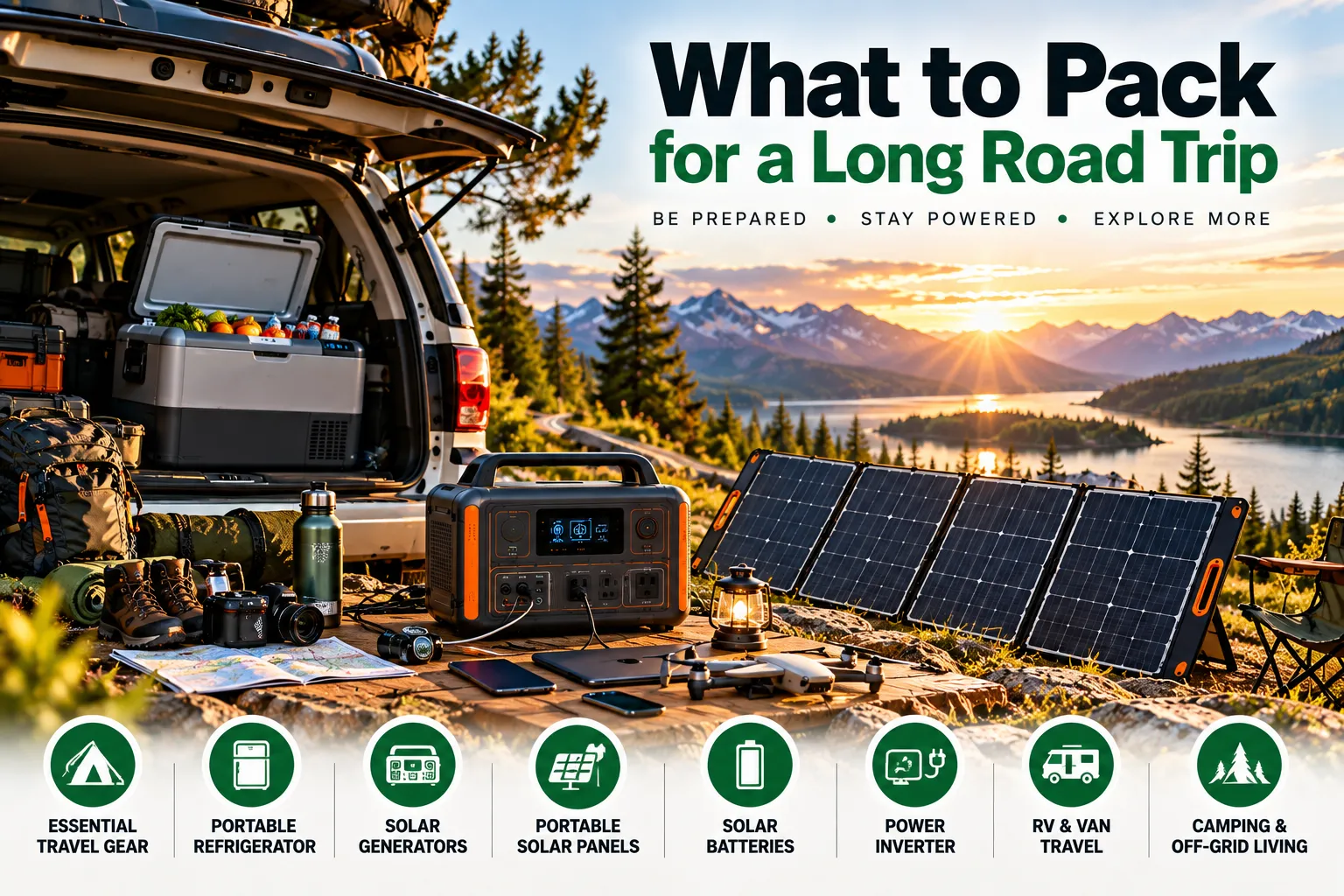
Beyond clothing, snacks, and navigation tools, it's important to consider how you'll keep food fresh, charge electronic devices, and access reliable power when travelling far from traditional outlets. A portable refrigerator, portable solar generator, and portable solar panels can be especially useful for road trips that include camping stops or extended stays away from powered campsites.
In this guide, we'll cover what to pack for a long road trip, how to prepare for unexpected situations, and how portable solar power can help you stay connected throughout your journey.
1. Pack the Essential Road Trip Items
Before thinking about extra equipment, start with the basics. Keeping your essentials organised makes it easier to find what you need during long drives and overnight stops.
Clothing and Personal Items
Pack clothing according to your destination, expected weather, and trip duration. Comfortable driving clothes, extra socks, a light jacket, and weather-appropriate footwear are useful for most journeys.
Remember to bring:
- Comfortable clothes and spare outfits
- Toiletries and personal hygiene products
- Towels and wet wipes
- Sunglasses, sunscreen, and insect repellent
- Reusable water bottles
- Any regularly needed personal medications
Keep frequently used items in an accessible bag rather than burying them beneath your luggage.
Travel Documents and Navigation
Even if you rely on your smartphone, prepare for situations where mobile reception or battery power is limited.
Your travel essentials should include:
- Driving licence and vehicle documents
- Insurance information and emergency contacts
- Offline maps or a dedicated navigation device
- Phone chargers and charging cables
- A power bank
- Cash and payment cards
Download important maps before departure, especially if your route includes remote highways, mountains, or rural areas.
2. Prepare a Vehicle Emergency Kit
A road trip can become stressful when a minor vehicle problem leaves you stranded. A compact emergency kit helps you respond to common issues and handle unexpected delays.
Consider packing:
- First-aid kit
- Spare tyre and suitable tyre-changing equipment
- Tyre pressure gauge and portable inflator
- Jumper cables or a compatible jump starter
- Flashlight with spare batteries
- Reflective warning triangles
- Basic tools and work gloves
- Drinking water and emergency snacks
- A warm blanket
Check your vehicle's tyres, brakes, lights, fluid levels, and battery before leaving. If you're travelling through isolated areas, tell someone your planned route and expected arrival time.
3. Bring a Portable Refrigerator to Keep Food Fresh
Food storage becomes more important when you're travelling for several hours or camping overnight. A portable refrigerator can help keep perishable foods and drinks at controlled temperatures without relying entirely on ice.
Depending on its capacity and power requirements, a portable fridge can be useful for storing:
- Drinking water and cold beverages
- Fresh fruit and vegetables
- Dairy products
- Prepared meals
- Ingredients for campsite cooking
Before choosing one, consider its internal capacity, temperature range, power consumption, dimensions, and how it will fit in your vehicle.
A compressor-based portable refrigerator may draw more power when cooling its contents and less once the target temperature is reached. Actual energy use depends on the model, ambient temperature, ventilation, settings, and how frequently the lid is opened.
Packing tip: Pre-cool the refrigerator before departure and load it with already chilled food. Keep it ventilated, secure it against movement, and follow food-safety guidance for temperature-sensitive items.
If you plan to camp away from powered facilities, consider how you'll keep the refrigerator running overnight. This is where a suitable portable solar generator and compatible solar panels can become useful.
4. Carry a Portable Solar Generator for Reliable Power
A portable solar generator can provide electricity for selected road-trip essentials when you don't have access to a wall outlet. These systems typically combine a rechargeable battery, an inverter, charging electronics, and multiple output ports.
Depending on the model, you may be able to power or charge:
- Smartphones and tablets
- Laptops and cameras
- LED lights
- Small fans
- Selected portable refrigerators
- Other compatible travel electronics
A portable solar power generator can be particularly helpful for camping, remote work, overnight stops, and emergency backup during a trip.
How to Choose the Right Portable Solar Generator
Before buying a unit, check three important specifications.
1. Battery capacity
Battery capacity is usually expressed in watt-hours (Wh). It indicates how much energy the battery can store, although the amount available to your devices may be lower because of conversion losses and operating limits.
2. Power output
Output wattage determines which devices the generator can run. Check both the continuous output and any short-duration surge rating. Appliances with compressors or motors may require additional starting power.
3. Charging options
Many portable power stations support wall charging, vehicle charging, and solar charging. If you expect to spend several days outdoors, solar charging may help replenish the battery when sunlight is available.
For a road trip, choose a unit based on your actual equipment rather than capacity alone. A system that works for phones and lights may not be sufficient for a refrigerator operating throughout the night.
5. Pack Portable Solar Panels for Off-Grid Charging
A portable power station stores energy, while portable solar panels can help replenish that energy during the day. Combining the two gives you a flexible power setup for campsites, RV stops, and other locations where conventional electricity is unavailable.
Portable solar panels come in different designs, including folding panels with integrated stands and rigid panels intended for more permanent installations. Folding models are convenient when storage space is limited, while other panel types may be more suitable for particular mounting arrangements.
What to Consider When Choosing Portable Solar Panels
- Wattage: Higher-rated panels can provide more power under suitable conditions, but actual output varies with sunlight, angle, shading, temperature, and system losses.
- Portability: Check the folded dimensions and weight before packing.
- Compatibility: Confirm the panel's voltage, current, connector type, and charging limits match your power station.
- Weather resistance: Review the manufacturer's guidance for rain exposure, storage, and operating conditions.
- Setup: Look for a design that is easy to position toward the sun and pack away after use.
Camping solar panels are particularly useful when you have several devices to recharge or want to reduce dependence on vehicle charging.
For longer journeys, explore portable solar panels and compare their specifications with your intended power station.
6. Calculate How Much Power Your Road Trip Requires
One of the most common mistakes when planning a solar-powered trip is choosing equipment before estimating daily electricity use.
Start by listing each device, its approximate power consumption, and the number of hours you expect to use it.
For example, consider this illustrative daily energy budget:
- LED lights: 10W × 5 hours = 50Wh
- Phone charging: 10W × 2 hours = 20Wh
- Laptop: 60W × 4 hours = 240Wh
- Small fan: 40W × 6 hours = 240Wh
Total estimated consumption: 550Wh per day.
This example does not include a refrigerator. Adding one could substantially increase your daily energy needs, depending on its operating conditions and actual consumption.
To plan your setup:
- Estimate the daily energy use of every device.
- Add the individual watt-hour figures together.
- Allow extra battery capacity for conversion losses and unexpected usage.
- Check the power station's continuous output and surge rating.
- Estimate how much solar energy you can realistically collect during the day.
Remember that panel wattage is a rated maximum under specified test conditions, not a guarantee of constant output. Cloud cover, shade, short winter days, and poor panel positioning can reduce charging performance.
7. Consider Off-Grid Solar Kits for Longer Trips
If your road trip involves an RV, campervan, remote cabin, or extended outdoor stay, a more complete solar setup may be worth considering.
Off grid solar kits can combine components such as solar panels, a charge controller, mounting hardware, wiring, and other equipment. The exact contents depend on the kit. Some systems are designed for smaller battery-charging applications, while others support larger off-grid installations.
Before you buy a solar kit, consider:
- Your expected daily energy consumption
- Battery capacity and battery chemistry
- Solar panel wattage and available installation space
- Charge-controller and inverter compatibility
- Vehicle or RV electrical requirements
- Future expansion needs
A solar panel kit can simplify equipment selection when its included components are designed to work together. However, always check the specifications rather than assuming every panel, battery, and inverter is compatible.
For a small road-trip setup, a portable power station paired with compatible portable solar panels may be easier to transport and operate than a permanent installation.
You can compare available options in the Solar Panel Kits collection at Off Grid Stores.
8. Understand Solar Batteries and Inverters
For travellers considering a larger solar setup, understanding the main components helps prevent compatibility problems.
Solar Batteries
Solar batteries store energy for use when the sun is not available. Battery capacity, usable energy, charging limits, and temperature requirements all affect how well a system meets your needs.
Lithium iron phosphate batteries, often abbreviated as LiFePO4, are used in many modern portable power stations and off-grid battery systems. Their suitability depends on the application and the manufacturer's specifications.
When selecting batteries for solar panels, make sure the battery is compatible with the charging equipment and that its voltage, capacity, and allowable charging current match the system.
Power Inverters
A power inverter converts direct current (DC) electricity from a battery into alternating current (AC) electricity for compatible appliances.
For a road trip, an inverter may be built into a portable power station. Larger RV or cabin installations may use separate solar power inverters or an off grid solar inverter as part of a complete system.
Check the inverter's continuous wattage, surge capacity, output waveform, and compatibility with the appliances you plan to use. Installation requirements also vary, particularly for permanently wired systems.
For a simple travel setup, an integrated portable power station can reduce the number of separate components you need to carry.
9. Pack Smart for Camping and Overnight Stops
If your road trip includes camping, add a few items that make overnight stays more comfortable.
Useful camping essentials include:
- Tent or suitable sleeping arrangements
- Sleeping bags and sleeping mats
- Camping chairs and a folding table
- Headlamps and rechargeable lanterns
- Cooking equipment and reusable utensils
- Water containers
- Rubbish bags
- Compact cleaning supplies
A portable solar setup can support lights, small electronics, and other compatible equipment at your campsite. Plan your energy use around the available battery capacity and expected sunlight.
Keep panels positioned where they receive good sunlight without creating a trip hazard or blocking vehicle access. Protect cables from damage, keep electrical connections dry as directed by the manufacturer, and secure equipment before driving away.
10. Don't Forget Comfort, Food, and Entertainment
Long journeys are easier when you plan for breaks, meals, and changing weather.
Pack healthy snacks, water, reusable cups, and easy-to-prepare meals. Bring comfortable pillows, blankets, and appropriate clothing for cold evenings or hot afternoons.
For entertainment, download music, podcasts, audiobooks, and films before departure. A tablet, camera, or laptop can also be useful for documenting your trip or working remotely, provided you have enough stored energy to run it.
A portable refrigerator and a suitable power setup can make meal planning more convenient, particularly on longer trips. Just remember that refrigeration, cooking equipment, and other high-demand appliances may require considerably more energy than phones or LED lights.
11. Make a Final Road Trip Packing Checklist
Before leaving, use this checklist to confirm that the essentials are covered.
Travel and safety
- Driving documents and insurance
- Navigation and offline maps
- First-aid kit
- Vehicle emergency supplies
- Water and emergency food
Food and comfort
- Clothing and toiletries
- Snacks and reusable water bottles
- Portable refrigerator, if needed
- Camping and sleeping equipment
Power and electronics
- Phone chargers and power banks
- Portable solar generator or power station
- Compatible portable solar panels
- Charging cables and adapters
- Lights and other essential electronics
For extended off-grid travel
- Appropriate solar panel kit or off-grid equipment
- Compatible solar batteries, where required
- Suitable inverter and charging equipment
- Spare cables and essential accessories
Check your vehicle's cargo capacity and secure heavy equipment before driving. Test your electronics and charging setup at home so you can identify compatibility or power issues before the trip begins.
Conclusion
Packing for a long road trip involves more than clothing and snacks. Reliable food storage, emergency supplies, navigation tools, and a well-planned power setup can make the journey more comfortable and flexible.
A portable refrigerator can help keep food fresh, while a portable solar power generator and compatible portable solar panels can provide power for selected electronics and camping equipment. For longer stays away from conventional electricity, a suitable solar panel kit or off-grid system may offer additional flexibility.
The best setup depends on your route, vehicle, energy requirements, available sunlight, and storage space. Estimate your power needs before choosing equipment, confirm component compatibility, and pack only what supports your travel plans.
With the right preparation, you can spend less time worrying about essential supplies and more time enjoying the road ahead.






















Sign in to leave a comment.