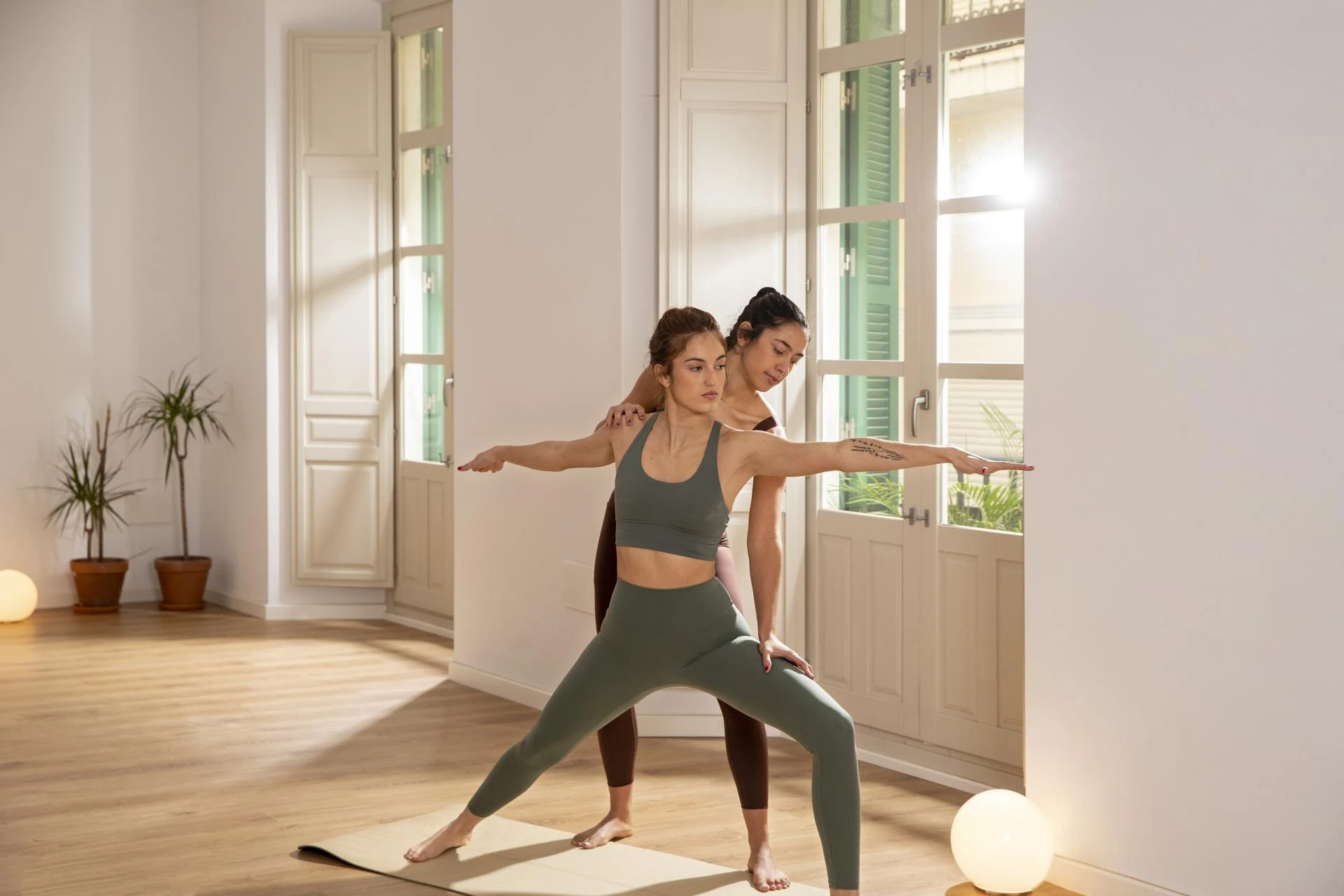

Except when it doesn’t. This can even happen in private yoga sessions near me.
You sit down to breathe, soften your shoulders, start to deepen the inhale… and suddenly things feel off. Your breath catches. Your chest tightens. You feel subtly unsettled. Instead of relaxing into rest, your body becomes more alert. More vigilant. Sometimes even anxious.
If this sounds familiar, don’t beat yourself up. Relaxing breathwork isn’t the only way to breathe, and your body isn’t breaking the rules — it’s actually following logic.
Slow breathwork can feel constraining
Many styles of breathwork are taught as though everyone has the same nervous system response. But your nervous system has a memory. It also has a pattern.
If you have a chronically stressed system — maybe due to burnout or overwhelm or trauma — slower, controlled breathing may actually feel strange to you. And if something feels unfamiliar, your nervous system may not recognise it as safe.
Slowing down your breath deliberately can also trigger an internal mic-check. Rather than allowing yourself to soften, you may start analysing what you’re doing:
Am I doing this correctly? Why does this feel weird? Why won’t I relax?
Piling this subtle layer of pressure on yourself can silently trigger your nervous system back into high-gear.
Control is a large component of calming breathwork techniques. Counting the inhale, lengthening the exhale, guiding your breath into set rhythms.
These techniques can be powerful tools. But they can also feel constraining, particularly if you’ve experienced overwhelm or lack of control in other areas of life.
Slowing down something that is usually automatic can suddenly make the breath feel like something you have to “do right”.
This might lead you to:
Breathe shallowly or forcefully
Feel like you aren’t getting enough air
Feel tightness in your chest or throat
Feel panicked or like you’re rushing
The irony is that the harder you try to control your breath, the more out-of-control it can feel.
Stillness can feel unsafe
Slower breathwork is often coupled with stillness. Sitting quietly with your eyes closed, breathing into your body. But stillness isn’t neutral.
Our bodies and nervous systems perceive everything through context. If you’re wired into busyness, distraction or external stimulation, sudden stillness can feel vulnerable. When you remove external input, your body’s internal sensations become magnified.
From the ping of your heartbeat to subtle tension you hadn’t noticed before, to pent-up emotions that might arise without warning.
These sensations aren’t actually anxiety. But your body may interpret them that way.
When calming breathwork backfires
In particularly sensitive situations, even inviting your focus to the breath can trigger your body. If you’ve ever had a panic attack that spiralled because you tried to “take deep breaths”, you’ll know how quickly the body can react.
The same is true for things like asthma, or other forms of breathing distress. Or any history of trauma that involved restriction, pressure, or feeling out of control.
Breathwork isn’t about forcing yourself into submission. It’s about connecting with your system. If that triggers your nervous system instead of calming it, your body is giving you feedback.
Slowing your breath sends a message to your body. But if your body is already on high-alert, it might interpret that message as danger.
Rather than settling, your nervous system prepares for action. Again, not your fault.
Release before rest
There are gentle ways to re-invite your focus to the breath that don’t involve “calming” it down. Instead of coaxing your breath into a specific shape, tune in to what it’s already doing.
Notice where you feel it most naturally. Allow the pace to be whatever it is without trying to change it. Allow it to be uneven, shallow, rushed.
Counterintuitively, allowing the breath to just be can give your body the permission it needs to soften into deeper relaxation.
Grounding before slowing
This might also mean slowing down your breath MORE gently.
Keep your eyes open or gaze softly in front of you. Feel grounded down through your feet, or your contact with a chair. Pair your breath awareness with some movement, like yoga on Mornington Peninsula, or shorten the practice instead of elongating it.
Help your nervous system feel safe to relax, instead of commanding it to calm down.
There’s not one “right” way to breathe for relaxation. In fact, some people find a slightly quicker, high-energy breath more calming than a deep one.
Others find focusing on the exhale — without placing intention on the inhale —allows their body to relax into their resting breath.
Listen to what feels good — and keep experimenting. You can always reverse course if something doesn’t feel right.
You don’t always need to fix your breath to find calm.
You just need to permit it.
























Sign in to leave a comment.