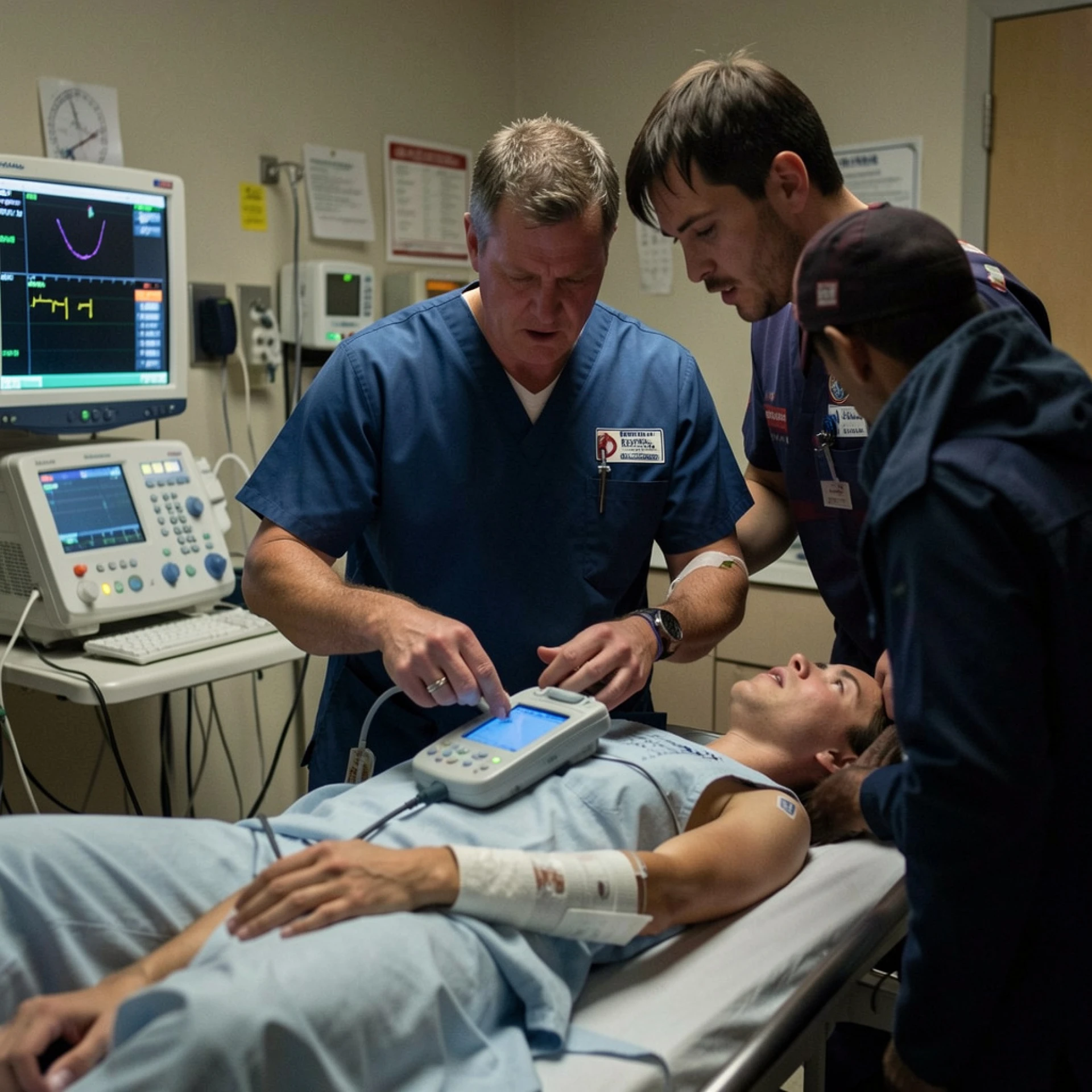

Medical emergencies don't schedule themselves around business hours. A child waking up in the middle of the night with a high fever, a sudden chest pain after dinner, or a sports injury on a Sunday afternoon — these situations demand immediate, reliable care that does not pause for the convenience of a clock. That is exactly why having access to a fully equipped, round-the-clock emergency facility in the Spring and Cypress corridor of Northwest Houston matters more than most families realize — until the moment they actually need one.
What Is a Freestanding Emergency Room and Why It Matters
A freestanding emergency room (ER) is a state-licensed medical facility that provides the same level of care as a hospital-based emergency department, but operates independently from a hospital building. Texas was among the first states to widely adopt this model, and today the Spring and Cypress communities benefit directly from this expansion.
Unlike urgent care centers — which are limited to treating minor illnesses and have restricted hours — a freestanding ER is staffed around the clock by board-certified emergency physicians and trained nurses. These facilities maintain on-site labs, CT scanners, digital X-ray machines, and ultrasound technology, allowing doctors to diagnose and treat the majority of emergencies without ever transferring a patient elsewhere. The experience mirrors what you would receive at a hospital emergency department, with one significant difference: the wait time.
According to CMS data, the nationwide median time a patient spends in a hospital emergency department is approximately 161 minutes. High-volume hospital ERs in major Texas metro areas can see patients waiting nearly five hours before being admitted. Freestanding ERs, by contrast, typically see patients within 10 to 15 minutes of arrival, largely because they operate without the overcrowding and administrative burden that comes with large hospital systems.
Conditions Treated at a 24-Hour Emergency Room
One of the most common misconceptions is that a freestanding ER is only appropriate for minor issues. In reality, these facilities are equipped to handle a broad spectrum of emergencies. Knowing what falls within scope can save critical time when a situation develops.
Life-threatening conditions that require immediate ER attention include chest pain, stroke symptoms (sudden facial drooping, arm weakness, slurred speech), difficulty breathing, severe allergic reactions, loss of consciousness, seizures, and major trauma.
Urgent but non-life-threatening conditions include broken bones and fractures, deep lacerations requiring stitches, high fevers (especially in infants and young children), abdominal pain, kidney stones, food poisoning with severe dehydration, eye injuries, animal bites, and respiratory infections that have significantly worsened.
Diagnostic services available on-site typically include CT scans, digital X-rays, ultrasound imaging, EKG monitoring, blood panels, urinalysis, and IV medication administration — including IV fluids, antibiotics, and pain management.
The rule of thumb: if the condition feels urgent and cannot safely wait for a same-day doctor's appointment, the emergency room is the right call.
Pediatric Emergency Care: A Critical Consideration for Families
Families in the Spring and Cypress area should know that not all emergency facilities offer the same level of pediatric experience. Children are not simply small adults — their physiology responds differently to illness and injury, their communication of symptoms is less precise, and they require a calmer, more deliberate approach from medical staff.
A quality 24-hour emergency room near Spring and Cypress should have team members with specialized pediatric training, child-appropriate dosing protocols, and an environment designed to minimize distress for young patients. Conditions like febrile seizures, croup, asthma attacks, and sudden high fevers in infants can escalate quickly, and having care available at 2 a.m. without the chaos of a major hospital pediatric wing can make an enormous difference in both outcomes and the family's experience.
Understanding Billing and Insurance at a Freestanding ER
Billing is often the most misunderstood aspect of freestanding emergency care. Texas law requires freestanding ERs to post clear pricing information, and these facilities bill patients in the same manner as hospital-based emergency departments. Most major private insurance plans are accepted, though patients should verify their coverage before visiting if time allows.
After a visit, patients typically receive an Explanation of Benefits (EOB) from their insurer before the actual bill arrives. The EOB outlines what insurance will cover and what the patient's responsibility may be — it is not itself a bill. For patients without insurance or those facing financial hardship, many freestanding ERs offer self-pay rates and financial assistance programs.
It is also worth noting that the cost of care at a freestanding ER is generally comparable to that of a hospital ER for equivalent services. The misconception that freestanding facilities charge significantly more has been largely debunked by independent studies comparing pricing structures across facility types.
The Spring Cypress Corridor: Why Location Is Part of Emergency Care
The communities that stretch along the Spring Cypress Road corridor — including Spring, Cypress, Klein, and Tomball — represent one of the fastest-growing suburban regions in the greater Houston area. That population density, combined with the distance from Level I trauma centers in central Houston, creates real urgency around having capable local emergency care.
That is why the 24 hour emergency room Spring Cypress TX area has become such a meaningful resource for residents. When a medical situation unfolds, the proximity of a fully equipped facility can determine whether a patient is stabilized locally or forced into a longer transport to a hospital miles away. For conditions like strokes, where treatment outcomes are directly tied to how quickly care begins, these minutes are not trivial.
What to Bring and What to Expect When You Arrive
Walking into an emergency room during a stressful medical event is easier when you know what to expect. Most freestanding ERs operate without appointment requirements — you walk in, and the team begins assessing your condition right away. If your situation is immediately life-threatening, lead with that information at check-in.
When possible, bring:
- A government-issued photo ID
- Your insurance card
- A list of current medications and dosages
- A brief summary of relevant medical history (allergies, chronic conditions, prior surgeries)
- Any physician contact information if you have a primary care provider
If the emergency prevents you from gathering these items, do not delay — the care team can work without them. Most facilities are also equipped to provide several days of prescribed medications on-site, so patients do not need to stop at a pharmacy immediately after being discharged.
How to Distinguish an ER from Urgent Care
This distinction matters, especially when symptoms are ambiguous. An urgent care center is appropriate for mild to moderate conditions — sore throats, minor cuts, urinary tract infections, cold and flu symptoms without serious complications. Urgent care centers are typically not equipped with CT scanners or the ability to administer IV medications, and many close by late evening or early morning.
An emergency room is appropriate when the condition is potentially serious, when symptoms are rapidly worsening, when the situation involves a child under 12 months with a fever, or when any instinct signals that something is genuinely wrong. The American College of Emergency Physicians notes that roughly two-thirds of emergency visits occur outside of standard business hours — a figure that underscores precisely why round-the-clock availability is not optional; it is essential.
Advanced Diagnostics: Why On-Site Technology Changes Outcomes
Speed of diagnosis is directly tied to speed of treatment, and on-site diagnostic capability is what separates a true emergency room from lesser alternatives. When a patient presents with chest pain, the physician's ability to order and receive an EKG result within minutes — rather than waiting for a transport to a separate radiology department — can be the difference between catching a cardiac event early and missing the treatment window entirely.
Modern freestanding emergency rooms carry the same core diagnostic technology as hospital emergency departments. CT imaging allows physicians to evaluate suspected strokes, internal bleeding, pulmonary embolism, and abdominal emergencies. Ultrasound supports diagnosis of gallbladder disease, appendicitis, ectopic pregnancy, and deep vein thrombosis. On-site laboratories process blood panels, metabolic panels, troponin levels, and urinalysis quickly enough to meaningfully guide treatment decisions before most hospital ERs would even have results pending.
This concentration of diagnostics under one roof also reduces the need for unnecessary hospital admissions. A patient who can be evaluated, stabilized, and discharged with a clear diagnosis and appropriate medications does not need to occupy a hospital bed. That efficiency benefits both the patient and the broader healthcare system.
Making the Right Choice Before an Emergency Happens
One of the most undervalued steps a family can take is identifying their nearest 24-hour emergency room before any emergency occurs. Searching for care in a panicked state wastes time and leads to suboptimal decisions. Save the address and phone number of your preferred local ER in your phone contacts. Know the fastest route from your home. If you have young children, confirm in advance that the facility has pediatric emergency capabilities.
The communities along the Spring and Cypress corridor are fortunate to have freestanding emergency care available locally. Taking a few minutes to familiarize yourself with what that care looks like — and what it can treat — means that when a difficult moment arrives, you already know exactly where to go.




























Sign in to leave a comment.