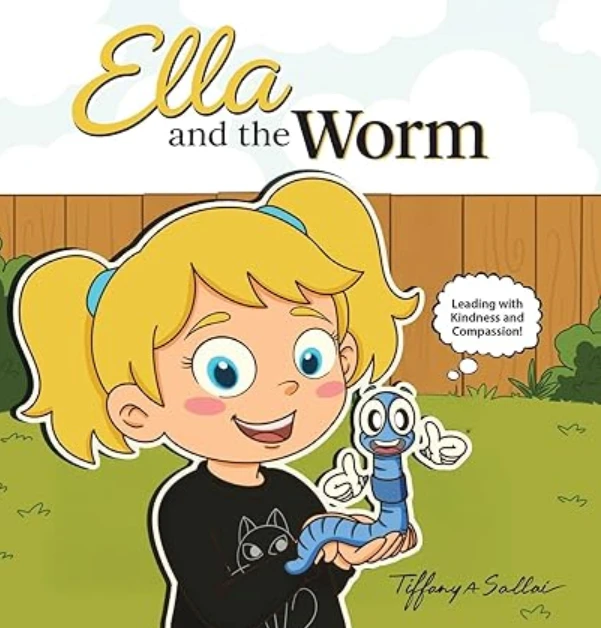

Helping looks simple from the outside, but when you watch children do it, you realize how quickly it becomes something bigger. They don’t aim for efficiency; they aim for expression. One idea sparks another, and before long, the original problem has grown into an entire experience. That sense of expansion drives the story forward. Ella doesn’t prepare one meal; she prepares many. Each new dish feels like a continuation of the same thought: keep helping. The kitchen becomes less about solving hunger and more about showing care. The situation becomes chaotic in the most comforting way because readers recognize the pattern. Enthusiasm moves faster than logic, and somehow that makes the moment feel more sincere rather than less.
The worm’s reactions keep the story grounded. It doesn’t just accept everything silently; it responds. Relief turns into excitement, excitement turns into overwhelm, and that emotional movement transforms the story into a conversation instead of a performance. Ella is giving, but she’s also learning in real time. When the worm finally says it’s enough, the moment feels earned rather than abrupt. There’s no shame attached to it. Just an adjustment. That distinction is important because it reflects how real learning happens. Caring doesn’t mean getting everything right immediately. It means staying present long enough to notice when something needs to change.
The scenes carry a kind of momentum that feels very true to childhood. You can picture Ella moving quickly, ideas arriving faster than she can finish them, fully immersed in what she’s doing. That energy makes the story feel alive. The worm becomes more than a character; it becomes a reminder that small needs are still needed. By focusing on something tiny, the story keeps the emotional stakes approachable while still meaningful. Children see someone helping. Adults see the process of empathy unfolding. Both experiences exist at the same time.
What makes the story memorable is that it doesn’t treat growth as correction. Ella remains kind from beginning to end. What changes is her awareness. The book suggests that kindness isn’t a single decision, but an ongoing process shaped by attention and communication. That idea feels reassuring because it mirrors real life. Helping rarely unfolds perfectly. It evolves. By wrapping that truth in humor and movement, the story keeps readers engaged while allowing the emotional insight to settle naturally.


























Sign in to leave a comment.