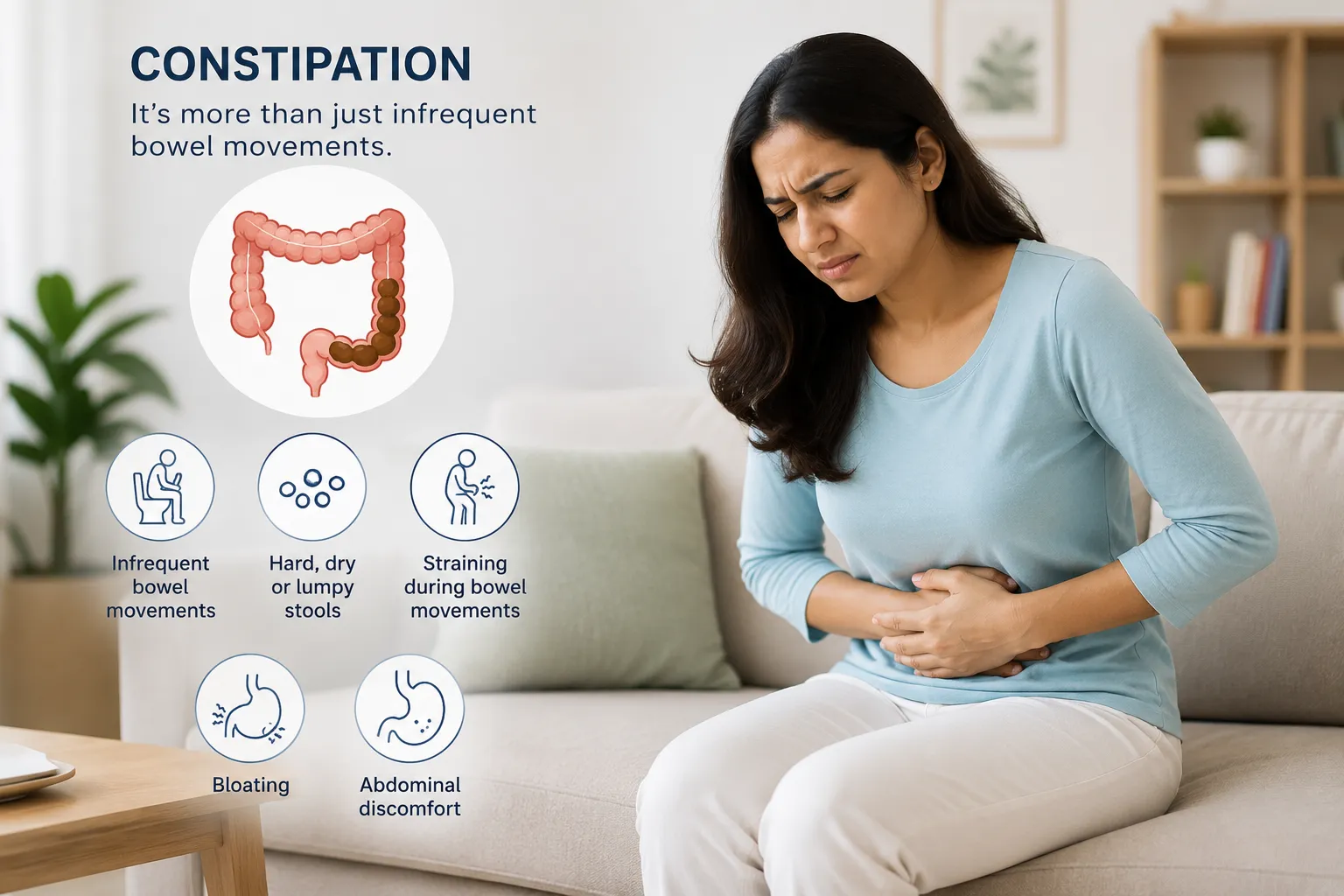

Nearly everyone experiences constipation at some point, and in most cases, it resolves on its own with simple changes to diet or routine. But because it's so common, it's easy to dismiss even when it shouldn't be. Understanding when constipation is a serious concern — versus when it's simply a temporary, manageable inconvenience — can help you know when self-care is enough and when it's time to seek medical attention.
What Counts as Constipation
Constipation is generally defined as having fewer than three bowel movements per week, though normal frequency varies between individuals. It often involves hard, dry stools, straining during bowel movements, or a persistent feeling of incomplete evacuation.
Common, Non-Serious Causes
- Inadequate fiber intake
- Insufficient water consumption
- Reduced physical activity
- Changes in routine, such as travel
- Certain medications, including some pain relievers and iron supplements
- Ignoring the urge to have a bowel movement
Warning Signs That Suggest a More Serious Issue
Sudden, Significant Changes in Bowel Habits
A sudden shift toward persistent constipation, especially in someone with previously regular bowel movements, deserves attention rather than being dismissed as routine.
Blood in Stool
This symptom should always be evaluated by a doctor, regardless of how minor the constipation itself seems.
Severe Abdominal Pain or Bloating
Intense pain accompanying constipation, particularly if it worsens over time, can indicate a blockage or other significant issue.
Unexplained Weight Loss
Losing weight without trying, especially alongside persistent constipation, warrants prompt medical evaluation.
Constipation Alternating With Diarrhea
This pattern can sometimes point to underlying conditions like irritable bowel syndrome and should be discussed with a doctor if persistent.
Constipation Lasting More Than Three Weeks
While occasional constipation is normal, prolonged constipation despite dietary and lifestyle changes suggests it's time for medical evaluation.
Inability to Pass Gas or Stool at All
This can indicate a bowel obstruction, which requires immediate medical attention.
Practical Ways to Relieve Common Constipation
- Increase fiber intake gradually, through fruits, vegetables, and whole grains.
- Drink adequate water throughout the day to support healthy digestion.
- Stay physically active, since movement helps stimulate bowel function.
- Establish a consistent bathroom routine, allowing time for regular bowel movements without rushing.
- Avoid ignoring the urge to have a bowel movement when it arises.
- Limit excessive use of certain medications that contribute to constipation, when possible and under medical guidance.
When to Consult a Doctor
Occasional constipation that responds to dietary changes and increased water intake usually isn't a concern. However, you should consult a doctor if constipation persists for more than three weeks despite lifestyle changes, is accompanied by blood in stool, severe pain, or unexplained weight loss, or if you're unable to pass stool or gas at all. These signs may indicate an underlying condition that requires proper diagnosis and treatment rather than continued self-management.
Conclusion
Most constipation is temporary and resolves with simple changes like increased fiber, hydration, and physical activity. However, recognizing when constipation is a serious concern — through warning signs like blood in stool, severe pain, or prolonged duration — is essential for catching underlying issues early. When in doubt, especially with persistent or unusual symptoms, consulting a doctor is always the safer choice over waiting it out.
FAQs
1. How many days without a bowel movement is considered a concern?
Going more than three days without a bowel movement, especially if paired with discomfort, is generally considered worth addressing, though normal frequency does vary between individuals.
2. Can stress cause constipation?
Yes, stress can affect digestive function and contribute to constipation in some people, given the close connection between the gut and the nervous system.
3. Is it normal for constipation to come and go?
Occasional, mild constipation that resolves with dietary changes is common. Frequent or persistent episodes, however, are worth discussing with a doctor.
4. Can certain foods make constipation worse?
Yes, low-fiber foods, excessive dairy in some individuals, and inadequate fluid intake can all contribute to worsening constipation.
5. When should I worry about constipation in children versus adults?
In both cases, persistent constipation lasting several weeks, blood in stool, or significant pain should prompt a medical evaluation, though thresholds and causes can differ, so a pediatrician or doctor can offer age-appropriate guidance.





























Sign in to leave a comment.