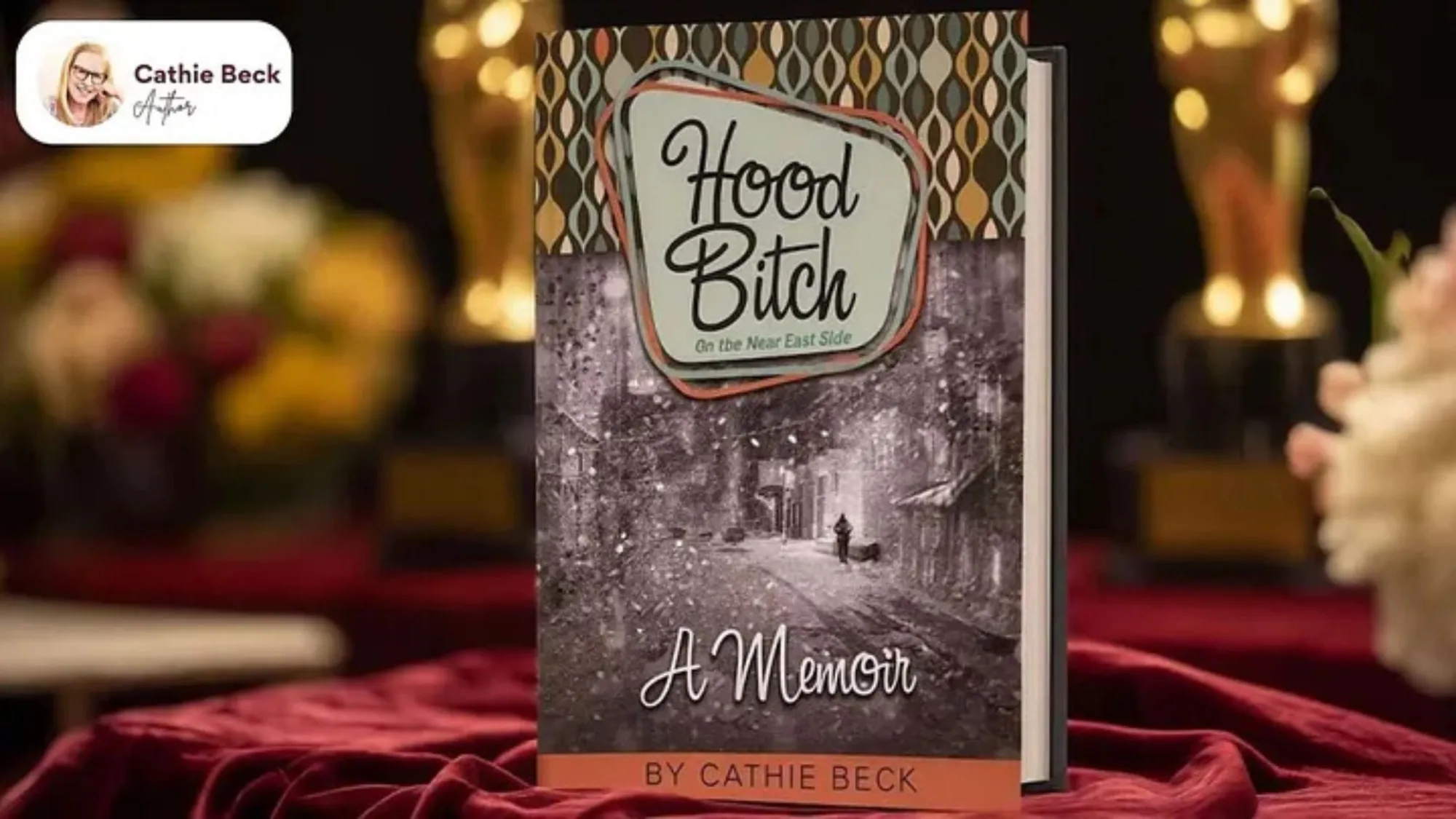

Some places stay with us long after we've left them. Not because they were beautiful. Not because they were easy. But because they shaped us in ways we didn't fully understand at the time. For Cathie Beck, neighborhoods have never simply been locations on a map. They have been classrooms, battlegrounds, shelters, and mirrors.
They have held memories of instability, resilience, longing, and survival. Long before she became a published author, before literary agents, publishing contracts, and book tours entered the picture, she was a girl trying to make sense of the world around her.
That world wasn't stable. She moved twelve times before the age of seventeen. Each move meant a new street, a new house, a new set of circumstances. For many children, home is a fixed point. For Cathie, home was often temporary. Yet looking back, those constant disruptions became part of the foundation of her storytelling voice.
The neighborhoods of her childhood weren't just backdrops. They became characters in their own right. Years later, when she sat down to write what would become the Hoodbitch memoir Indianapolis, she wasn't simply documenting where she lived. She was exploring how place shapes identity. How streets become memories. How economic hardship, family dynamics, and social class can leave lasting marks on a person's understanding of themselves.
That is what makes personal history so fascinating.
We often imagine history as something large and distant—wars, elections, movements, and monuments. But personal history operates differently. It exists in front porches, school hallways, apartment complexes, and kitchen tables. It lives in the ordinary places where people grow up and slowly figure out who they are.
Cathie's writing captures that reality with remarkable honesty.
She doesn't romanticize struggle. She doesn't smooth over uncomfortable truths. Instead, she examines them with the same curiosity and courage that have defined her career as a writer.
Readers who discover the Hoodbitch memoir Indianapolis quickly realize they are reading more than a recollection of childhood. They are witnessing a deeper exploration of belonging, displacement, and survival.
And perhaps that is why the story resonates so strongly.
Many people may never have lived in Indianapolis during the 1960s and 1970s. They may never have experienced the specific circumstances that shaped Cathie's life. Yet they understand the universal emotions beneath the details.
The desire for security. The search for identity. The hope that life might become something larger than its current circumstances. Those feelings transcend geography.
Isn't It Strange How the Places We Leave Never Really Leave Us?
One of the remarkable things about memory is that it rarely organizes itself chronologically.
A particular street corner can trigger a flood of recollections. The smell of a neighborhood bakery can transport us decades into the past. A familiar building can remind us of who we were before we became who we are now.
Cathie understands this better than most. Her writing often reflects the way memory actually works—layered, emotional, and interconnected. The neighborhoods of her youth remain present because they continue to influence how she sees the world.
Growing up amid economic uncertainty taught her resourcefulness. Frequent moves taught her adaptability. Instability taught her resilience.
These lessons would later serve her well during another difficult chapter of her life: the long struggle to become a published author.
Many readers know the story by now. Cathie spent years writing and revising her manuscript. She faced rejection after rejection from publishers. Opportunities appeared, disappeared, and reappeared again. There were moments when the dream seemed impossibly distant.
But perseverance had already become part of her character.
After all, resilience wasn't something she learned from publishing.
- She learned it much earlier.
- She learned it in those neighborhoods.
- She learned it while navigating circumstances beyond her control.
- She learned it while continually adapting to change.
The qualities that helped her survive childhood eventually helped her survive the publishing industry.
That connection between past and present runs throughout her work. The adult writer and the young girl are not separate people. They are part of the same story.
And every neighborhood she inhabited contributed another chapter.
What If Our Neighborhoods Are Writing Us, Too?
Writers often talk about finding their voice. Cathie Beck's voice emerged from lived experience.
It developed through observation, curiosity, hardship, and perseverance. The same qualities that made her attentive to the complexities of human relationships also made her attentive to the environments that shaped those relationships.
That perspective is particularly evident in Hoodbitch on the Near Eastside book, where place and identity become inseparable. The neighborhoods aren't merely settings. They influence behavior, expectations, opportunities, and dreams.
The result is a memoir that feels deeply personal while speaking to broader truths about class, family, and resilience.
Readers often connect with stories that are willing to tell the truth. Not polished truth. Not a convenient truth. Real truth.
Cathie's willingness to examine difficult memories with honesty gives her work its emotional power. She invites readers into experiences that are sometimes painful, sometimes funny, sometimes heartbreaking, and often illuminating.
That vulnerability is what transforms personal memories into meaningful literature.
The Hoodbitch on the Near Eastside book demonstrates how individual experiences can reveal larger cultural realities. Through the lens of one life, readers gain insight into broader questions about belonging, mobility, and survival.
Yet despite its seriousness, the memoir is ultimately a story of resilience. The girl who moved from neighborhood to neighborhood became a woman who built a successful writing career.
The child searching for stability became an author capable of examining instability with wisdom and perspective.
The dreamer who wanted to see her name on a book cover eventually held that dream in her hands. When neighborhood history becomes personal history, something remarkable happens. The streets we once walked become part of our narrative. The places that shaped us become stories worth telling.
And sometimes, as Cathie Beck's journey demonstrates, those stories become the very foundation of a writer's voice. Because in the end, we don't simply come from places. In many ways, those places help create us.
And for writers like Cathie Beck, that transformation becomes a story worth sharing with the world.




























Sign in to leave a comment.