

Memoir is a strange architecture, built from the shifting sands of what we remember and the concrete reality of what actually occurred. For Cathie Beck, that construction process involved more than just ink and paper; it required a level of grit that would make a seasoned litigator blush. At one low point, after years of circling the drain of the New York publishing world, she found herself staring at the void of her own career, thinking she probably should have just gone to law school. It’s a sentiment many writers share when the rejections pile higher than the manuscripts, but for Beck—a woman who navigated teenage motherhood and raised two children on her own—surrender was never really on the menu.
Her journey is a fascinating case study in how a story moves from a private grief to a public triumph. It began with the loss of her friend Denise in 1998, an event that eventually catalyzed into a 90-page narrative arc. What started as a "long short story" slowly breathed itself into a full-length book. But as any author will tell you, writing the book is often the easy part; finding the world for it is where the real "peeling back of the skin" begins. Beck’s path involves a mix of investigative journalism (audaciously interviewing agents for a magazine just to pitch them her own work) and a DIY marketing blitz that would eventually change her life.
The raw pulse of a Midwestern upbringing
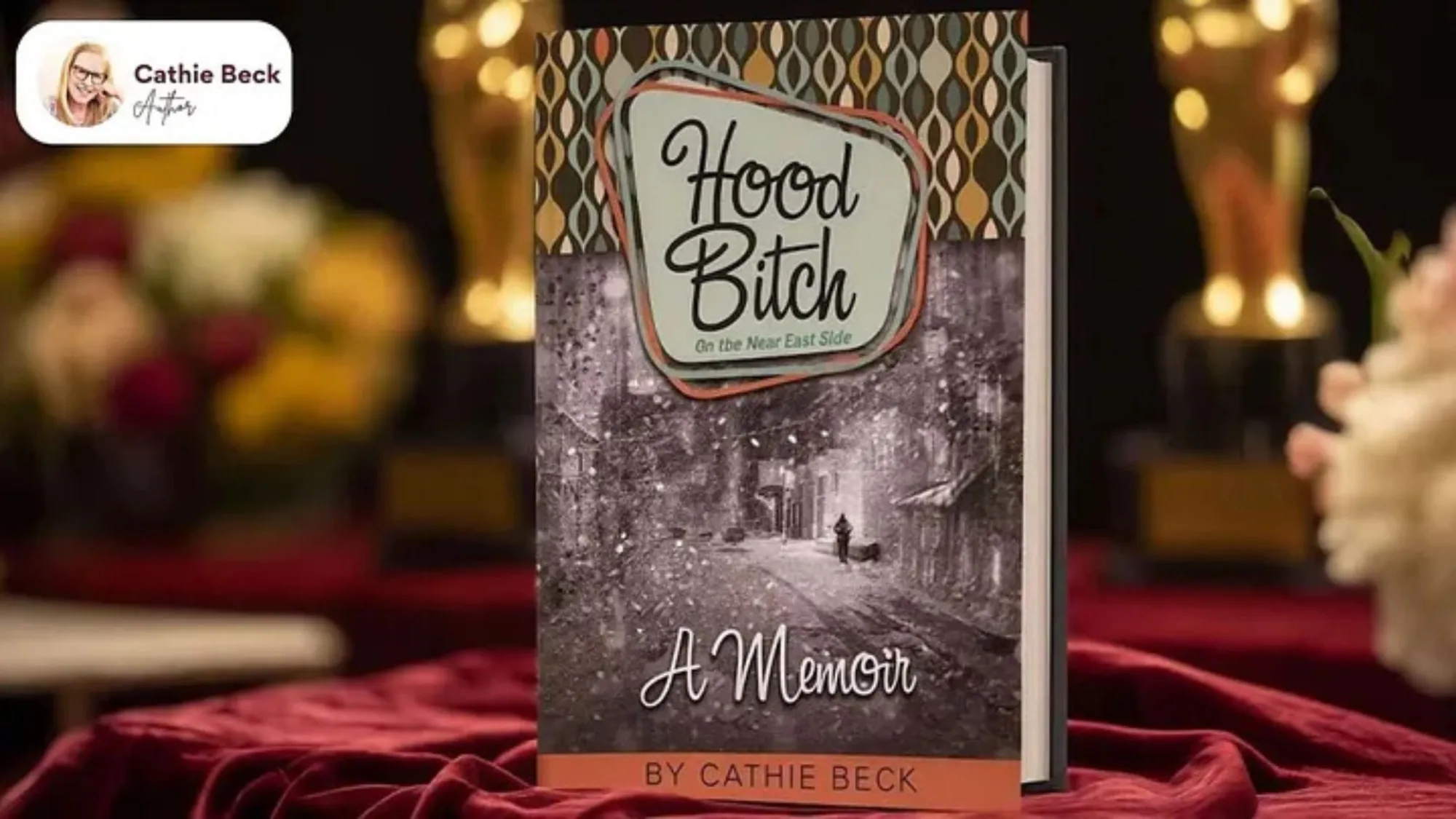
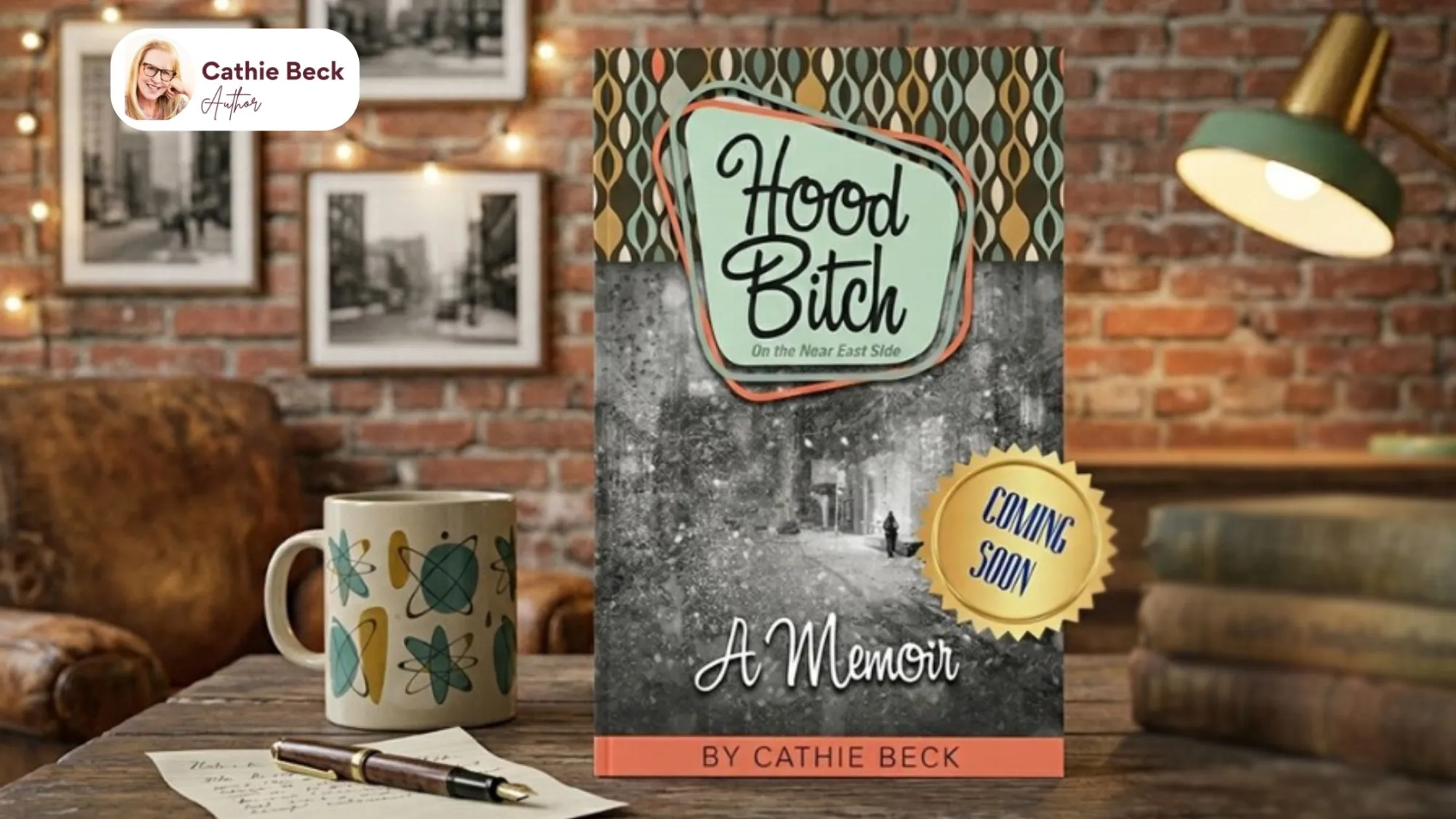
While many know her for the wit and heart of her debut, there is a deeper, more shadow-flecked history that informs her voice—a history rooted firmly in the soil of the Crossroads of America. When we look at an Indiana memoir by Cathie Beck, we aren’t just looking at a collection of anecdotes; we’re looking at a map of survival. Her upcoming work, Hoodbitch: On the Near Eastside, takes us back to a 1960s and 70s Indianapolis that feels visceral and unvarnished. Moving twelve times before the age of seventeen creates a specific kind of perspective—one that is both untethered and hyper-observant.
This brand of Indianapolis narrative nonfiction doesn't rely on nostalgia. Instead, it leans into the "instability and grit" of a childhood defined by class struggle and the relentless need to be resourceful. There is an electricity in her prose that captures the fractured nature of home. By documenting the Near Eastside with such piercing honesty, Beck manages to elevate a personal history into a broader cultural dialogue about what it means to grow up in the margins of the Midwest. It’s the kind of writing that garners praise from high-level editors and places her in the same category as heavy hitters like Leslie Jamison or Maggie Nelson. She isn't just telling us what happened; she’s showing us how it felt to survive it.
Why the "impossible" story still matters
The narrative of Beck’s success is often framed by her "marketing savvy"—the "virtual party" that pushed her book up the Amazon charts until it was neck-and-neck with Madeleine Albright’s latest. But focusing solely on the strategy misses the point of the prose. The reason the blitz worked is that the story itself was undeniable. Even after being told that a character wasn't "likable enough" and ripping half the book out to rewrite it without anesthesia, Beck stayed true to the emotional core of her work. She understood that the truth is rarely likable; it is simply necessary.
When you dive into an Indiana memoir by Cathie Beck, you are engaging with a writer who refused to let the "bitter-pissed" moments win. The psychic reward of seeing her name on an ISBN number wasn't just about vanity; it was about fulfilling a "burn in the belly" that had existed since she was five years old. That level of commitment is what gives Indianapolis narrative nonfiction its weight. It’s the difference between a writer who wants to "have written" and one who simply must write.
The industry eventually caught up to her. After the "blitz of gargantuan proportion," the hate mail from annoyed agents was eventually drowned out by a life-changing phone call from a Manhattan Starbucks and a three-way bidding war among major publishing houses. But the essence of the work remains the same as it was when she was sitting in her flannel pajamas, hoping for a break: it is a raw, unflinching look at connection and resilience.
The enduring power of the "Real"
Ultimately, the stories that stay with us are the ones that don't try to hide the scars. Whether she is recounting the uproarious wit of a lifelong friendship or the "raw honesty" of a turbulent childhood, Beck’s work functions as a bridge between the reader’s own experiences and the specificities of an Indiana life. We read memoirs to see how someone else navigated the mess, and Beck offers a roadmap that is as intelligent as it is grounded.
As she moves forward with her new projects, the literary community continues to recognize the value of her "considerable writing skills" and her refusal to play by the traditional rules of the game. From the Tattered Cover in Denver to the fractured homes of her youth, Cathie Beck has proven that if a story is rooted in truth, it doesn't matter how long it takes to find its audience—it will eventually find its way home. We are simply the lucky ones who get to read the results.


























Sign in to leave a comment.