
Table of Contents
- Introduction
- The Science Behind Pre Emergent Protection
- Seasonal Planning: When Pre Emergent Works Best
- Post Emergent Treatments and Weed Rescue Methods
- Comparing Preventive vs Reactive Lawn Care
- Cost and Maintenance Benefits of Smart Weed Management
- Safety and Environmental Care Tips
- Conclusion
- Book a Lawn Care Consultation Today!
- Frequently Asked Questions
Key Takeaways
- Pre emergent and post emergent treatments work best when used strategically rather than randomly.
- Pre emergent treatments answer the question: what does a pre emergent do by stopping weeds before germination.
- Post emergent treatments answer: what is post emergent by eliminating weeds already growing.
- Timing, soil temperature, and weather conditions strongly influence success rates.
- A balanced approach supports long-term lawn strength and reduces treatment costs.
Introduction
Maintaining a strong, resilient lawn requires more than watering and mowing. Strategic weed management is a core part of building a healthy lawn foundation, especially when combined with professional care from starting early in the maintenance process.
Homeowners, property managers, and business owners often struggle with weed control because they treat symptoms instead of preventing problems. Understanding how pre emergent and post emergent solutions function allows us to shift from reaction-based care to a more sustainable, long-term lawn protection strategy.
Instead of viewing weed control as a seasonal chore, think of it as a year-round defense system that protects turf density, soil nutrition, and overall landscape aesthetics.
The Science Behind Pre Emergent Protection
What Does a Pre Emergent Do in Lawn Care?
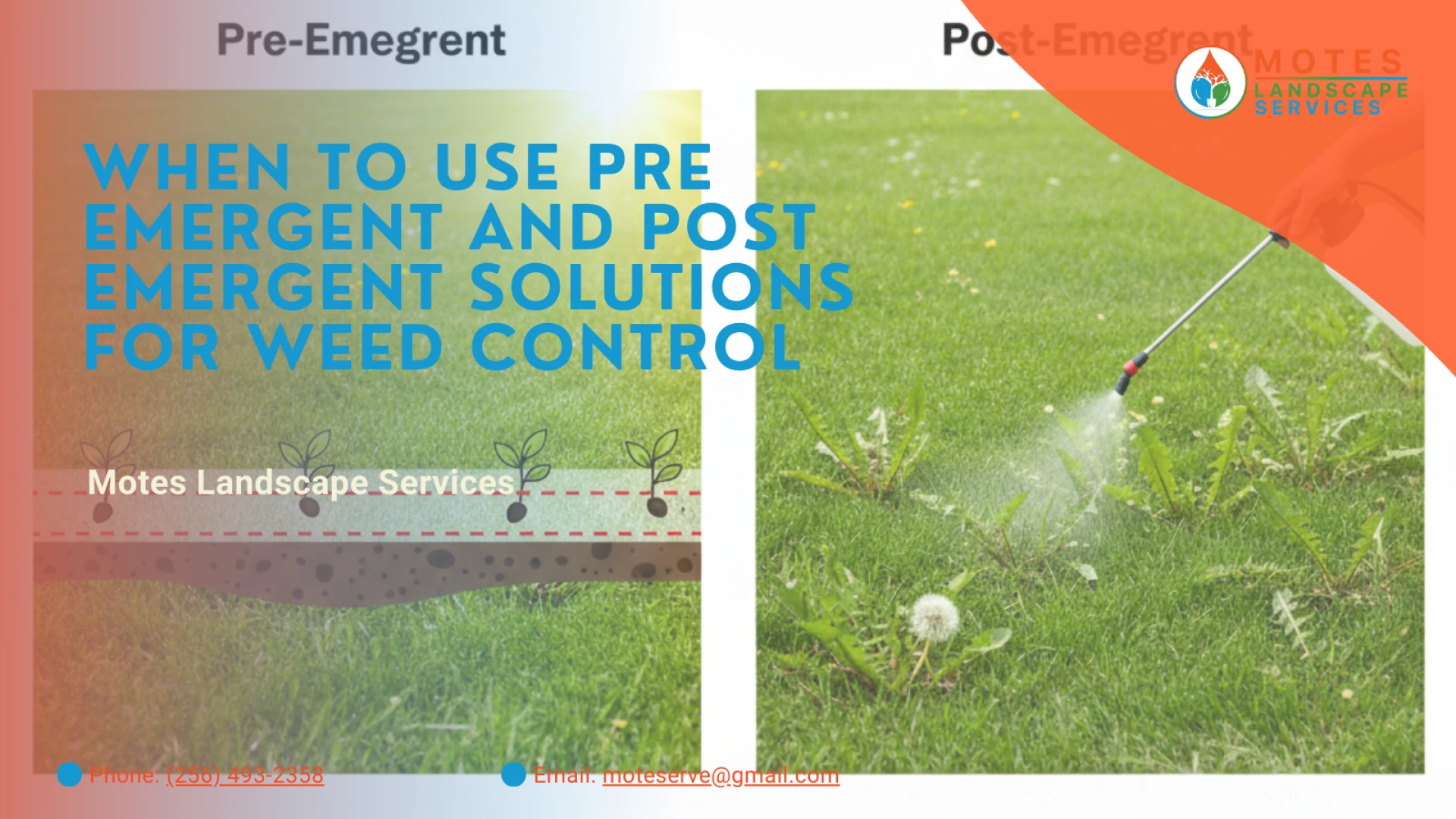
Pre emergent products create a chemical barrier inside the soil that prevents weed seeds from completing their germination cycle. Unlike traditional herbicides that attack visible weeds, these products work underground before weeds become visible.
In simple terms, pre emergent treatments block the early development of root and shoot growth. This is why they are essential for maintaining consistent turf quality across growing seasons.
When applied correctly, pre emergent treatments support a stronger lawn ecosystem by reducing competition for nutrients, sunlight, and water. Fewer weeds mean grass plants can develop deeper roots and stronger blades, which contributes to long-term turf resilience.
Environmental factors also matter. Soil moisture levels influence how well the barrier spreads through the ground. Too little moisture may reduce product effectiveness, while excessive rainfall may dilute protection layers.
Common Mistakes Homeowners Make With Pre Emergent Use
Many lawn owners apply pre emergent treatments too late. Once weed seeds have already germinated, these treatments lose most of their effectiveness.
Another common mistake is applying products without measuring soil temperature. Most weed species begin germinating when soil temperatures reach specific thresholds, which vary by region and season.
Over-application is also risky. Too much chemical concentration can weaken turfgrass roots and disrupt beneficial soil microorganisms that support plant health.
Seasonal Planning: When Pre Emergent Works Best
Timing is everything when using pre emergent and post emergent treatments.
Spring applications typically focus on controlling warm-season weeds. These weeds thrive during hotter months and can quickly spread across lawns if not prevented early.
Fall applications focus on winter weed species that germinate when temperatures begin cooling. Applying treatment too early may reduce effectiveness because weed seeds may not yet be active.
Professional lawn caretakers often monitor soil temperature trends instead of relying solely on calendar dates. This scientific approach improves treatment accuracy and reduces wasted product usage.
Post Emergent Treatments and Weed Rescue Methods
What Is Post Emergent Treatment?
Post emergent products are designed to eliminate weeds that have already become visible above soil level. These treatments are absorbed through leaves and stems, disrupting photosynthesis and nutrient transport inside the weed.
Selective post emergent treatments target specific weed species without damaging grass varieties. Non-selective treatments, however, kill almost all vegetation they touch and must be used carefully.
The effectiveness of post emergent treatments depends on weed maturity. Younger weeds are easier to eliminate because their root systems are not yet fully established.
When to Apply Post Emergent Solutions
Post emergent applications work best under mild weather conditions. Extreme heat can stress grass and increase chemical sensitivity. Heavy rainfall shortly after treatment may wash away active ingredients before absorption occurs.
We also recommend treating weeds during early growth stages. Small weeds require less chemical exposure, reducing environmental impact while improving success rates.
Visual inspection is essential. Regular lawn walks help identify new weed clusters before they become widespread problems.
Comparing Preventive vs Reactive Lawn Care
Using pre emergent and post emergent strategies together creates a dual-layer protection plan.
Pre emergent care focuses on prevention. Think of it as installing security systems before problems occur.
Post emergent care focuses on damage control. Think of it as repairing issues that already exist.
A practical maintenance routine usually looks like this:
- Apply pre emergent treatment before peak growing seasons.
- Monitor lawn health weekly.
- Apply post emergent treatment only where weeds appear.
- Maintain proper watering and fertilization schedules.
This combined approach reduces chemical exposure while improving turf sustainability.
Cost and Maintenance Benefits of Smart Weed Management
Strategic weed management can reduce long-term lawn care expenses. Preventing weeds is typically cheaper than removing mature weed infestations.
Healthy grass density also reduces maintenance costs. Strong turf naturally crowds out weeds by limiting sunlight exposure to soil surfaces.
Property value can also improve when lawns are well maintained. Businesses especially benefit from consistent landscape presentation because it enhances customer trust and curb appeal.
Investing in professional lawn planning services often saves money compared to repeated chemical treatments and emergency weed removal services.
Safety and Environmental Care Tips
Responsible lawn care involves more than weed elimination.
Always follow product label instructions carefully. Wear gloves, masks, and protective footwear when handling chemical treatments.
Avoid applying treatments during windy conditions to prevent drift onto unwanted areas like flower beds or vegetable gardens.
Integrated pest management methods can also reduce chemical reliance. These include:
- Maintaining proper mowing height
- Improving soil aeration
- Adding organic mulch layers
- Using drought-resistant grass varieties
These natural methods strengthen turfgrass without excessive chemical use.
Conclusion
Understanding pre emergent and post emergent lawn care strategies allows homeowners to manage weeds intelligently instead of reacting to problems after they appear. Pre emergent treatments answer what does a pre emergent do by preventing weed germination, while post emergent treatments answer what is post emergent by eliminating established weeds.
Success comes from timing, observation, and consistent maintenance routines. When applied correctly, these strategies support stronger turf health, reduce long-term costs, and create visually appealing landscapes throughout the year.
Book a Lawn Care Consultation Today!
Protect your landscape investment with professional guidance. Learn how customized treatment plans can help you maintain a healthier lawn throughout every season.
Send us an email at [email protected] or call us at (256) 493-2358 to schedule a consultation today.
Frequently Asked Questions
1. How often should pre emergent and post emergent treatments be applied?
Application frequency depends on climate, weed pressure, and product formulation. Most lawns benefit from seasonal pre emergent treatments and spot post emergent applications as needed.
2. Can post emergent treatments harm my grass?
Selective post emergent products are designed to target weeds while protecting grass. However, stressed lawns may experience sensitivity during extreme weather.
3. Are pre emergent products safe for pets and children?
Safety varies by product. Always allow treatments to dry completely before allowing pets or children on treated surfaces.
4. Can I apply pre emergent and post emergent at the same time?
These products typically work best when applied at different times because they address different stages of weed growth.
5. How do I know which weeds need post emergent treatment?
Weed identification guides, local agricultural extensions, or professional lawn services can help identify weed species early for proper treatment.

























Sign in to leave a comment.