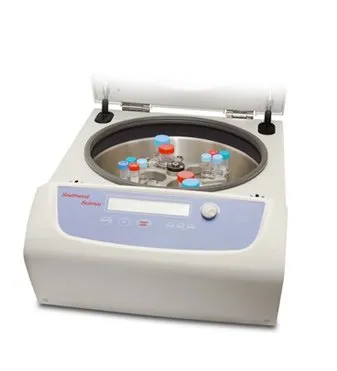


Choosing the right centrifuge machine laboratory equipment for your lab is essential to ensure accurate results and smooth workflow. With so many options available, understanding the types, their applications, and features can help you pick the best professional laboratory centrifuge for your needs. Here is a clear breakdown of the seven main benchtop centrifuge types and their uses.
1. Mini Centrifuges
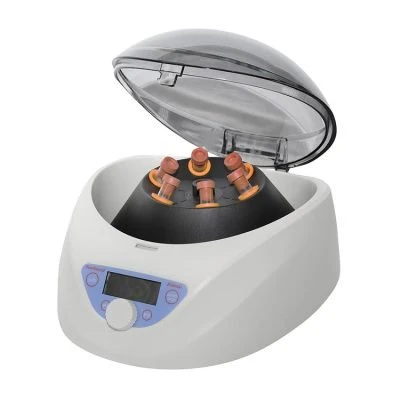
Mini centrifuges are compact machines, usually with fixed or two-speed options. They can hold small tubes ranging from 0.2ml to 5ml depending on the rotor. Some models can accommodate different tube sizes in a single rotor.
Key Uses:
- Quick spin-downs of samples.
- Equalizing sample concentrations by removing liquids from tube walls.
Mini centrifuges are designed for convenience, and rotors are fixed, meaning they are not user-replaceable. These machines are ideal for labs that need fast sample processing without complex setups.
2. Clinical Centrifuges
Clinical centrifuges are designed to handle blood and urine tubes of various sizes, from 2ml up to 15ml. They can also be used for platelet-rich plasma (PRP) work in blood tubes.
Key Uses:
- Routine blood and urine testing.
- PRP separation for medical applications.
The rotors in clinical centrifuges are fixed and not changed by users. They are reliable machines for labs that process clinical samples frequently.
3. Microcentrifuges
Microcentrifuges are a sub-category of benchtop centrifuges. They are used with small tubes, typically 1.5ml and 2.0ml, and can hold smaller tubes like 0.2ml or 0.5ml with adapters or specific rotors.
Key Uses:
- Molecular biology experiments, including DNA/RNA purification.
- Pelleting proteins or nucleic acids.
- High-speed applications with high g-force.
Microcentrifuges come in refrigerated and non-refrigerated versions to maintain sample integrity when spinning at high speeds.
4. Plate Centrifuges
Plate centrifuges are used for microtiter and PCR plates instead of tubes. They perform quick spin-downs to ensure even concentration of components in all wells.
Key Uses:
- Microplate assays.
- PCR and molecular biology preparations.
These centrifuges are excellent for labs that frequently work with plate-based experiments and require uniform sample distribution.
5. Low-Speed Multipurpose Centrifuges
Low-speed general purpose centrifuges separate samples based on density. They are versatile machines with multiple rotor options, including fixed angle and swing bucket rotors.
Key Uses:
- Blood and urine analysis.
- Cell harvesting and culturing.
- Separation of heavier particles like bacteria.
These centrifuges can handle tubes from 2ml up to 50ml, and refrigerated versions are available to maintain sample temperature during extended runs.
6. 50ml Centrifuges
The 50ml centrifuge category offers an economical option with fixed angle rotors for large tubes. These machines often spin both 50ml and 15ml tubes using inserts or adapters.
Key Uses:
- Routine separations similar to low-speed centrifuges.
- Labs seeking cost-effective solutions without compromising function.
This type is ideal for labs with budget constraints but still requiring reliable performance for larger tubes.
7. PRP Centrifuges
PRP centrifuges are specifically designed for high-yield platelet-rich plasma preparation. Fixed angle rotor models are clinical centrifuges, while swing bucket versions focus on PRP separation.
Key Uses:
- Processing blood tubes from 2ml to 10ml.
- High-efficiency PRP preparation for medical and research labs.
PRP centrifuges are essential for labs involved in regenerative medicine or clinical studies requiring precise platelet separation.
Key Factors to Consider When Choosing a Centrifuge
- Tube size compatibility: Ensure the centrifuge can accommodate the tube sizes your lab uses most frequently.
- Rotor types: Fixed angle or swing bucket rotors affect the type of separation and sample handling.
- Refrigeration needs: For heat-sensitive samples or high-speed spinning, choose refrigerated models.
- Speed and g-force: High-speed centrifuges are necessary for molecular biology applications.
- Budget and space: Consider your lab’s space and budget while selecting the right model.
By understanding the specific applications and features of each type of benchtop centrifuge, labs can choose the most suitable machine to optimize performance, accuracy, and efficiency.
Outcome:
Selecting the right centrifuge machine laboratory equipment is crucial for accurate results and efficient lab workflow. By considering tube sizes, rotor types, speed, g-force, and refrigeration needs, labs can choose a benchtop centrifuge that fits their specific applications.



























Sign in to leave a comment.