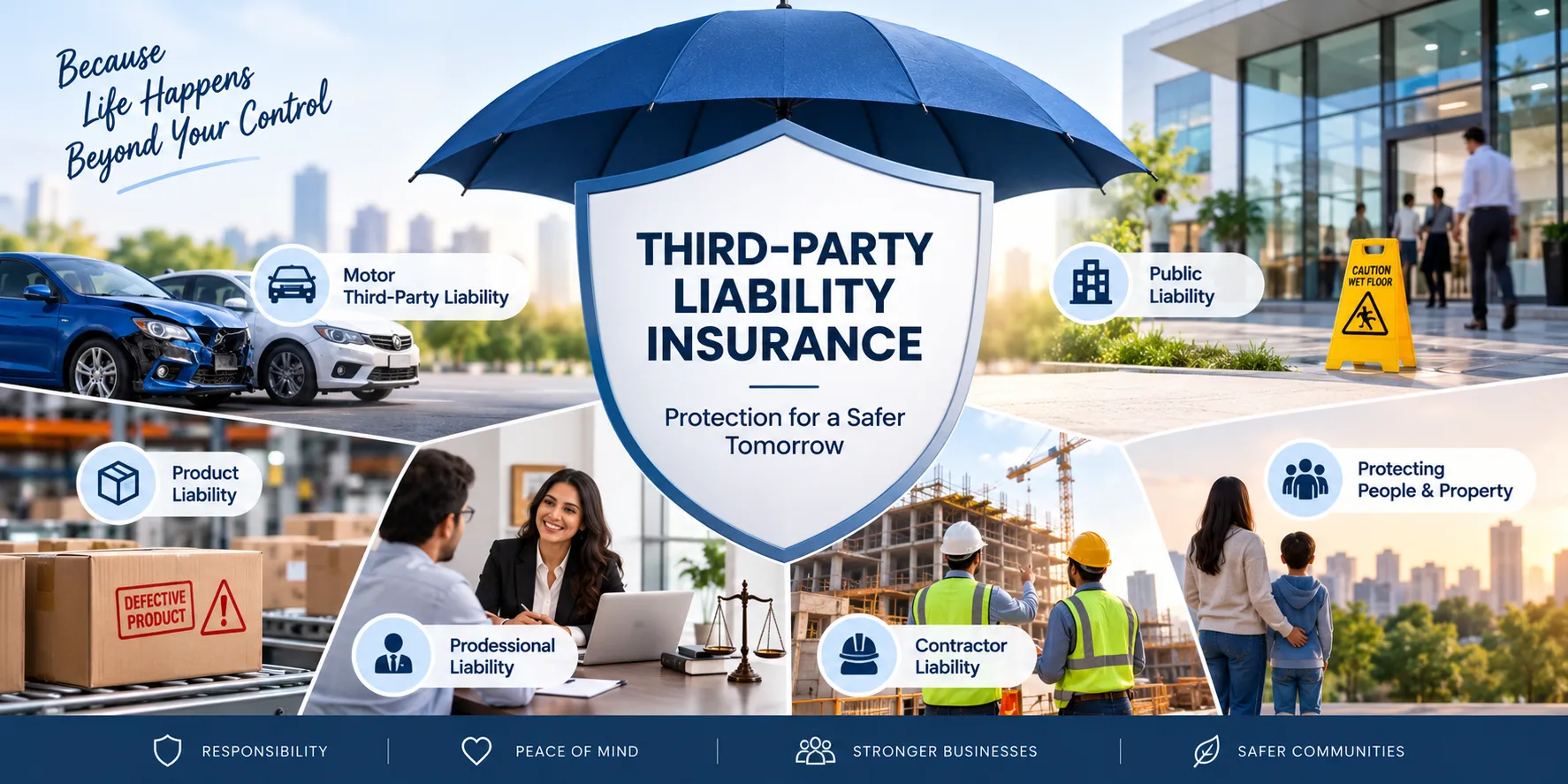

Businesses interact with customers, vendors, visitors, contractors and members of the public every day. While these interactions are essential to operations, they can also expose a business to claims if a third party suffers bodily injury, property damage or certain other losses because of the business's activities. This is where third party liability insurance can play an important role. It is designed to provide financial protection against covered legal liabilities arising from claims made by third parties, subject to the policy's terms, conditions and exclusions.
But does every business need this type of insurance? The answer depends on the nature of the business, its operations, the people it interacts with and the risks associated with its premises, products or services.
What Is Third Party Liability Insurance?
Third-party liability insurance protects a business against specified liabilities towards people other than the policyholder and its employees. A third party could include a customer, visitor, vendor, contractor or another member of the public.
For example, suppose a customer visits a retail store and suffers an injury because of a hazardous condition on the premises. If the customer makes a covered claim against the business, the policy may help meet eligible legal liability and associated expenses, depending on the policy terms.
The exact scope of protection varies between policies. Businesses should therefore review the coverage limits, exclusions, deductibles and other conditions before purchasing a policy.
Who Needs Third-Party Liability Insurance?
While the need for coverage varies by business, certain organisations face greater exposure to third-party claims.
Retail Stores And Commercial Establishments
Retailers regularly interact with customers and other visitors. Customers may enter stores, warehouses or other commercial premises, creating potential risks involving slips, falls, accidental injuries or property damage.
Third-party liability coverage can help businesses manage eligible liabilities arising from such incidents.
Restaurants, Cafes And Food Businesses
Restaurants and cafes have customers entering and spending time on their premises. In addition to premises-related risks, these businesses may face liabilities associated with their day-to-day operations.
Businesses in this sector should assess the risks associated with customer footfall, premises, equipment and other activities when determining their insurance requirements.
Manufacturers And Industrial Businesses
Manufacturing operations can involve machinery, equipment, storage facilities, transportation and interaction with suppliers, contractors and visitors.
An incident at or arising from business operations could potentially result in a third-party claim. Manufacturers should therefore evaluate their liability exposure alongside other commercial insurance requirements.
Depending on the nature of the business, additional covers such as product liability insurance may also be relevant.
Contractors And Construction Businesses
Construction and contracting businesses often work at locations where employees, subcontractors, clients and members of the public may be present.
Accidental damage to third-party property or injury to a third party could result in legal claims and financial losses. Liability insurance can provide protection against covered claims, subject to the applicable terms and limits.
IT And Professional Service Businesses
IT companies, consultants and other professional service providers may also encounter third-party liability risks. These can arise from activities conducted at client locations, use of premises or accidental damage to third-party property.
However, businesses providing professional advice or specialised services should distinguish third-party liability coverage from professional indemnity insurance, which is intended to address certain claims arising from professional errors, omissions or negligence.
Property Owners And Facility Operators
Commercial property owners and facility operators have responsibilities relating to premises used by tenants, customers, visitors and other third parties.
An accident occurring on the property could potentially lead to a liability claim. Appropriate insurance can help transfer some of the financial risk associated with covered claims.
Event Organisers
Events bring together large numbers of people in a limited space. Depending on the type of event, organisers may face risks involving attendees, vendors, venues and third-party property.
Third-party liability coverage can be particularly relevant where an event involves significant public participation or contractual liability requirements.
Does Every Business Need Third-Party Liability Insurance?
Not necessarily. The need depends on the business's specific risk profile.
A small business operating entirely online from a home office, for example, may have a different liability exposure from a restaurant, construction company or manufacturing unit that has frequent visitors and physical operations.
Businesses should consider factors such as:
- Number of customers and visitors
- Nature and location of business premises
- Type of products or services offered
- Use of machinery and equipment
- Interaction with contractors and vendors
- Potential for third-party property damage
- Potential for bodily injury claims
- Contractual insurance requirements
- Industry-specific regulatory requirements
Assessing these factors can help a business determine whether third-party liability coverage is appropriate and what level of protection may be required.
Third Party Liability Insurance vs General Liability Insurance
General liability insurance is generally broader and may combine protection against several types of liability risks under one policy, depending on the insurer and policy structure. Third-party liability is a broader concept referring to liabilities owed to parties other than the insured, but the exact terminology and coverage structure can differ across insurance products and jurisdictions.
Businesses should therefore avoid assuming that two policies with similar names provide identical protection. The policy wording should be reviewed to understand exactly which claims, legal liabilities, expenses and situations are covered.
What Should Businesses Consider Before Buying The Policy?
Selecting liability insurance should not be based solely on the premium. Businesses should first understand their exposure and then evaluate the policy's coverage.
Important factors include:
Coverage Limits
The limit should be appropriate for the scale and nature of the business's potential liability exposure.
Exclusions
Businesses should understand situations that are specifically excluded from coverage. These can significantly affect the usefulness of a policy.
Deductibles
A deductible is the amount that the insured may need to bear before the insurer's coverage applies, depending on the policy terms.
Legal And Defence Costs
Businesses should determine whether eligible legal expenses are covered and whether they form part of or are payable in addition to the policy limit.
Contractual Requirements
Some clients, landlords, venues or business partners may require a company to maintain specified liability insurance before entering into a contract.
Why Is Third-Party Liability Insurance Important?
A third-party claim can create more than just the cost of repairing physical damage. Businesses may also face legal expenses, compensation obligations and other financial consequences associated with a covered claim.
Third-party liability insurance can help businesses manage these risks and reduce the financial uncertainty associated with unexpected claims. It can also support business continuity by transferring eligible risks to an insurer according to the policy terms.
However, insurance does not eliminate the underlying risk. Businesses should continue to follow appropriate safety procedures, maintain their premises and equipment and use suitable risk-management practices.
Conclusion
Third-party liability risks can affect businesses across industries, particularly those that regularly interact with customers, visitors, contractors or members of the public. Retailers, restaurants, manufacturers, construction companies, event organisers and property operators may have significant exposure, although the exact need depends on their individual operations.
Before purchasing third-party liability insurance, businesses should assess their risks, understand the coverage available and compare limits, exclusions, deductibles and policy conditions. In some cases, a broader general liability insurance policy or additional covers may also be appropriate.
The objective should be to build an insurance programme that reflects the business's actual liability exposure rather than simply choosing the cheapest available policy.





















Sign in to leave a comment.