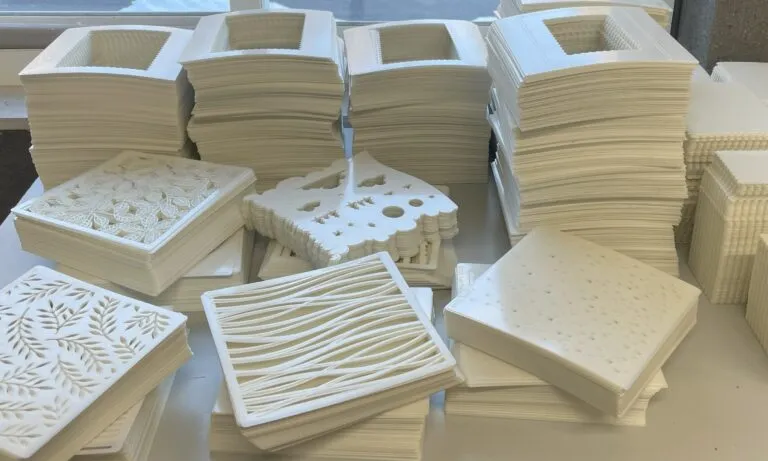

In the world of professional branding, interior design, and industrial manufacturing, the ability to replicate a pattern or design with absolute precision is invaluable. Whether you are an artist creating a series of canvases, a business owner looking to add a polished logo to your storefront, or a contractor needing consistent marking for industrial safety, you have likely encountered the limits of manual tools. This is where a professional stencil cutting service becomes a game-changer. By outsourcing the technical side of your project to experts, you ensure that every line, curve, and corner is executed with machine-like accuracy, allowing you to focus on the application rather than the labor of cutting.
Understanding What A Service Actually Does
At its core, this is a specialised form of manufacturing that bridges the gap between digital design and physical application. These services use high-end equipment—such as CNC lasers, plotters, or water-jet cutters—to transform a digital file into a durable, reusable template.
When you submit a design to these professionals, you are not just asking for a hole to be cut in a sheet. You are asking for a calculated balance between structural integrity and visual detail. The service provider analyses your design to ensure that "islands"—those floating pieces of a letter like the centre of an O or a B—are properly connected with "bridges." These tiny segments of material hold the design together, ensuring that your template remains a cohesive tool rather than a collection of loose fragments.
Why Choose A Professional Service Over Manual Methods?
While it is tempting to pick up a hand tool and cut a design yourself, the limitations of human hands are quickly apparent when you need consistency.
1. Unmatched Precision
Professional cutters operate with tolerances measured in fractions of a millimetre. When you are working on a project that requires multiple repetitions, such as painting a wall pattern or branding a large batch of shipping crates, even the smallest error in manual cutting will compound, leading to an inconsistent final result. A specialised provider guarantees that the first print is identical to the thousandth.
2. Material Versatility
Different projects require different materials. You might need thin, flexible Mylar for a delicate textile print, or heavy-duty polypropylene for outdoor floor marking. Professional services have access to a vast array of industrial materials that are not typically available at standard retail stores. They understand the tensile strength, heat resistance, and chemical compatibility of these materials, ensuring your tool is built for the specific environment in which it will be used.
3. Complexity Of Design
Manual cutting is limited by the geometry of the blade and the fatigue of the artist. Complex, swirling patterns or highly detailed typographic logos are nearly impossible to cut by hand without fraying or tearing the material. Laser cutting, which is standard for a professional stencil cutting service, vaporises the material with extreme heat, allowing for intricate details that would be physically impossible to achieve with a hand tool.
Navigating The Design And Submission Process
Successfully using a professional service starts long before the cutting begins. Most providers require a high-quality digital vector file. If you are not a designer, do not worry; many services offer design assistance to convert your sketches or low-resolution images into the vector format required for their machinery.
When planning your project, consider these three pillars of success:
- Bridge Management: If you have an overly complex design, consult with the service provider about where to place bridges to maximise structural support without sacrificing the final aesthetic.
- Scale Considerations: A design that looks great on a 10-inch sign may need adjustment to work on a 5-foot wall. Discuss the intended output size with the provider early in the process.
- Material Selection: Be clear about your application. Are you using spray paint, house paint, or heavy-duty marking ink? Will you be using the template on a flat floor or a curved vehicle panel? These details allow the service to suggest the perfect material thickness (measured in "mil").
Applications Across Different Industries
The demand for high-quality production spans across a diverse range of fields:
- Interior Design And Decor: Designers use custom templates for creating feature walls, bespoke furniture accents, and personalised floor patterns that mimic expensive tile work at a fraction of the cost.
- Retail And Branding: Businesses use them to apply logos directly onto walls, windows, and product packaging, ensuring a clean, uniform look that reinforces brand identity without the need for expensive vinyl decals.
- Industrial Safety And Logistics: Warehouses and construction sites rely on standardised, durable templates for marking aisles, parking spaces, and hazard warnings. These need to be tough enough to handle heavy foot traffic and exposure to the elements.
- Textile And Fashion: Artisans use custom templates to create unique patterns on clothing, cushions, and curtains, allowing for high-end customisation in small-batch production.
The Economic And Creative Benefits
Investing in a professional service is often seen as an extra expense, but when you look at the big picture, it is an investment in efficiency. When you cut your own templates, you are spending hours performing labor that is prone to error. By using a stencil cutting service, you buy back that time. You eliminate the frustration of failed attempts, wasted paint, and redo-work.
Furthermore, these services open up a world of creative possibilities. When you know that any shape or design can be accurately produced, you are no longer limited by what you can cut by hand. You can push the boundaries of your designs, knowing that the physical implementation is backed by reliable technology.
Making The Right Choice
When selecting a provider, look for companies that demonstrate expertise beyond just the cutting. A reputable service should be able to provide advice on the best material for your specific needs, offer clear timelines for production, and show a portfolio of complex work. Communication is key; a team that asks questions about your intended use is a team that cares about your end result.
As you plan your next creative or industrial challenge, remember that the quality of your finish is directly tied to the quality of your tools. By utilising a professional Stencil Online you ensure that your projects are not only beautiful and accurate but also durable enough to last. Whether your vision is simple or complex, let technology handle the precision so that you are free to focus on the art of making.
Frequently Asked Questions
1. What file format do I need to submit for cutting?
Most providers require vector files such as AI, SVG, or DXF for the best results.
2. How thick should my template material be?
It depends on your project. Thinner 5-mil sheets are great for detail, while 10-mil or thicker is better for heavy-duty floor work.
3. Can professional services help if I only have a rough sketch?
Yes, many providers offer graphic design assistance to turn your ideas into a cut-ready vector format.
4. How long do these templates usually last?
High-quality Mylar or polypropylene templates can be cleaned and reused hundreds of times if handled properly.
5. Are these services limited to basic shapes and text?
Not at all. Professional laser technology allows for incredibly intricate, detailed patterns that would be impossible to cut manually.























Sign in to leave a comment.