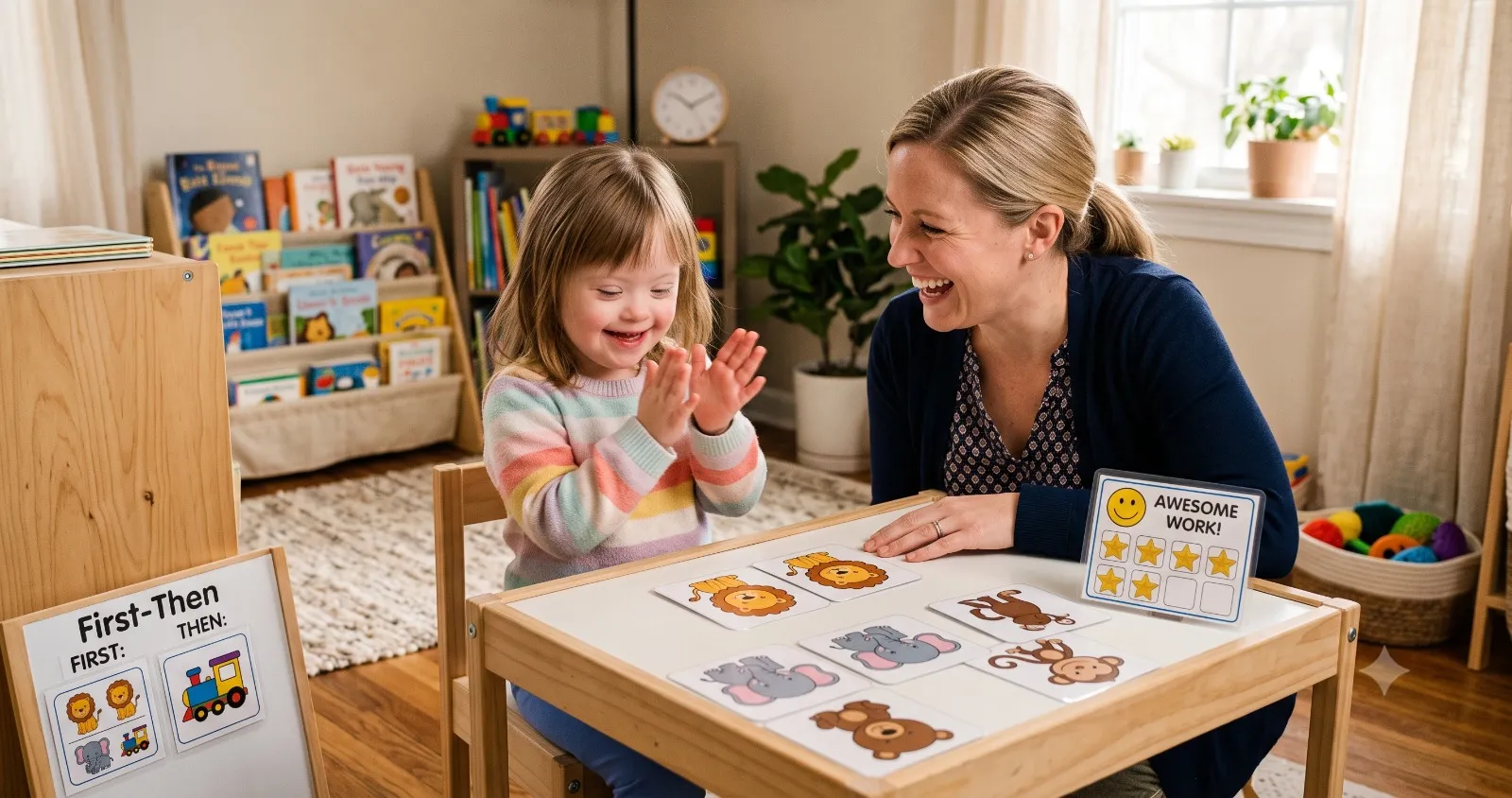

ABA therapy's effectiveness for children with Down syndrome is grounded in the same research base that established its use with other developmental populations: behavioral principles apply broadly across learner profiles. Reinforcement strengthens behavior. Systematic instruction, broken into manageable steps, builds skills that would otherwise be inaccessible. Regular data collection identifies what's working and what needs adjustment. These mechanisms don't depend on a specific diagnosis to function.
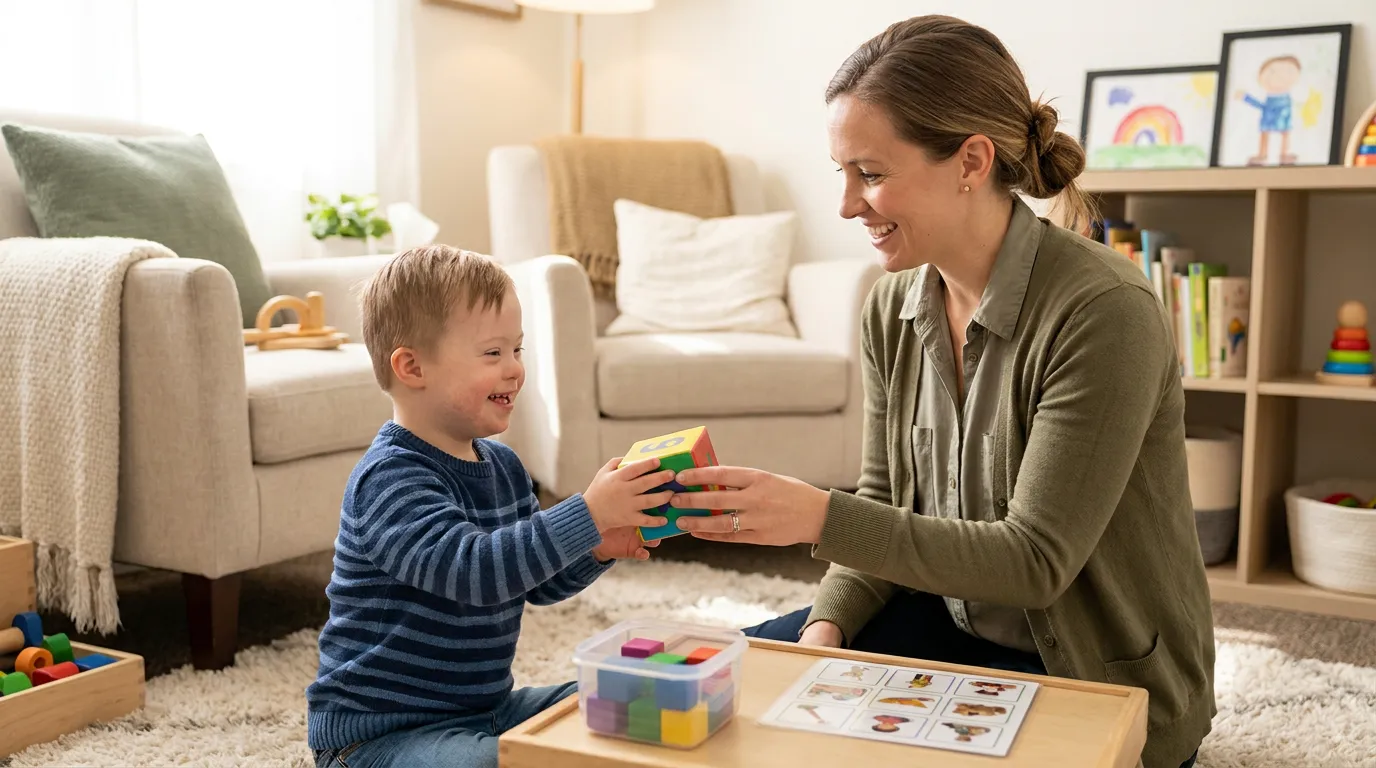
What makes ABA particularly well-suited to many children with Down syndrome is the structure and repetition it provides, paired with a heavy reliance on positive reinforcement. Children with Down syndrome often respond well to consistent routines and predictable instructional formats, and ABA's discrete trial training and naturalistic teaching approaches can be calibrated to fit that learning style. The therapy is not a single fixed method; it's a framework that skilled clinicians adapt to each child's profile.
Research supports this application. Studies published in peer-reviewed behavioral journals have documented meaningful gains in communication, adaptive behavior, and academic readiness in children with Down syndrome receiving behavior analytic intervention. A 2020 review in the Journal of Applied Behavior Analysis highlighted positive outcomes across multiple skill domains when ABA principles were applied with appropriate individualization for learners with Down syndrome. These are not extraordinary findings; they reflect the consistent pattern across behavioral research showing that the principles of learning apply regardless of etiology.
Where ABA Makes the Biggest Difference
Communication development is one of the areas where ABA produces the most consistent gains for children with Down syndrome. Many children in this population have expressive language that lags behind their comprehension, and ABA programs can systematically target verbal imitation, requesting, labeling, and conversational skills through structured practice with meaningful reinforcement. When combined with augmentative and alternative communication strategies, such as picture exchange systems or speech-generating devices, ABA can help bridge the gap between what a child understands and what they're able to express.
Functional daily living skills are another high-priority area. ABA's task analysis approach, breaking a complex skill like washing hands or putting on shoes into small sequential steps, is particularly effective for children with Down syndrome who may need more practice trials to reach mastery than typically developing peers. Once a skill is taught with this level of structure, it tends to be retained and can be generalized to different environments with systematic support.
Self-regulation and adaptive behavior goals, including following routines, managing transitions, and tolerating unexpected changes, are areas where many families see meaningful improvements through ABA. These skills have direct impacts on a child's ability to participate in school, community activities, and family life. The applied behavior analysis ma resources at Rising Above ABA address these goals with programs designed specifically around the learning profiles of children with Down syndrome, rather than adapting autism-focused programs after the fact.
What Families Should Know About the Process
Progress in ABA therapy for children with Down syndrome is real and measurable, but it takes time. Skills are built systematically, and the pace of progress varies across children and across skill domains. A child might make rapid gains in requesting vocabulary while another area, like peer interaction, moves more slowly. That variation is normal and doesn't indicate that the program is failing.
Family involvement amplifies outcomes. When parents and caregivers understand and consistently apply the same strategies at home that are being used in therapy, skills generalize faster and hold more durably over time. ABA programs that build in parent training as a core component, not an occasional add-on, consistently produce better long-term outcomes than those that keep families at arm's length from the clinical work.





























Sign in to leave a comment.