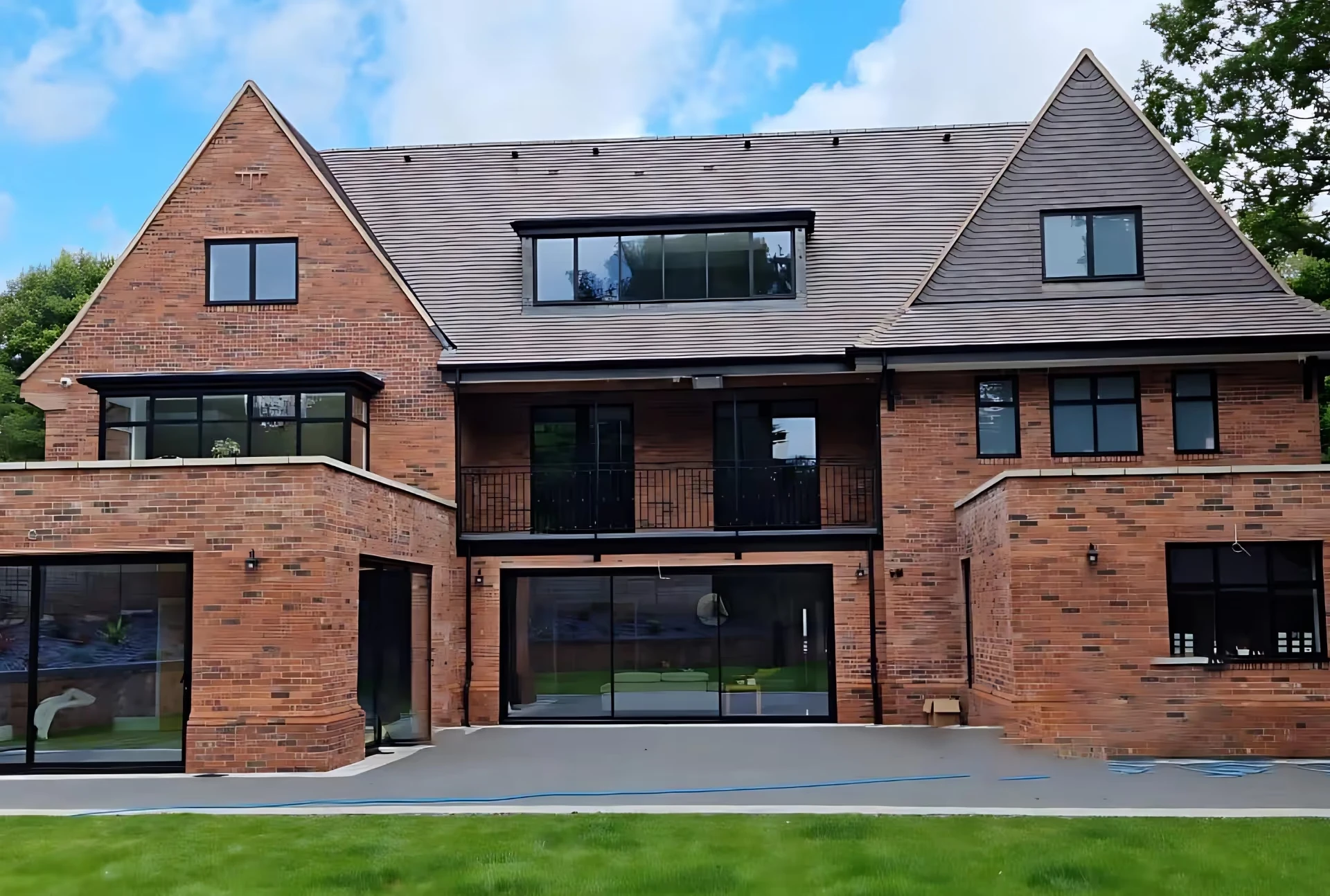

“Architecture in Bath is a dialogue between heritage and innovation. Every window must respect the past while performing for the future.”
Bath’s architectural identity is globally recognised, with its Georgian heritage earning UNESCO World Heritage status. The city contains over 5,000 listed buildings, and its conservation areas impose strict planning permissions that demand both aesthetic precision and measurable energy efficiency. For architects, the challenge lies in balancing heritage preservation with modern performance standards.
The 2022 uplift to Part L Building Regulations has heightened expectations, requiring glazing systems that align with low‑carbon construction and Passivhaus principles. Tilt-and-turn windows are increasingly specified for Bath projects because they meet these dual demands.
Aluminium tilt-and-turn windows provide dual functionality: tilt for controlled ventilation and full inward opening for cleaning and emergency egress. With U‑values as low as 1.0 W/m²K, acoustic insulation up to 40dB reduction, and PAS 24 security compliance, they outperform traditional casement designs. For architects sourcing from trusted window frame manufacturers, tilt-and-turn systems deliver heritage‑sensitive aesthetics with future‑ready performance.
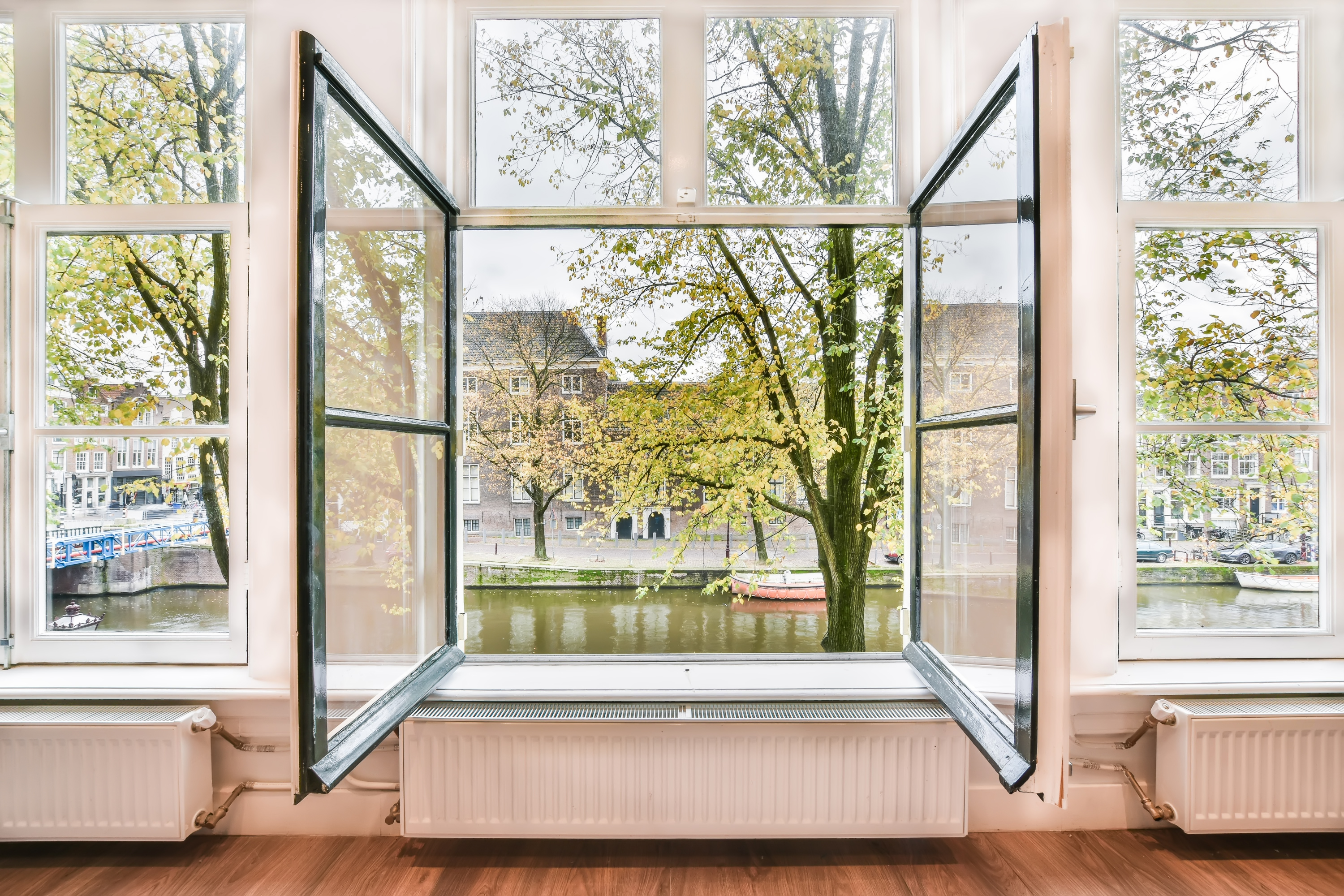
Performance That Meets Modern Building Regulations
The UK Government’s Future Homes Standard requires new homes to produce 75–80% lower carbon emissions by 2025. High‑performance glazing is central to achieving this, significantly reducing heat loss and ensuring compliance with Part L.
Architects sourcing from aluminium window manufacturers in Birmingham benefit from precision‑engineered systems with slim sightlines suitable for heritage areas. With lifespans exceeding 40 years, powder‑coated finishes, and CNC‑machined accuracy, these windows combine durability with compliance by partnering with experienced manufacturers. Bath architects secure glazing solutions that meet conservation requirements while delivering measurable sustainability outcomes.
Ventilation Without Compromising Heritage Aesthetics
Bath’s Georgian architecture demands symmetry, clean internal lines, and discreet detailing. Aluminium tilt-and-turn windows achieve this balance with concealed hardware and inward‑opening designs, ideal for Bath’s narrow streets. Unlike traditional casement windows, tilt-and-turn systems provide superior airflow control while maintaining façade integrity.
For architects, aluminium tilt-and-turn windows in Bath projects deliver heritage‑sensitive aesthetics without compromising ventilation performance, an essential combination in conservation‑led developments.
See how architects across Bath specify precision-engineered tilt-and-turn systems.
Explore our completed residential and commercial glazing projects and discover why architectural practices consistently choose our solutions. Get in touch with our team today to discuss your project requirements.
Why Klassic Trade Frames is the Preferred Manufacturing Partner?
Engineered Manufacturing Standards in Birmingham
Klassic Trade Frames manufactures in Birmingham and delivers precision‑engineered aluminium systems tailored to architectural specifications. Using CNC machining and RAL‑certified powder‑coated finishes, every unit is fabricated to exacting standards. Lead times typically range from 10 to 15 working days, depending on project scale, ensuring reliable scheduling.
As an aluminium window manufacturer based in Birmingham, Klassic Trade Frames has supplied over 1,000 trade customers, backed by 25+ years of combined industry expertise. With a 98% on‑time delivery rate, PAS 24 compliance, and Secured by Design accreditation, our systems consistently meet the highest performance benchmarks. For architects balancing conservation aesthetics with modern standards, our window frame manufacturers provide trusted solutions.
We also collaborate with door suppliers in Birmingham to provide complete façade solutions for residential and commercial projects.
Integrated Solutions Beyond Windows
Beyond glazing, Klassic Trade Frames offers uPVC front doors and frames that complement tilt-and-turn window specifications. Architects benefit from façade consistency, with U‑values as low as 1.2 W/m²K for uPVC systems. Multi‑point locking, GRP, and composite options ensure both security and thermal performance.
In Bath projects, architects often combine tilt-and-turn windows with matching uPVC front doors and frames, achieving cohesive aesthetics and thermal consistency across the building envelope. This integrated approach simplifies specification and ensures compliance across all façade elements.
Speak Directly with Our Technical Specification Team
Request U-value calculations, CAD drawings and compliance documentation from Klassic Trade Frames. Our technical team will respond with tailored support within 24 hours.
Client Testimonials
★★★★★
Andrew
“These guys have done several things for us recently, including replacement glazing and a screen for the conservatory, as well as the replacement of windows. Every project was delivered on time, and the finish quality was excellent.”
★★★★★
Simon
“I’ve just picked up a new door. The quality is outstanding, but more importantly, the team provide a premier service. They go the extra mile to help you find exactly what you need and offer all the support you could ask.”
Data Supporting Tilt and Turn Window Growth (130 words)
According to Statista, the UK windows and doors market is projected to exceed expectations by 2027. Demand for high‑performance aluminium systems continues to rise, driven by energy efficiency regulations and urban design requirements.
Architects increasingly favour inward‑opening tilt-and-turn systems in dense environments like Bath, where conservation restrictions meet modern ventilation needs. Aluminium tilt-and-turn windows in Bath projects represent the fastest‑growing specification trend, combining compliance with design flexibility.
Conclusion
Architects in Bath face the unique challenge of balancing heritage preservation with modern performance standards. With energy efficiency regulations tightening and conservation requirements remaining strict, precision‑engineered glazing is essential.
Tilt-and-turn windows. Bath projects deliver measurable results, including heritage-sensitive aesthetics, improved thermal performance, and enhanced security compliance. By partnering with aluminium window manufacturers in Birmingham, architects secure systems that combine durability, slim sightlines, and compliance‑ready documentation.
From tilt-and-turn windows to uPVC front doors and frames, Klassic Trade Frames provides integrated solutions trusted across Bath, Birmingham, and the wider Southwest England region. Choosing the right manufacturing partner determines whether a project merely complies or truly performs.
FAQs
1. Why are tilt and turn windows suitable for listed buildings in Bath?
Answer: Tilt-and-turn windows are ideal for Bath’s listed buildings because they respect Georgian symmetry while offering slim aluminium profiles that blend seamlessly with heritage façades. Their design flexibility allows architects to meet conservation requirements without compromising performance. Concealed hardware ensures clean internal lines, and inward-opening designs suit Bath’s narrow streets, making them practical as well as aesthetically sensitive.
2. What U‑values can aluminium tilt and turn windows achieve?
Answer: Aluminium tilt-and-turn windows can achieve U‑values between 1.0 and 1.4 W/m²K, depending on the glazing specification. This range ensures compliance with Part L Building Regulations and supports low‑carbon construction goals. By reducing heat loss, these systems contribute to Passivhaus standards and help architects meet the UK Government’s Future Homes Standard, which requires significant reductions in carbon emissions by 2025.
3. Are tilt and turn windows more secure than casement windows?
Answer: Yes. Tilt-and-turn windows are inherently more secure due to their inward‑opening design, which makes forced entry more difficult. Combined with multi‑point locking systems, they achieve PAS 24 security standards. This level of protection is particularly important for urban projects in Bath and Birmingham, where architects and developers must balance security with conservation aesthetics.
4. Do aluminium systems outperform uPVC long term?
Answer: Aluminium systems typically last 40+ years compared to 20–25 years for uPVC. Their durability, resistance to warping, and ability to maintain slim sightlines make them the preferred choice for architects. While uPVC offers good thermal performance, aluminium provides superior lifecycle value, reducing replacement costs and ensuring compliance with evolving building regulations.
5. How quickly can aluminium window manufacturers in Birmingham deliver?
Answer: Standard lead times are 10–15 working days, depending on project scale. Experienced aluminium window manufacturers in Birmingham ensure reliable scheduling, backed by CNC precision fabrication and a 98% on‑time delivery rate. This consistency allows architects to plan projects confidently, knowing the supplier will promptly provide compliance documentation and technical support.
Want updates on specifying high-performance tilt-and-turn windows?
Subscribe to our newsletter for product news, specification tips, and lead-time alerts from Klassic Trade Frames. Receive practical guidance and compliance updates that architects rely on.
Contact Us
Call: 0121 713 0050
Email: [email protected]
Address: Unit 2, Seeley’s Park Industrial Estate, Seeley’s Road, Tyseley, Birmingham, B112LR
Follow Us
Please stay connected with us for more insights and updates on Klassic Trade Frames.
Instagram: www.instagram.com/klassictradeframes
Facebook: www.facebook.com/p/Klassic-Trade-Frames-Ltd-61577621549027/
Sign in to leave a comment.