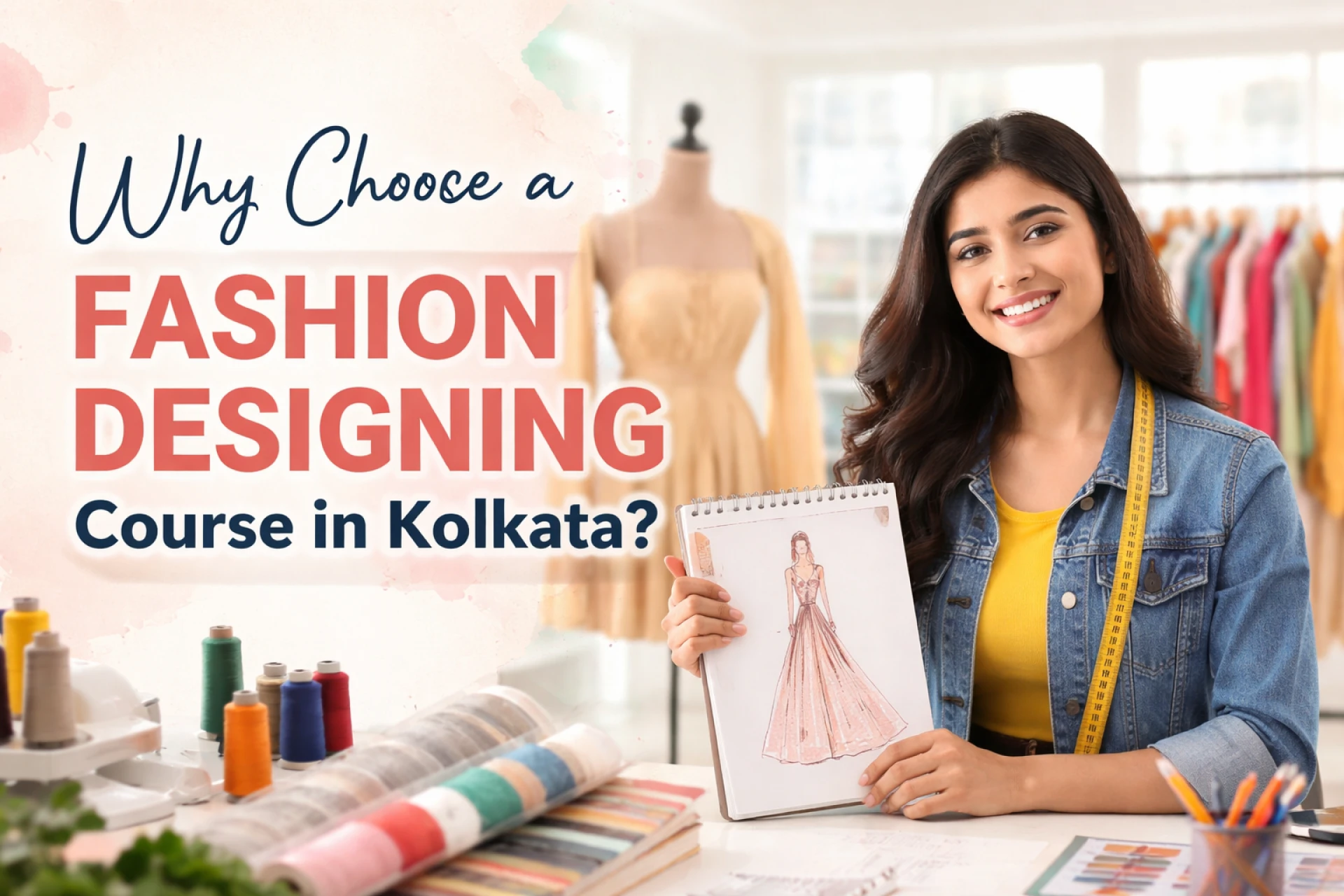

Fashion is one of the fastest-growing creative industries in India, attracting students who aspire to build careers in design, styling, apparel production and brand development. Kolkata, a city known for its artistic heritage and evolving fashion culture, offers excellent opportunities for design learners. Choosing a fashion designing course in Kolkata gives students the advantage of learning in an environment where tradition meets modern creativity, supported by strong industry exposure, practical workshops and hands-on design training.
How Does Industry-Led Learning Shape a Strong Fashion Foundation?
Industry involvement plays a huge role in developing competent and creative designers. Leading design programmes ensure that students interact with established designers and creative professionals who share real insights about trends, techniques and fashion workflows.
- Students gain access to sessions conducted by celebrated designers such as Abu Jani, Sandeep Khosla, Masaba Gupta, Gauri Khan and others.
- Supplementary certifications earned through these platforms strengthen the resume and build professional credibility.
- Expert-led workshops help learners understand trend forecasting, styling principles and garment development processes.
- Exposure to industry professionals ensures students stay aligned with modern design standards.
These experiences create a strong base for learners pursuing the NSHM B.Sc. Fashion Design in Kolkata.
What Infrastructure Supports Practical and Creative Skill Development?
Advanced labs and creative studios are essential to support hands-on design training. Modern fashion programmes offer dedicated spaces where students can conceptualise, develop and refine their ideas.
- Digital Mac labs help students create illustrations, patterns and digital portfolios.
- Design and art studios encourage experimentation with textures, themes and creative concepts.
- Production labs support detailed garment-making processes, from cutting to finishing.
- Fashion labs allow students to work on styling, fabric treatment and surface design.
- These facilities create an environment where concepts evolve into professionally finished designs.
Such infrastructure strengthens technical skills and supports creative exploration.
How Do Workshops and Field Visits Enrich Student Learning?
Experiential learning helps students observe, analyse and interpret the world of fashion beyond the classroom. Regular workshops and industry field visits introduce learners to real creative settings.
- Illustration workshops sharpen students’ visual storytelling abilities.
- Filmmaking and content workshops teach them to present collections through modern digital formats.
- Visits to artist hubs, craft centres and textile markets expose students to diverse materials and techniques.
- Industry symposiums bring together designers, researchers and creative thinkers.
- Field activities keep students updated with new trends and local craftsmanship.
This continuous exposure encourages creative thinking and broadens artistic perspectives.
What Role Do Industry Experts Play in a Student’s Design Journey?
Learning directly from experts helps students understand the expectations, challenges and opportunities in fashion careers.
- Designers, stylists and production experts conduct hands-on workshops.
- Professionals share practical insights into branding, collection building and fashion show preparation.
- Students learn how to interpret client requirements and create market-relevant designs.
- Mentorship from industry professionals helps learners refine their design identity.
This mentorship ensures students develop the confidence needed to succeed in a competitive industry.
How Do Practical Projects and Internships Bridge the Knowledge Gap?
Fashion education becomes truly effective when theory is paired with real-world practice. Most design programmes integrate internships and projects to help students apply classroom knowledge.
- Students work on industry assignments that mirror real design briefs.
- Internship opportunities expose them to garment manufacturing, retail, styling and production environments.
- Mentorship programmes help learners build strong collections and professional portfolios.
- Industry projects develop problem-solving, teamwork and time-management skills.
- These experiences prepare students for design studios, creative agencies and apparel companies.
This applied learning approach aligns with the standards followed by the NSHM B.Sc. Fashion Design in Kolkata.
What Career Opportunities Can Graduates Explore After a Fashion Degree?
The fashion industry offers diverse roles across creative, technical and managerial domains. Graduates can explore multiple pathways depending on their interests and strengths.
- Costume designers work on film, TV and theatre projects.
- Fashion consultants guide clients in styling and wardrobe planning.
- Technical designers create detailed specifications for garment production.
- Fashion coordinators manage brand shoots, campaigns and visual identity.
- Apparel production managers handle manufacturing, quality and workflow.
- Graduates may work as illustrators, fabric buyers or showroom representatives.
- Many students also start their own clothing labels or boutique units.
These opportunities highlight the wide scope available to fashion graduates.
Conclusion
Kolkata offers an inspiring environment for aspiring designers, combining cultural richness with evolving fashion trends. The fashion designing course in Kolkata provides students with expert mentorship, advanced facilities and extensive practical exposure, helping them grow into confident and industry-ready professionals. With creative training, hands-on learning and strong career pathways, fashion design students can step into the global creative industry with clarity and skill.
FAQs
1. Why is Kolkata a strong choice for studying fashion design?
Kolkata blends cultural heritage with modern creativity, offering an inspiring environment for fashion education.
2. Do students receive industry exposure during the course?
Yes. Students interact with leading designers, attend expert-led workshops and participate in real-world creative sessions.
3. Are advanced facilities available for practical design training?
Most programmes provide digital labs, production spaces, art studios and fashion labs for hands-on learning.
4. What experiential learning opportunities are offered?
Students attend illustration workshops, filmmaking sessions, field visits and symposiums that enhance creative skills.
5. How do industry professionals support student development?
Professionals guide students through workshops, share industry insights and help them understand modern design processes.
6. What career pathways can fashion design graduates explore?
Graduates can work as costume designers, stylists, technical designers, production managers or creative entrepreneurs.
7. Does the programme include internships or industry projects?
Yes. Internships, real design projects and mentorship programmes help students gain practical experience and build strong portfolios.




























Sign in to leave a comment.