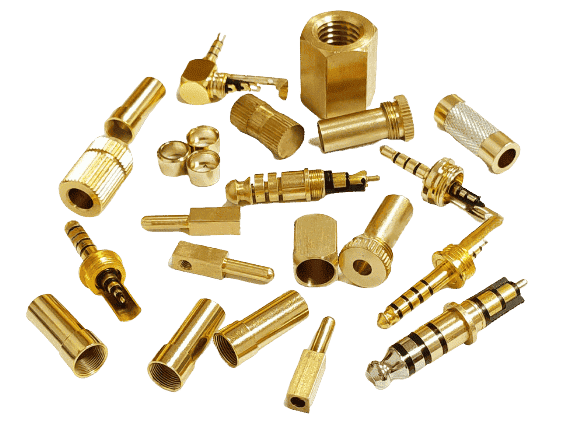

The manufacturing industry has entered a new era of precision and performance, and nowhere is this more evident than in the production of brass components. With the growing demand for accuracy, consistency, and speed, the traditional methods of machining are being replaced by advanced technologies. Among these, the CNC machine
stands at the forefront, offering an unmatched combination of efficiency and precision.
Brass, known for its excellent machinability and durability, is widely used in electrical, plumbing, and industrial sectors. When combined with CNC technology, it transforms into components that meet the highest standards of engineering and design.
Evolution of Brass Machining
In earlier times, brass parts were produced using manual lathes and milling machines. While skilled operators could achieve good results, manual machining was slow and prone to errors. The introduction of CNC machining changed everything. By automating the process through computer-controlled systems, manufacturers can now produce thousands of identical parts with zero variation.
CNC technology eliminates human error and brings consistency to every phase of production, from cutting and drilling to milling and finishing. This not only improves product quality but also reduces material waste and production time.
Why CNC Machining Is Ideal for Brass
Brass is one of the most CNC-friendly materials. It cuts cleanly, generates minimal heat, and requires less tool wear compared to harder metals. This allows for faster machining speeds and longer tool life. Whether creating tiny electrical terminals or large plumbing fittings, CNC machining ensures each brass part meets tight tolerances and smooth surface requirements.
Another key advantage is repeatability. Once a program is created, the same design can be replicated with perfect accuracy for years. This makes CNC machining ideal for industries that demand precision in every piece.
Key Benefits Driving the Future of Brass CNC Machining
Precision and accuracy
CNC machining operates with micrometer-level accuracy, ensuring even the most complex brass geometries are perfectly formed.
Efficiency and speed
Automated CNC systems work continuously without fatigue, significantly increasing production output.
Cost-effectiveness
Reduced errors, optimized cutting parameters, and minimal waste all lead to lower production costs.
Scalability
From a single prototype to bulk production, CNC machining allows flexibility in order sizes without sacrificing quality.
Integration with new technologies
The latest CNC systems now integrate with sensors, AI, and IoT platforms, allowing real-time monitoring and predictive maintenance.
The Role of Smart Manufacturing
The future of brass machining lies in smart manufacturing. Modern factories are adopting connected CNC machines that collect and analyze data during production. This information helps operators optimize tool paths, monitor wear, and prevent downtime before it occurs. Such systems not only improve efficiency but also ensure consistent quality across all batches.
Automation is also playing a key role. Robotic arms and automated loaders are now common in high-volume brass component manufacturing. This reduces manual handling, enhances safety, and allows machines to run 24/7 with minimal supervision.
Sustainable CNC Machining Practices
Sustainability is becoming a major focus in manufacturing. Since brass is recyclable, CNC machining supports eco-friendly production by reducing scrap material and energy use. The use of clean coolants, efficient chip management systems, and energy-optimized machines further contributes to a greener production process.
Applications of CNC-Machined Brass Components
CNC-machined brass components are used across a wide range of industries due to their reliability and performance. Common applications include:
Electrical connectors and terminals
Plumbing and gas fittings
Automotive and mechanical parts
Precision valves and regulators
Decorative and architectural hardware
These applications demand exact dimensions, corrosion resistance, and durability—qualities that CNC machining delivers consistently.
The Future Outlook
As manufacturing becomes more automated and data-driven, the role of CNC machining in brass production will continue to grow. The integration of hybrid systems, combining additive and subtractive manufacturing, will open doors to more complex and customized designs. Digital twins and simulation-based programming will further enhance accuracy and reduce setup times.
Why Hiren Brass Product Leads the Way
At Hiren Brass Product, we continuously invest in modern CNC technology and skilled craftsmanship to produce brass components that meet global standards. Our focus on precision, innovation, and sustainability ensures that every product we manufacture delivers exceptional quality and performance.
Conclusion
CNC machining is not just a tool it is the future of brass manufacturing. It allows for faster production, greater precision, and complete reliability across every project. With the help of an advanced CNC machine
, manufacturers like Hiren Brass Product continue to redefine quality standards for brass components worldwide.

























Sign in to leave a comment.