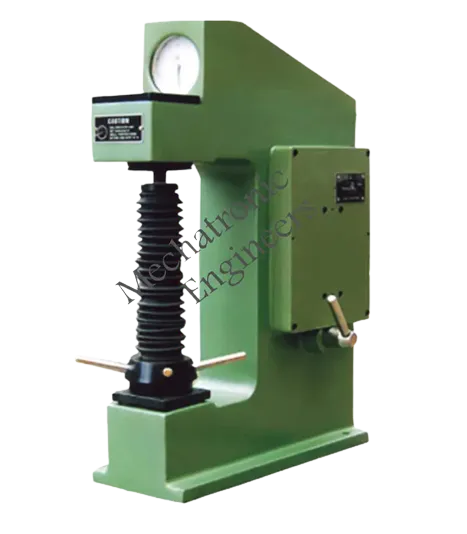

Computerized universal testing machines improve testing accuracy, automate reporting, reduce manual errors, and support modern quality-control requirements across manufacturing industries.
Manufacturing standards have changed significantly over the last decade. Industries today require faster production, better consistency, and more accurate quality control than ever before. As a result, material testing has also evolved from simple manual inspection into a more advanced, software-driven process.
Modern industries no longer rely only on basic load measurements. They now require detailed analysis, digital reporting, traceable records, and repeatable testing conditions. This is one of the biggest reasons why computerized universal testing machines are becoming increasingly important across industrial manufacturing environments.
What is a computerized universal testing machine?
A computerized universal testing machine combines mechanical or hydraulic testing systems with software-based digital controls for accurate material evaluation.
These systems help manufacturers:
- Monitor tests digitally
- Generate stress-strain curves automatically
- Store historical test data
- Produce faster reports
- Improve testing consistency
Unlike traditional systems that depend heavily on operator interpretation, computerized machines simplify the testing process while improving precision.
Industries using advanced Universal Testing Machines often benefit from improved workflow efficiency and better quality-control documentation.
Why are traditional testing methods becoming less effective?
Traditional testing methods still have applications in some environments, but they often create limitations when industries require high-volume and high-precision testing.
Manual systems can lead to:
- Inconsistent readings
- Slower reporting
- Increased operator dependency
- Limited digital traceability
- Greater chances of human error
Modern manufacturing environments require repeatable testing procedures that can support audits, compliance documentation, and long-term data storage.
Computerized systems help industries meet those expectations more efficiently.
How does software improve material testing?
Testing software has become one of the most important parts of modern material testing systems.
Software-driven testing improves:
- Data analysis
- Automated calculations
- Report generation
- Graphical representation
- Sample comparison
Many industries now require customized reporting formats depending on production standards or research requirements.
Modern testing software can also evaluate:
- Yield strength
- Tensile strength
- Elongation behavior
- Proof stress values
This level of analysis becomes especially important in industries where even small material variations can affect product reliability.
Why do industries rely on computerized testing systems?
Industries today operate under stricter quality expectations. Material failure can create serious safety, structural, or production issues.
That is why sectors such as:
- Steel manufacturing
- Automotive production
- Aerospace engineering
- Defense laboratories
- Metallurgical research
- Engineering institutions
depend heavily on precise and repeatable testing systems.
In many manufacturing facilities, testing machines are now integrated directly into quality-control processes rather than treated as standalone laboratory equipment.
Why are older testing machines being upgraded?
Many organizations continue using older testing systems because the mechanical structure remains strong and reliable.
However, older machines often lack:
- Advanced software
- Automated reporting
- Digital displays
- Real-time analysis
- Data storage capability
Instead of replacing entire systems, industries increasingly choose electronic modernization.
Electronic upgradation helps improve:
- Machine lifespan
- Reporting capability
- Testing precision
- Workflow efficiency
Facilities working with Tensile Testing Machines frequently modernize older systems to improve digital compatibility while reducing replacement costs.
Why are electronic extensometers important?
Electronic extensometers improve measurement accuracy during tensile testing by tracking material deformation more precisely.
They are commonly used for:
- Elongation analysis
- Yield point evaluation
- Proof stress measurement
- Deformation tracking
In high-performance manufacturing environments, accurate elongation data is extremely important because even small inconsistencies can affect product quality and structural reliability.
How computerized systems improve industrial efficiency
Modern testing systems improve more than just accuracy. They also improve overall operational efficiency.
Computerized systems help operators:
- Reduce manual calculations
- Generate reports faster
- Store test records digitally
- Analyze data more efficiently
- Reduce testing downtime
This becomes especially useful in high-volume production environments where testing speed and repeatability directly affect productivity.
Many manufacturers also integrate data from Hardness Testing Machines into broader quality-control workflows for more complete material evaluation.
Why data-driven testing is becoming the future
Manufacturing is becoming increasingly data-driven. Industries now expect:
- Digital documentation
- Automated analysis
- Better traceability
- Faster audits
- Consistent reporting
Testing machines are evolving alongside those expectations.
The future of material testing will likely involve even stronger integration between:
- Automated systems
- Smart software
- Real-time analytics
- Digital quality-control environments
Computerized testing systems help industries prepare for those changes while improving current operational performance.
Frequently Asked Questions
What is a computerized universal testing machine?
A computerized universal testing machine combines mechanical testing with software-driven digital analysis and reporting.
Why are computerized testing systems more accurate?
They reduce manual errors and improve testing consistency through automation and digital monitoring.
Can older testing systems be upgraded?
Yes. Many older testing machines can be converted into computerized systems through electronic modernization.
Which industries commonly use computerized testing systems?
Steel, automotive, aerospace, defense, manufacturing, and research industries commonly use them.
Why is testing software important?
Testing software improves reporting, traceability, data analysis, and workflow efficiency during material evaluation.
Conclusion
Computerized universal testing machines are becoming essential because modern manufacturing depends on precision, repeatability, and accurate digital analysis. Industries today require more than basic force measurement. They need systems capable of generating reliable reports, storing traceable data, and supporting advanced quality-control processes.
As manufacturing standards continue evolving, computerized testing systems will remain critical across industrial production, research laboratories, and engineering institutions. Testing is no longer just about evaluating material strength. It is about generating dependable information that supports safer products, smarter engineering decisions, and long-term manufacturing reliability.






























Sign in to leave a comment.