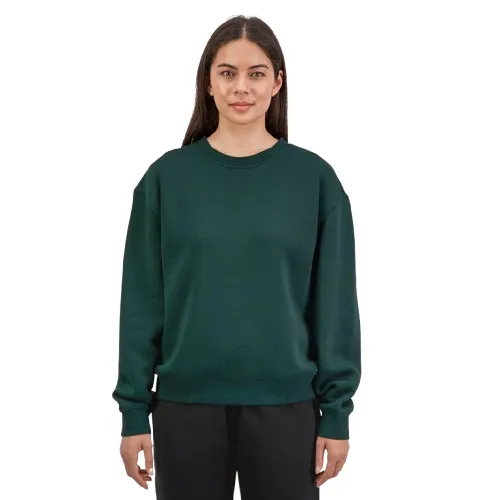

Why Do Businesses Use Branded Sweatshirts?
Branded apparel has become a more strategic business asset than many organisations realise. For Australian companies, schools, universities, clubs, events and not-for-profits, branded sweatshirts are no longer just warm layers with a logo. They can support workplace culture, brand consistency, staff engagement, event identity, client impressions and long-term visibility.
The best examples are not loud or gimmicky. They are practical, well-designed garments that people actually want to wear. A quality sweatshirt can move between the office, commute, campus, warehouse, trade show, café, community event or remote working environment. That versatility is why businesses continue to use them across uniforms, onboarding packs, promotional campaigns, teamwear and customer merchandise.
In 2026, the decision to invest in branded sweatshirts is also being shaped by broader workplace and apparel trends. Employees expect comfort. Procurement teams are asking more questions about quality and sustainability. Marketing teams want merchandise with measurable value. HR leaders are looking for ways to strengthen belonging across hybrid and distributed teams. A branded sweatshirt sits at the intersection of all these priorities.
Branded Sweatshirts Help Build a Stronger Sense of Team Identity
One of the clearest reasons businesses use branded sweatshirts is to create a shared team identity. This matters in customer-facing environments, but it is just as relevant for internal culture.
When people wear a consistent branded garment, it creates a sense of belonging. For staff, volunteers, students or event teams, a sweatshirt can signal that they are part of something organised, credible and unified. This is especially useful for businesses with multiple locations, casual staff, rotating teams or employees who split their time between office, site and home.
Practical example
A growing trade business with teams across Sydney, Newcastle and Wollongong may use branded sweatshirts as part of its staff uniform during cooler months. The garment helps field teams look consistent when arriving at client sites, while giving employees a comfortable item they are likely to wear regularly.
The same principle applies to universities, schools, gyms, hospitality groups, construction firms, medical practices, creative agencies, councils and community organisations. A simple branded sweatshirt can create visual unity without feeling overly formal.
They Support Brand Visibility Without Relying on Traditional Advertising
Branded sweatshirts create repeated brand exposure in everyday settings. Unlike a digital ad that disappears after a scroll, apparel continues to be seen whenever it is worn. This makes it valuable for businesses that rely on local visibility, referrals, community presence or face-to-face service.
A sweatshirt worn by an employee, student, volunteer or event participant can place the brand in real-world environments: cafés, public transport, trade shows, client meetings, campuses, shopping centres, sports facilities and community events.
This kind of exposure is subtle. It works best when the design is tasteful and wearable. People are more likely to wear a sweatshirt outside work when the branding feels modern, balanced and aligned with current apparel standards.
What makes visibility effective?
Brand visibility through apparel works when the garment has:
- A clear but not oversized logo
- A colour palette aligned with the brand
- Good fit and fabric quality
- Decoration that suits the garment style
- A design that looks appropriate beyond the workplace
A sweatshirt that looks like a generic giveaway may be worn once. A sweatshirt that feels like a quality retail-inspired garment may be worn for years.
Sweatshirts Are Practical for Australian Workplaces and Weather
Australia’s climate varies significantly by region and season. Many businesses need apparel that works across cool mornings, air-conditioned offices, outdoor events, early starts, warehouse environments and unpredictable weather.
Sweatshirts are popular because they provide warmth without the structure of a jacket. They are easy to layer, easy to distribute, and suitable for many industries. For teams that do not need heavy-duty winter uniforms, a branded sweatshirt can be a practical middle layer.
Common use cases in Australia
Businesses often use branded sweatshirts for:
- Staff uniforms during autumn and winter
- Casual Friday or relaxed office apparel
- Outdoor event teams
- University and school merchandise
- Hospitality and café teams
- Trade and construction support staff
- Fitness, wellness and sports organisations
- Conference and expo teams
- Volunteer groups
- Product launches and internal campaigns
For businesses planning local apparel programs, this is where working with an experienced supplier such as Garment Printing can help. Decisions around fabric weight, fit, print method and logo placement can affect whether the finished garment feels professional, comfortable and suitable for the intended environment. For teams considering custom sweatshirt printing in Sydney, it is worth planning the garment around both brand presentation and how people will actually wear it.
They Improve Employee Engagement and Belonging
Employee engagement is not created by apparel alone, but branded clothing can contribute to a broader culture strategy. When done well, it can make people feel included, recognised and connected to the organisation.
This is particularly relevant in 2026 as many workplaces continue to manage hybrid teams, flexible schedules and changing employee expectations. A branded sweatshirt can act as a physical reminder of belonging, especially for employees who are not always in the same office.
Onboarding and internal culture
Many organisations now include branded apparel in onboarding packs. A sweatshirt can make a new employee feel welcomed and part of the team from day one. It can also reduce the uncertainty of “what should I wear?” in more casual or mixed work environments.
For internal campaigns, branded sweatshirts can also support:
- Team milestones
- Company retreats
- Leadership offsites
- Sales kick-offs
- Product launches
- Charity initiatives
- Safety campaigns
- End-of-year recognition
The key is to avoid treating apparel as a token item. It should feel considered, useful and aligned with the organisation’s culture.
Branded Sweatshirts Create a More Consistent Customer Experience
For customer-facing teams, appearance plays a role in trust. Staff do not need to look overly formal, but they do need to look identifiable and professional.
A branded sweatshirt can help customers quickly recognise employees in a retail store, café, event, showroom, gym, school, service centre or trade environment. This improves the customer experience because people know who to approach for help.
Why consistency matters
Brand consistency supports:
- Professional presentation
- Easier staff identification
- Stronger customer trust
- Better event coordination
- A more polished workplace environment
- Reduced variation in staff dress standards
For businesses with seasonal teams or casual staff, branded apparel can also simplify dress expectations. Rather than relying on every employee to interpret a dress code, the business provides a practical garment that aligns with the brand.
They Are Useful for Events, Conferences and Campaigns
Events remain one of the strongest use cases for branded sweatshirts. Event organisers need apparel that is practical, recognisable and suitable for long days. Sweatshirts work especially well for outdoor activations, winter events, university open days, charity events, markets, festivals and conferences.
A sweatshirt can be used for staff, volunteers, speakers, sponsors or attendees. It can also become a keepsake that extends the event’s visibility after the day is over.
Event examples
A university may create branded sweatshirts for orientation week so student ambassadors are easy to identify.
A charity may provide sweatshirts to volunteers at an outdoor fundraising walk.
A technology company may design limited-edition sweatshirts for an annual conference or product launch.
A school may offer branded sweatshirts to students, parents and staff as part of a community campaign.
The best event sweatshirts are designed with longevity in mind. If the design is too date-heavy or too campaign-specific, people may stop wearing it after the event. A more timeless design can continue building brand visibility well beyond the original occasion.
They Can Strengthen Employer Branding
Employer branding is how current and potential employees perceive an organisation as a place to work. Branded sweatshirts can play a small but visible role in that perception.
For industries competing for talent, team apparel can communicate culture. A modern, well-made sweatshirt can suggest that the organisation is organised, proud of its identity and willing to invest in its people.
This is relevant for:
- Startups and scaleups
- Agencies and creative studios
- Hospitality groups
- Construction and trade businesses
- Universities and training organisations
- Health, wellness and fitness businesses
- Professional services firms with relaxed dress codes
- Not-for-profits and community organisations
In recruitment content, social media posts and careers pages, branded apparel can also create a more cohesive visual identity. It helps show real people, real teams and a recognisable workplace culture.
Quality Matters More Than Quantity in 2026
One of the biggest apparel and merchandise shifts in 2026 is the move away from cheap, disposable promotional products. Businesses are becoming more selective. They want fewer items, but better ones.
This matters for branded sweatshirts because the garment’s quality directly affects brand perception. A poorly fitting sweatshirt with a rough print or low-quality fabric can make a brand feel careless. A comfortable, durable sweatshirt can create the opposite effect.
What to assess before ordering
Procurement and marketing teams should consider:
- Fabric weight and warmth
- Cotton, polyester or blended composition
- Fit options for different body types
- Size range and inclusivity
- Colour availability
- Print or embroidery suitability
- Wash durability
- Minimum order quantities
- Lead times
- Packaging and distribution needs
- Reorder availability
The cheapest option is not always the best value. If a garment is uncomfortable or loses shape quickly, it may not be worn. If it is not worn, it does not deliver brand exposure, staff value or cultural impact.
Sustainability Is Becoming a Procurement Priority
Sustainability has become a more important factor in branded apparel decisions. Australian businesses are increasingly conscious of waste, product lifespan, ethical sourcing and responsible procurement.
For sweatshirts, sustainability is not just about choosing a garment labelled “eco”. It is about making better decisions across the whole lifecycle.
More sustainable apparel decisions include:
- Choosing durable garments that last longer
- Avoiding over-ordering
- Selecting timeless designs that will not date quickly
- Considering recycled or responsibly sourced materials where available
- Using decoration methods suited to long-term wear
- Planning accurate sizing to reduce unused stock
- Reordering strategically rather than producing excess inventory
- Working with suppliers who can explain garment and decoration options clearly
A sustainable apparel program is usually a practical one. The most responsible sweatshirt is often the one people wear repeatedly, wash easily and keep for a long time.
Decoration Method Affects the Final Result
The way a logo or design is applied to a sweatshirt has a major impact on the final appearance, feel and durability.
Common decoration methods include screen printing, embroidery, digital transfer and direct-to-garment printing. Each has strengths depending on the artwork, quantity, garment material and intended use.
Screen printing
Screen printing is often suitable for larger runs and bold designs. It can create strong, durable results when the artwork and garment are compatible.
Embroidery
Embroidery creates a premium, textured finish and is often used for logos on the chest or sleeve. It works well for corporate apparel but may not suit highly detailed artwork.
Digital transfer
Digital transfer can be useful for multi-colour designs, smaller runs or detailed graphics. Quality depends on the transfer type, application process and garment compatibility.
Direct-to-garment printing
Direct-to-garment printing can work for detailed or full-colour designs, particularly on suitable cotton-rich garments. It is often used for smaller batches or more complex artwork.
A professional supplier will recommend the method based on the outcome required, not just the easiest production route.
Design Should Be Wearable, Not Just Branded
A common mistake is treating a sweatshirt as a blank advertising space. Good branded apparel design considers how people dress, what they feel comfortable wearing and where the garment will be used.
In 2026, branded apparel is increasingly influenced by retail fashion. Employees and customers expect better fits, softer fabrics, modern colours and less intrusive branding. Oversized logos still have a place for sports, events and youth-focused merchandise, but many business applications benefit from a more refined approach.
Design recommendations
For a more wearable branded sweatshirt:
- Keep the main logo placement clean
- Consider small chest logos, sleeve details or back prints
- Use brand colours carefully rather than forcing exact matches
- Choose neutral or versatile base colours
- Avoid cluttered artwork
- Test how the design looks across different sizes
- Consider unisex and fit-specific options
- Think about whether people would wear it outside work
A design that feels wearable will usually deliver better long-term results than one that tries to say everything at once.
Branded Sweatshirts Can Support School, University and Community Identity
Schools, universities, colleges and community groups often use branded sweatshirts because they combine identity, practicality and belonging.
For students, a sweatshirt can represent a year level, faculty, club, sports team, graduation group or campus community. For schools, it can support consistency while still offering a comfortable garment students value. For universities, it can become part of student experience and alumni connection.
Common education uses
Branded sweatshirts are often used for:
- Senior school apparel
- University societies
- Faculty merchandise
- Orientation week
- Sports teams
- Camps and excursions
- Graduation merchandise
- Alumni programs
- Fundraising campaigns
The design approach may differ from corporate apparel. Education and community apparel can often be more expressive, with bolder graphics, names, mascots or year-specific designs.
They Are Valuable for Customer and Client Merchandise
Some businesses use branded sweatshirts as customer merchandise rather than staff apparel. This works best when the brand has a strong community, lifestyle connection or loyal customer base.
Examples include gyms, cafés, breweries, tourism operators, events, creative brands, local retailers, music organisations and sports clubs. In these contexts, the sweatshirt becomes more than a promotional item. It becomes a product people choose to wear because they identify with the brand.
For B2B companies, branded sweatshirts can also be used as client gifts, partner merchandise or campaign assets. However, quality and relevance are essential. A generic garment sent without context may not create much impact. A thoughtfully designed sweatshirt tied to a milestone, event or relationship can feel far more meaningful.
How Businesses Should Decide Whether Branded Sweatshirts Are Worth It
Branded sweatshirts are useful, but they are not automatically the right choice for every business. The decision should be based on purpose, audience and expected use.
Ask these questions before ordering
- Who will wear the sweatshirt?
- Where will they wear it?
- Is it for staff, customers, students, volunteers or event attendees?
- Does the design need to feel corporate, casual, premium or community-focused?
- How often is the garment likely to be worn?
- What climate or working conditions does it need to suit?
- Is durability more important than low upfront cost?
- How will sizing be collected?
- Will the design still feel relevant in 12 to 24 months?
- What result are we expecting: visibility, unity, recognition, retention, sales or event impact?
Clear answers will lead to better decisions about garment style, decoration method, budget and quantity.
Actionable Takeaways for Australian Businesses
Branded sweatshirts work best when they are planned as part of a broader brand, culture or uniform strategy. Before placing an order, businesses should:
- Define the purpose of the garment
- Choose quality over unnecessary quantity
- Prioritise comfort and fit
- Keep the design wearable
- Consider sustainability and long-term use
- Match decoration method to the artwork and garment
- Plan sizing carefully
- Allow enough time for production and delivery
- Think beyond the logo and focus on the wearer experience
The most successful branded sweatshirts are not just printed garments. They are useful brand assets that people are happy to wear.
FAQ Section
Why do companies give employees branded sweatshirts?
Companies give employees branded sweatshirts to support team identity, workplace culture, brand consistency and practical comfort. They are especially useful for onboarding, hybrid teams, seasonal uniforms, events and internal campaigns.
Are branded sweatshirts good for marketing?
Yes, branded sweatshirts can support marketing by creating repeated real-world brand visibility. Their effectiveness depends on whether people actually wear them. Quality, fit and design are critical to long-term marketing value.
What type of businesses use branded sweatshirts?
Many organisations use branded sweatshirts, including trade businesses, schools, universities, hospitality groups, gyms, retail teams, technology companies, agencies, construction firms, councils, charities and event organisers.
What is the best logo placement on a sweatshirt?
The best placement depends on the purpose. A small left-chest logo is common for professional uniforms, while larger back prints or front graphics may suit events, schools, merchandise and community apparel. Sleeve branding can also add a subtle premium detail.
Are embroidered or printed sweatshirts better?
Neither is always better. Embroidery can feel more premium and works well for simple logos. Printing is often better for larger, bolder or more detailed designs. The right method depends on the artwork, garment fabric, quantity and intended use.
How can businesses make branded sweatshirts more sustainable?
Businesses can improve sustainability by choosing durable garments, avoiding over-ordering, using timeless designs, planning accurate sizing, considering responsible material options and selecting decoration methods that last through regular washing.
Conclusion
Businesses use branded sweatshirts because they combine practicality, identity and visibility in one garment. For Australian organisations, they can support staff engagement, customer trust, event recognition, employer branding and long-term brand awareness.
The strongest results come from treating sweatshirts as strategic apparel, not disposable merchandise. That means choosing garments people want to wear, designing with restraint, considering sustainability, and aligning every decision with the organisation’s purpose.
A well-made branded sweatshirt can do more than keep people warm. It can help teams feel connected, make brands more recognisable, and create a professional impression that lasts well beyond a single campaign or event.

























Sign in to leave a comment.