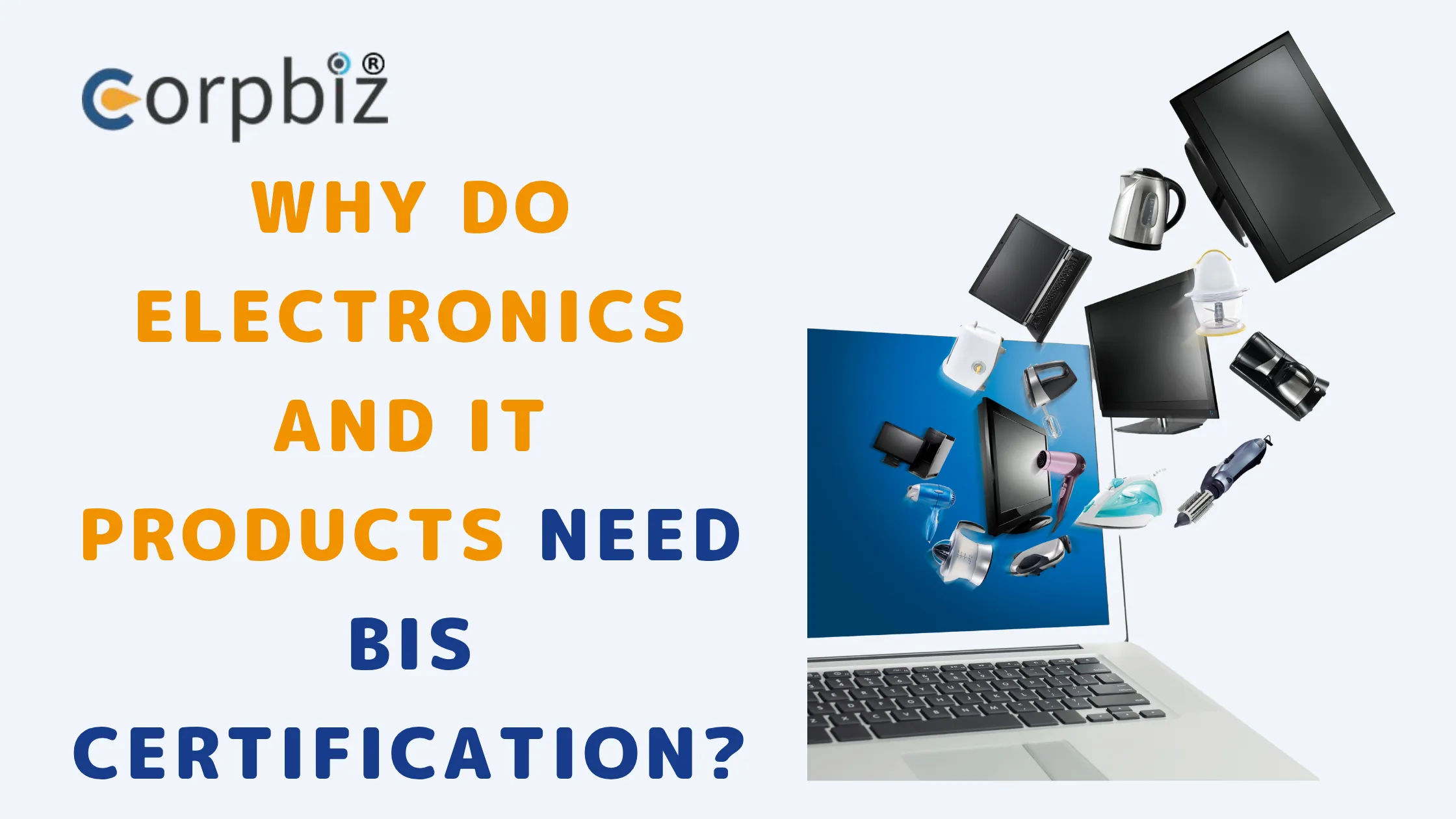

In today’s digital world, electronics and IT products are everywhere—smartphones, laptops, chargers, LED lights, routers, power banks, and even smart home devices. These products make our lives easier, faster, and more connected. But have you ever wondered how the government ensures that these products are safe to use?
This is where BIS Certification comes into the picture.
In India, the Bureau of Indian Standards (BIS) plays a crucial role in making sure that products meet quality and safety standards before they reach consumers. Whether it’s a mobile charger or a laptop, certification ensures that the product is reliable, safe, and compliant with Indian laws.
In this blog, we will explore why electronics and IT products need BIS certification, how it works, and why it matters for manufacturers, importers, and consumers.
What is BIS Certification?
BIS (Bureau of Indian Standards) is the national standards body of India. It sets quality benchmarks for various products and ensures that manufacturers follow them.
BIS certification is a process through which products are tested and verified to meet Indian safety and quality standards. Once approved, the product gets a certification mark, such as the ISI mark or registration under the Compulsory Registration Scheme (CRS).
Today, businesses can easily apply for BIS Certification Online, making the process more efficient and accessible.
What is BIS CRS Registration?
For electronics and IT products, the most common certification system is the Compulsory Registration Scheme (CRS).
Under this scheme, manufacturers must get their products tested in BIS-approved labs and register them before selling in India.
This process is often referred to as BIS CRS registration Online, which allows manufacturers (especially foreign companies) to apply digitally without complicated paperwork.
Products covered under CRS include:
- Mobile phones
- Laptops and tablets
- LED lights
- Power adapters and chargers
- Smart watches
- Bluetooth devices
- USB devices
Why Do Electronics and IT Products Need BIS Certification?
Let’s understand the key reasons in simple words.
1. Ensures Consumer Safety
Electronics products deal with electricity, which can be dangerous if not handled properly.
Poor-quality products can cause:
- Electric shocks
- Short circuits
- Fires
- Explosions (especially batteries)
BIS certification ensures that the product has passed safety tests and is safe for everyday use.
2. Maintains Product Quality
Not all products in the market are made with the same quality standards.
Without regulation, manufacturers may use:
- Low-grade materials
- Unsafe components
- Faulty designs
BIS certification ensures that the product meets minimum quality standards, so consumers get reliable products.
3. Mandatory Legal Requirement
In India, many electronics and IT products cannot be sold without BIS certification.
The government has made it mandatory under the CRS scheme.
If a company tries to sell products without certification, it may face:
- Heavy penalties
- Product bans
- Legal action
This is why businesses must complete BIS Certification Online before launching their products.
4. Builds Consumer Trust
When customers see a BIS mark on a product, they feel more confident.
It assures them that:
- The product is tested
- It meets safety standards
- It is approved by a government authority
This trust directly impacts sales and brand reputation.
5. Helps in Import and Export
For importers, BIS certification is essential.
Without certification:
- Products can be stopped at customs
- Shipments may be rejected
- Business losses can occur
Similarly, for exporters, having BIS certification improves credibility in international markets.
6. Reduces Risk of Product Failures
Electronic devices that are not tested properly may fail quickly.
Common issues include:
- Overheating
- Battery damage
- Circuit failures
BIS-certified products go through strict testing, reducing the chances of such problems.
7. Promotes Standardization
BIS ensures that products follow uniform standards across the country.
This helps in:
- Compatibility between devices
- Consistent performance
- Easy maintenance and repair
Types of BIS Certification for Electronics & IT Products
Depending on the product and manufacturer, different types of BIS certification apply.
1. BIS CRS Registration Online
This is the most common certification for electronics and IT products.
- Applicable for both Indian and foreign manufacturers
- Product testing in BIS-approved labs
- Registration required before selling in India
2. ISI Certification Online
ISI mark is generally used for industrial and consumer products.
However, some electronic items also require ISI Certification Online if they fall under mandatory Indian Standards.
The ISI mark indicates:
- High quality
- Compliance with Indian standards
- Safety assurance
3. FMCS BIS Certification Online
Foreign manufacturers who want to sell products in India must apply under the Foreign Manufacturers Certification Scheme (FMCS).
Through FMCS BIS Certification Online, foreign companies can:
- Get BIS approval
- Appoint an Indian representative
- Sell products legally in India
4. BIS Certification for Toys (Special Mention)
Even though toys are not electronics in all cases, many modern toys include electronic components.
That’s why BIS Certification for Toys is also mandatory.
It ensures:
- Non-toxic materials
- Safe electrical components
- Child-friendly design
Products Covered Under BIS Certification
The government has notified several electronics and IT products under mandatory BIS certification.
Some major categories include:
- Mobile phones and smartphones
- Laptops and notebooks
- Tablets
- LED lighting products
- Power banks
- Chargers and adapters
- Smart wearable devices
- Set-top boxes
- USB drives
- Wireless keyboards and mice
The list is continuously updated, so businesses must stay informed.
Process of BIS Certification Online (Simple Overview)
Here’s a simplified version of the process:
- Product Testing
The product is tested in a BIS-recognized laboratory. - Documentation
Required documents such as test reports, business details, and manufacturing information are prepared. - Online Application
Submit the application through the BIS portal. - Verification
BIS reviews the application and documents. - Certification Approval
Once approved, the product gets a registration number. - Marking & Sale
The manufacturer can now sell the product with the BIS mark.
Challenges Without BIS Certification
If a company ignores BIS requirements, it may face:
- Legal penalties
- Product seizure
- Customs rejection
- Damage to brand reputation
- Loss of customer trust
In short, operating without certification is risky and not sustainable.
Benefits of BIS Certification for Businesses
Let’s look at the advantages from a business perspective:
✔ Easy Market Entry
Certification allows smooth entry into the Indian market.
✔ Competitive Advantage
Certified products are preferred over non-certified ones.
✔ Brand Value
Improves credibility and trust among customers.
✔ Regulatory Compliance
Avoids legal issues and penalties.
✔ Business Growth
Opens doors to partnerships and larger markets.
Why Choose Professional Help?
Although the process is online, it can still be complex due to:
- Technical documentation
- Product testing requirements
- Regulatory updates
Taking professional help ensures:
- Faster approval
- Error-free documentation
- Hassle-free process
About Corpbiz
Corpbiz is a leading consultancy firm that provides expert assistance in regulatory compliance and business registrations.
We help businesses with:
- BIS Certification Online
- BIS CRS registration Online
- FMCS BIS Certification Online
- ISI Certification Online
- BIS Certification for Toys
With a team of experienced professionals, Corpbiz ensures a smooth and quick certification process so that you can focus on growing your business.
FAQs
1. Is BIS certification mandatory for all electronics products?
No, but many electronics and IT products are covered under mandatory BIS certification. You must check if your product falls under the CRS list.
2. Can I apply for BIS Certification Online?
Yes, the entire process can be done through the official BIS portal. Many businesses prefer professional assistance for faster approval.
3. What is the difference between CRS and ISI certification?
CRS is mainly for electronics and IT products, while ISI certification applies to a broader range of products, including industrial goods.
4. How long does BIS certification take?
It usually takes 4–8 weeks, depending on product testing and documentation.
5. Can foreign companies apply for BIS certification?
Yes, through FMCS BIS Certification Online, foreign manufacturers can register their products in India.
6. What happens if I sell products without BIS certification?
You may face penalties, product bans, and legal action from authorities.
7. Is BIS Certification required for toys?
Yes, BIS Certification for Toys is mandatory in India to ensure safety and quality standards.
Final Thoughts
BIS certification is not just a legal requirement—it is a mark of safety, quality, and trust.
For electronics and IT products, where risks are high and consumer expectations are even higher, certification becomes essential. It protects users, builds brand reputation, and ensures that only safe and reliable products reach the market.
If you are planning to manufacture or import electronics in India, getting BIS Certification Online should be your top priority.
It’s not just about compliance—it’s about responsibility.
Author Profile
Atul Shukla
Compliance Expert at Corpbiz
Atul Shukla is a regulatory compliance specialist with years of experience in certification and licensing services. He has helped numerous businesses successfully obtain BIS certification and expand their presence in the Indian market. His expertise lies in simplifying complex legal processes into easy-to-understand guidance for entrepreneurs and manufacturers.






















Sign in to leave a comment.