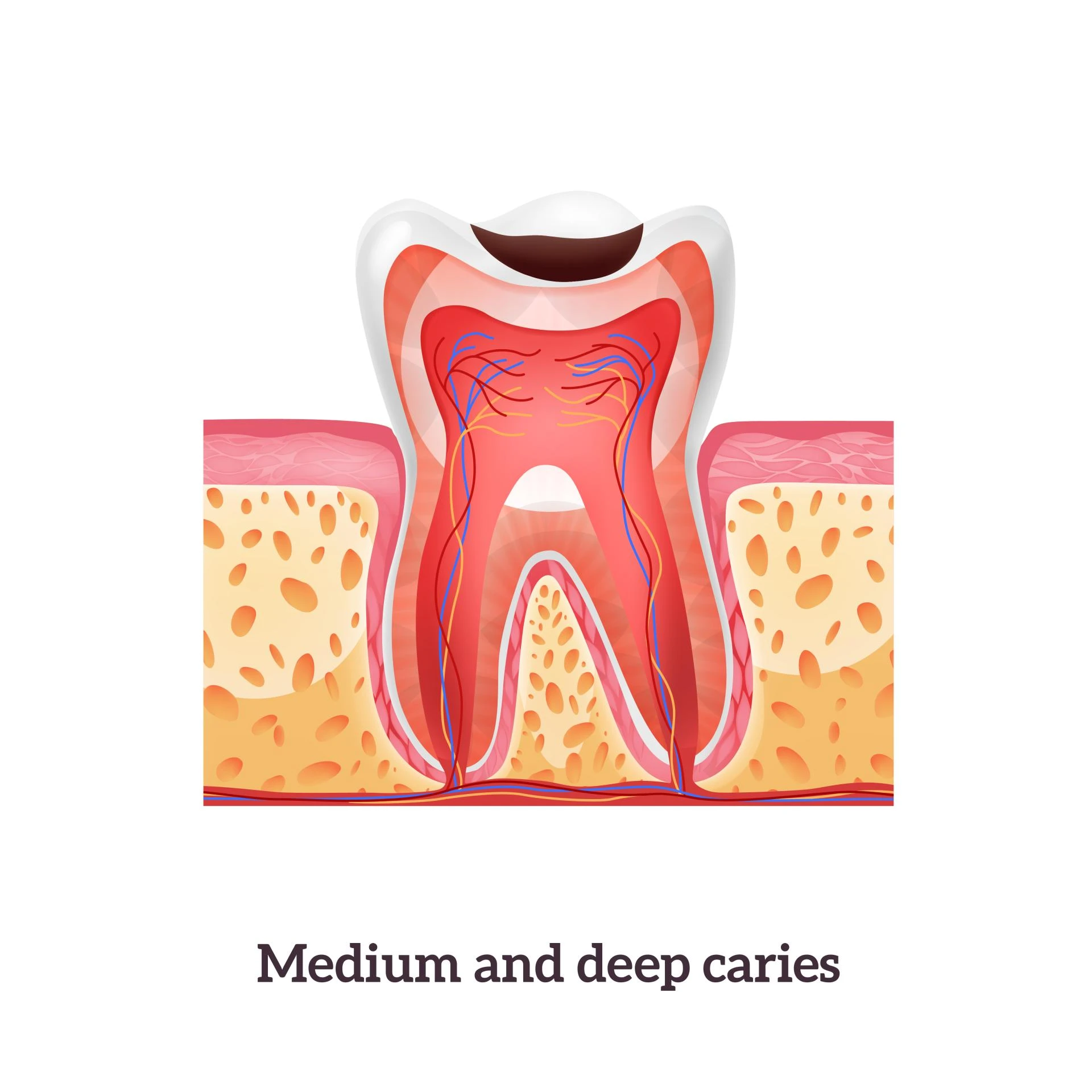

A root canal is a common dental procedure that helps save a severely damaged or infected tooth. Many people need a root canal due to deep decay, repeated dental procedures, cracks, or trauma that expose the inner pulp of the tooth to bacteria.
Common Reasons for Root Canal Treatment
- Tooth Decay: When cavities are left untreated, bacteria penetrate deep into the tooth, reaching the pulp and causing severe pain or infection. A root canal removes the infected tissue, preventing further damage.
- Infection or Abscess: Bacterial infections inside the tooth can lead to painful abscesses, swelling, and even bone loss. Root canal therapy clears out the infection and seals the tooth to prevent reinfection.
- Cracked or Chipped Teeth: Trauma, accidents, or biting down on hard objects can cause cracks, allowing bacteria to enter and infect the pulp. A root canal helps save the tooth and prevent extraction.
- Repeated Dental Work: Teeth that have undergone multiple procedures, such as fillings or crowns, may weaken over time. This increases the risk of infection and often necessitates a root canal.
Why Root Canals Are Important
A root canal not only relieves pain but also preserves your natural tooth, preventing the need for extraction and costly replacements like implants or bridges. It restores function, allowing you to chew and speak comfortably.
If you’re experiencing severe tooth pain, sensitivity, or swelling, consult a dentist immediately. Root canal therapy can save your tooth and protect your overall oral health.



























Sign in to leave a comment.