
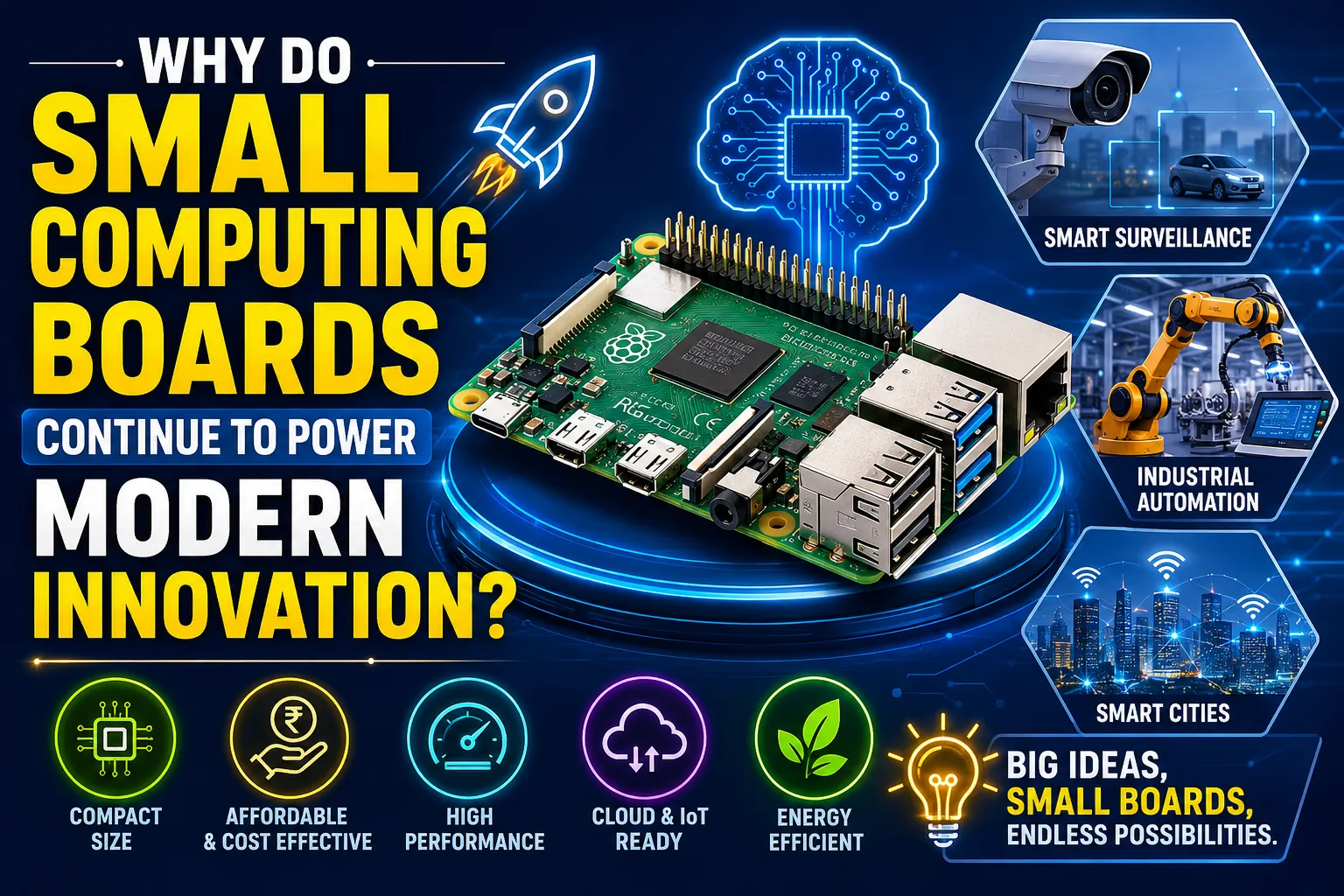
Technology has become smaller, smarter, and more efficient than ever before. From smart homes and industrial automation to robotics and artificial intelligence, compact computing boards have transformed how developers, businesses, and innovators build intelligent solutions. Their affordability, flexibility, and ability to connect with sensors and cloud platforms have made them an essential part of modern technological advancement.
One of the biggest reasons behind this growing popularity is the increasing adoption of why is raspberry pi used for iot devices? across education, startups, manufacturing, healthcare, agriculture, and home automation. These compact computers provide an ideal platform for rapid development, making advanced technology accessible to students, engineers, hobbyists, and enterprises alike without requiring massive infrastructure investments.
The Rise of Compact Computing in a Connected World
Modern businesses demand technology that is scalable, energy-efficient, and easy to deploy. Small computing boards meet these expectations by offering impressive processing power within a compact form factor. Whether someone is creating a weather monitoring station, an automated irrigation system, or an AI-powered security camera, these boards provide reliable performance while consuming minimal power.
As digital transformation accelerates worldwide, organizations increasingly rely on embedded computing solutions to build connected products that communicate with cloud services, collect real-time data, and automate complex operations.
Affordable Innovation for Every Creator
One of the strongest advantages of small computing boards is affordability. Traditional computing systems often require expensive hardware and higher maintenance costs. Compact boards significantly reduce development expenses while still supporting programming languages, operating systems, networking capabilities, and numerous hardware interfaces.
This affordability encourages experimentation among students, startups, research institutions, and independent developers. Instead of investing heavily before validating an idea, innovators can quickly build prototypes, test concepts, and refine products before commercial deployment.
Accelerating Internet of Things Development
The Internet of Things continues to reshape industries by connecting billions of devices worldwide. Small computing boards serve as intelligent controllers capable of collecting sensor data, processing information locally, and transmitting results securely to cloud platforms.
Developers appreciate their compatibility with cameras, temperature sensors, GPS modules, wireless communication technologies, and machine learning frameworks. These features make them ideal for smart farming, industrial monitoring, predictive maintenance, environmental sensing, and intelligent transportation systems.
Businesses also benefit from faster deployment cycles because developers can integrate hardware and software using widely available libraries and open-source communities.
Supporting Artificial Intelligence at the Edge
Artificial Intelligence is no longer limited to large data centers. Edge computing allows AI models to process information closer to where data is generated, reducing latency and improving privacy.
Modern compact computing boards now support lightweight neural networks capable of recognizing images, detecting objects, processing voice commands, and analyzing sensor data in real time. This enables applications like facial recognition, quality inspection, smart surveillance, and automated manufacturing without constantly depending on cloud connectivity.
As AI hardware accelerators become more accessible, these boards continue expanding their capabilities across numerous industries.
Driving Innovation Across Critical Industries
Small computing boards are helping reshape industries beyond consumer electronics. Energy companies, research organizations, and engineering firms increasingly deploy embedded systems for remote monitoring, automation, and predictive maintenance.
For example, projects related to deep offshore technology energy often depend on reliable embedded computing for monitoring equipment, collecting operational data, and supporting autonomous systems operating in challenging offshore environments. Compact hardware enables continuous monitoring while minimizing energy consumption and reducing maintenance requirements in difficult locations.
These same technologies also contribute to renewable energy management, oil and gas infrastructure, environmental monitoring, and industrial safety.
Powering Smart Cities and Intelligent Infrastructure
Urban environments are becoming increasingly connected through intelligent traffic systems, environmental sensors, smart lighting, parking management, and public safety networks.
Small computing boards act as local processing units that gather information from multiple sensors before transmitting meaningful insights to centralized platforms. Their compact size allows deployment in locations where traditional computers would be impractical.
Municipal authorities benefit from reduced operational costs while improving traffic flow, energy efficiency, waste management, and emergency response capabilities.
Transforming Education and Skill Development
Educational institutions around the world increasingly use compact computing platforms to teach programming, robotics, electronics, cybersecurity, networking, and artificial intelligence.
Students gain valuable hands-on experience instead of learning only theoretical concepts. Building real projects improves problem-solving skills while preparing learners for careers in software engineering, embedded systems, industrial automation, and IoT development.
In India, engineering colleges, technical institutes, and innovation labs have embraced these affordable platforms to encourage practical learning and entrepreneurship among students.
Enhancing Security and Smart Surveillance
Security technology has evolved significantly with advances in embedded computing and computer vision. Small computing boards now power intelligent surveillance systems capable of detecting unusual activities, recognizing objects, and sending instant alerts.
Applications such as camera to detect motion on vehicle demonstrate how compact computing platforms support modern transportation safety, fleet monitoring, parking security, and accident prevention. By processing visual information locally, these systems respond more quickly while reducing bandwidth requirements for cloud communication.
As transportation becomes increasingly autonomous and connected, embedded vision systems will continue playing an important role in improving road safety and operational efficiency.
Why Small Computing Boards Will Continue Leading Innovation
Technology trends consistently move toward greater efficiency, intelligence, and connectivity. Small computing boards align perfectly with these objectives by delivering powerful computing capabilities within compact, affordable hardware.
Their compatibility with artificial intelligence, cloud computing, edge processing, wireless communication, robotics, industrial automation, and Internet of Things ecosystems ensures they remain highly relevant across future technological developments.
As industries continue embracing digital transformation, organizations will increasingly depend on flexible embedded platforms that support rapid innovation while keeping deployment costs under control.
Conclusion
Small computing boards have become far more than educational tools or hobbyist devices. They now serve as the foundation for countless innovations across healthcare, agriculture, manufacturing, transportation, energy, education, security, and smart cities. Their balance of affordability, performance, scalability, and versatility makes them one of the most valuable technologies driving modern digital transformation.
As connected devices become smarter and businesses continue adopting automation, these compact platforms will remain at the heart of innovation. Whether powering AI applications, enabling IoT ecosystems, or supporting industrial automation, small computing boards are shaping a future where intelligent technology becomes more accessible, efficient, and impactful for organizations and individuals alike.























Sign in to leave a comment.