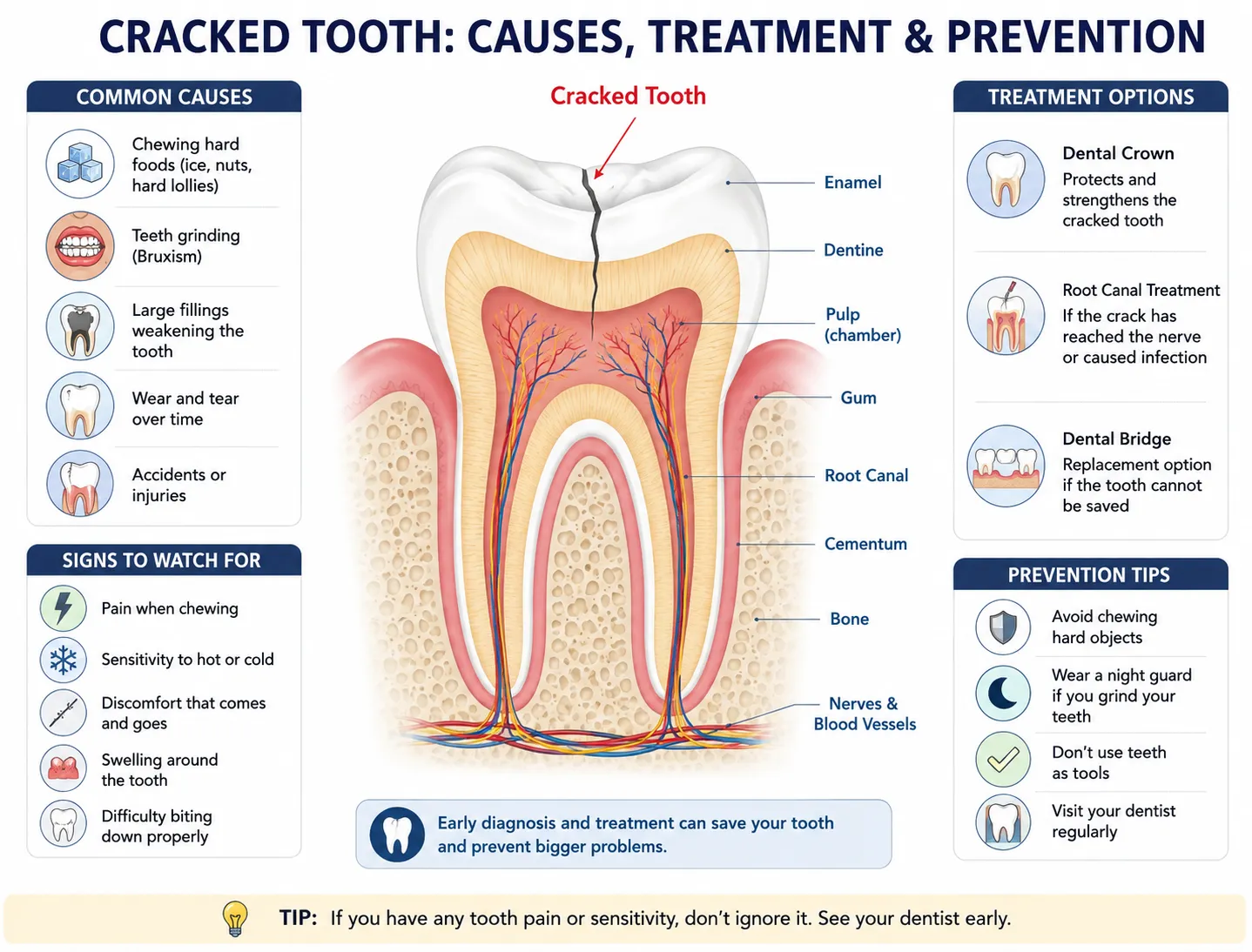

Most people do not really think about their teeth cracking until it actually happens to them. One day you are eating something normal and suddenly there is a sharp feeling when you bite down. Sometimes it is obvious straight away. Other times, the crack is small and you only notice random sensitivity here and there.
The strange thing is, teeth are strong. Really strong. But they are also under pressure every single day, so over time, little problems can start to build up.
Cracks Do Not Always Happen from Big Accidents
A lot of people assume a cracked tooth only happens after an injury or something serious. That can happen, of course, but honestly, everyday habits are usually the bigger reason.
Chewing ice is a common one. Same with hard lollies, popcorn kernels, or biting pens. Some people even use their teeth to open packaging without thinking twice about it.
Then there is grinding. This causes more damage than most people realise. You might sleep through it every night and not even know it is happening. But over time, all that pressure slowly weakens the tooth.
And sometimes, it is just wear and tear. Teeth go through years of chewing, pressure, hot drinks, cold drinks… eventually small stress lines can appear.
The Signs Can Be Easy to Miss
This is why cracked teeth are annoying. The symptoms are not always consistent.
You may feel:
- Pain when chewing on one side
- Sensitivity to cold drinks
- A sharp feeling that comes and goes
- Discomfort while biting certain foods
Then suddenly the pain disappears again, which makes people think everything is fine.
Usually, it is not.
Why It Gets Worse if Ignored
A small crack does not always stay small.
Once the outer layer weakens, bacteria can enter deeper into the tooth. That can lead to infection, swelling, or stronger pain later on.
And honestly, this is where many people regret waiting too long. What could have been handled with a simple fix sometimes turns into a much bigger procedure.
How Dentists Usually Fix Cracked Teeth
The treatment depends on how bad the crack is.
If it is minor, the tooth might just need smoothing or bonding. But when the tooth has weakened more seriously, a dental crown is often the better option.
Crowns basically cover and protect the damaged tooth so it can function normally again. They are especially helpful when the crack affects a larger part of the tooth.
If the crack reaches the nerve, root canal treatment may also be needed before restoring the tooth.
And in situations where the tooth cannot be saved properly, replacement options like a dental bridge may be discussed instead.
Prevention Is Easier Than Treatment
This is the part people usually ignore until after the problem happens.
Simple habits actually make a difference:
- Avoid chewing hard objects
- Do not use your teeth as tools
- Wear a night guard if you grind your teeth
- Keep up with regular dental visits
A lot of dentists greensborough clinics check for early signs of cracks during routine appointments, especially in patients who grind or clench their teeth.
Teeth Grinding Is More Common Than You Think
This deserves its own mention because many people do not realise they grind at all.
Some wake up with jaw tightness or headaches. Others only find out when their dentist notices worn teeth.
Grinding puts constant stress on enamel, and over time, that pressure can create tiny fractures that slowly become bigger.
Final Thoughts
Teeth can crack for all sorts of reasons, and sometimes it happens gradually without obvious symptoms. That is why small signs should not be ignored, even if the pain comes and goes.
The good thing is that early treatment usually prevents things from becoming more serious. Whether it is protecting the tooth with a crown or catching the issue before it spreads, acting early almost always makes things easier later on.



























Sign in to leave a comment.