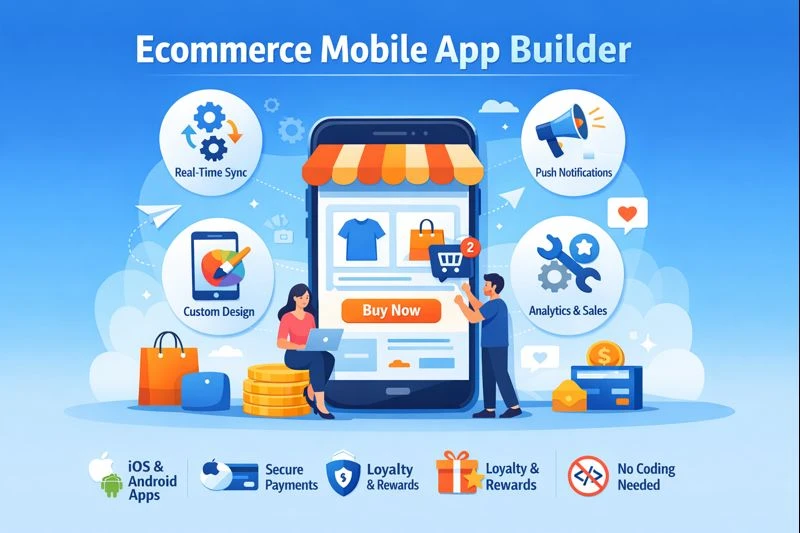

Ecommerce is no longer limited to websites. Users now prefer mobile apps for shopping. They are faster, easier, and more engaging. This shift has made ecommerce app development a key part of business growth.
If your goal is to increase sales and customer retention, a mobile app can help. It creates a direct connection with users. It also improves the overall shopping experience.
The Real Impact of Mobile Apps on Ecommerce
Many businesses still rely only on websites. This limits their growth. Mobile apps offer a stronger advantage.
Apps keep users logged in. They reduce steps in the buying process. They also allow instant communication through notifications.
This is why ecommerce mobile app development leads to better conversions. It removes friction and makes shopping simple.
What Makes an Ecommerce App Perform Well
Not every app succeeds. The difference comes from how the app is designed and built.
Fast Product Search
Users should find products quickly. Smart filters and search improve usability.
Easy Checkout Process
A long checkout flow leads to drop-offs. Keep it short and simple.
Personalized Experience
Show users what they like. Use behavior-based recommendations.
Relevant Push Notifications
Send updates based on user actions. Avoid random alerts.
High-Speed Performance
Slow apps lose users. Speed directly affects retention.
Key Trends in Ecommerce App Development
To stay competitive, businesses must follow current trends. These trends shape how users interact with apps.
AI-Powered Recommendations
Apps now suggest products based on user behavior. This increases sales.
Voice Search Integration
Users prefer voice over typing. It saves time and improves accessibility.
Augmented Reality (AR)
Users can view products in real space. This helps them make better decisions.
Headless Commerce
This approach separates frontend and backend. It offers more flexibility.
Multi-Service Apps
Apps are adding more features in one place. This improves user convenience.
Is Ecommerce App Development Worth the Cost?
This is a common question. The answer depends on your strategy.
The initial cost may seem high. But the long-term return is strong.
Apps increase repeat purchases. They improve customer loyalty. They also reduce marketing costs over time.
Unlike websites, apps build a direct user base. You do not need to rely only on ads.
Common Mistakes to Avoid
Many ecommerce apps fail due to poor planning. Here are some common issues:
- Copying competitors without strategy
- Complicated user interface
- No focus on user retention
- Heavy and slow app design
- Lack of performance tracking
Ecommerce app development is not just about coding. It is about solving user problems.
Choosing the Right Development Approach
Different businesses need different solutions.
For startups
Cross-platform apps are a good choice. They save time and cost.
For growing businesses
Scalable solutions work best. They support future expansion.
For large enterprises
Native apps with advanced architecture offer better control and performance.
Your choice should match your business goals.
Final Thoughts
Ecommerce app development is a growth tool. It helps businesses connect better with users. It also improves sales and engagement.
A successful ecommerce mobile app focuses on speed, simplicity, and user needs. If done right, it becomes a long-term asset.
In a competitive market, businesses that invest in mobile commerce are moving ahead faster.


























Sign in to leave a comment.