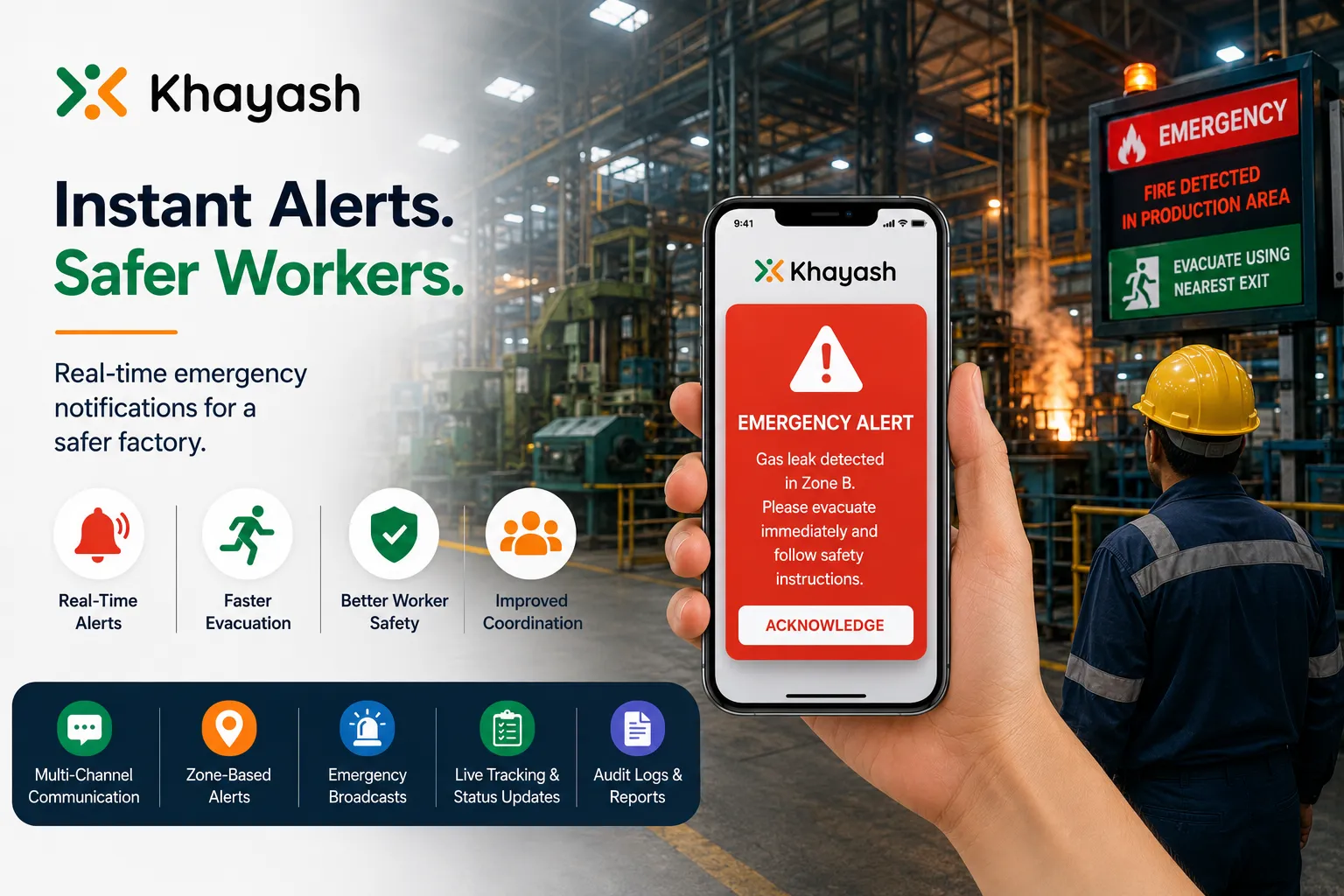

It is essential for any factory to operate with a high level of safety. An example of this would be heavy manufacturing plants where there will be large amounts of equipment, hazardous materials and chemicals as well as lots of open space that can easily become dangerous during an emergency situation.
In an emergency situation such as fire or gas leak, or equipment breakdowns, a delay in communication can increase the risk to workers and could put their lives in danger. In many cases, traditional forms of communication simply don't provide workers with timely and reliable information.
For these reasons, many factories are beginning to implement emergency notification systems (ENS) so that they have the means to improve the overall safety of workers and to be better prepared for an emergency, as well as being able to provide real-time communication.
Safety of Workers in Manufacturing Industry
The manufacturing industry is exposed to numerous hazards on a daily basis. Although significant work has been done to create a culture of safety within the manufacturing industry, there are still times when an emergency occurs.
Examples of emergencies in factories:
- Fire
- Chemical release
- Gas release
- Equipment Failure
- Electrical failures
- Worker injuries
- Unauthorized access
- Evacuations
Having an emergency notification system in place will allow factories to communicate immediately with workers, supervisors, emergency responders, and security personnel with critical alerts and instructions, immediately, during an emergency.
What Is An Emergency Notification System?
A centralized emergency notification system is a communications platform designed to provide real-time information on emergencies and urgent alerts.
Emergency notification systems deliver notifications through a variety of communications channels, such as:
- SMS notifications
- Mobile app push notifications
- Email notifications
- Audible speaker announcements
- Desktop notifications
- Mobile app alerts
Providing workers with critical information through this type of communication ensures that workers receive alerts as soon as feasibly possible, regardless of their location on-site.
How Emergency Notification Systems Help Improve Worker Safety In Factories
Real-Time Emergency Alerts
The ability to deliver instant alerts as soon as an emergency occurs is one of the greatest advantages of the use of an emergency notification system at the factory.
When an emergency occurs, the factory can immediately notify workers of the following events:
- Fires
- Hazardous gas leaks
- Evacuation orders
- Restricted area notifications
- Warnings of potential danger
- Equipment malfunctions
Through the distribution of real-time alerts, workers will be able to react faster and have less anxiety when dealing with critical situations.
Faster Emergency Response
Effective communication is critical for improving response times to emergency situations.
As a communication tool, the emergency notification system will enable the following outcomes:
- To quickly notify the safety team
- To alert the workers as to what risks exist
- To inform the emergency responders that there is an emergency
- To coordinate the workers' response to the evacuation of the factory
Utilizing emergency notification systems results in improved coordination between factory operations and ultimately results in reduced injuries in the workplace.
Improved Evacuation Management for Manufacturing Facilities
Large manufacturing operations feature many production zones, storage areas, and areas that are limited in access. When there is an emergency and workers need to evacuate the facility, managing those evacuations manually can become cumbersome.
Emergency notification systems provide manufacturers with:
- Instructions for evacuating the facility.
- Identifying assembly points.
- Routes for workers to exit the facility.
- Live updates during the emergency.
Using these features, organizations can enhance their capacity to prepare for emergencies and provide workers with safe workplaces.
Multi-Channel Communication
In a noisy industrial setting, there may be workers who do not hear alarms or other announcements made during an emergency.
Emergency notification systems solve the problem of notification by using multiple communication methods to notify workers of an emergency at the same time.
This increases the likelihood that workers will receive critical safety notifications sooner rather than later.
Reduction of Communication Delays
Traditional emergency communications have relied on manual coordination to alert workers and departments, creating multiple points of delay in the notification and response processes.
Automated emergency notification systems reduce delay by simultaneously sending alerts electronically to workers and departments throughout the facility.
The Problem with Using Traditional Communication Methods Within Factories
Many factories continue to rely on traditional methods of communication such as:
- Manual notification systems
- Sirens
- Radios
- Telephone
While they would technically provide workers with reasonable methods of communicating, the above will create problems when trying to use them during emergencies.
Known issues with traditional communication methods:
- Delayed notification.
- Poor communication.
- Poor coordination.
- Insufficient coverage.
- Inability to provide the safety information needed across the entire facility.
With the continual growth of manufacturing plants and operations becoming more sophisticated, there is a need for more reliable, efficient, and effective methods of communication.
Automation in the Workplace Safety
Automation has a profound effect on workplace safety and security within today's manufacturing sector.
The types of emergency notifications systems, which can automatically notify employees of emergencies in the workplace include:
- Fire alarms
- Hazard detection
- Unauthorized access
- Machine failure
- Safety sensor activation
By providing automated notification systems, organizations can take proactive measures to respond to emergencies before they develop into larger issues.
The Long-term Benefits of Emergency Notification Systems to Manufacturers
The implementation of an intelligent emergency communications platform offers a variety of long-term benefits to manufacturing organizations:
- Worker safety and security improvements
- Faster emergency stimulation and response
- Improved operational coordination
- Reduced risk of injury and property damage
- Increased preparedness for emergencies
- Enhanced compliance program Management
- Increased efficiency of communications
When using the various benefits provided by this type of system, manufacturing facilities will create a safer and more secure working environment.
How Khayash Supports Manufacturers with Emergency Communication
Khayash's Emergency Notification System will enhance workplace safety within manufacturing plants through real time emergency communication and automated notification systems.
The Khayash system will provide manufacturers with the ability to provide immediate emergency notifications and notifications, improve evacuation coordination, streamline incident response, and improve the efficiency of communications within the organization.
By providing multi-channel notification and automated processes, Khayash will improve the overall safety of workers and organizations in manufacturing.
Conclusion
Effective emergency communication among factory workers relies on prompt and effective communication during times of need. Old-fashioned communication means are inadequate for modern factories where there is a need for rapid response and common coordination.
Implementing an emergency notification system at manufacturing facilities provides many benefits to enhance worker safety as well as improve emergency response times, automate communication processes, and enhance workplace preparedness.
With continued change in industrial safety standards, implementing a smart emergency notification system is becoming an integral part of every manufacturing organisation.
If your manufacturing facility is looking to improve emergency communication and worker safety operations, explore the Khayash Emergency Notification System or get in touch with the team for a personalized demo.
FAQs
1. What is an emergency notification system in manufacturing?
An emergency notification system is a communication platform that instantly sends alerts and emergency messages to factory workers during workplace incidents.
2. How do emergency notification systems improve worker safety?
They improve worker safety by delivering real-time alerts, evacuation instructions, emergency updates, and faster communication during critical situations.
3. What types of emergencies can emergency notification systems handle?
These systems can manage fire accidents, gas leaks, machine failures, security incidents, evacuations, and other workplace emergencies.
4. Why are automated emergency alerts important in factories?
Automated alerts reduce communication delays and help workers receive important emergency information immediately during dangerous situations.
5. How does Khayash help manufacturing plants improve emergency communication?
Khayash helps factories streamline emergency alerts, improve workplace safety, automate notifications, and strengthen industrial emergency response management.


























Sign in to leave a comment.