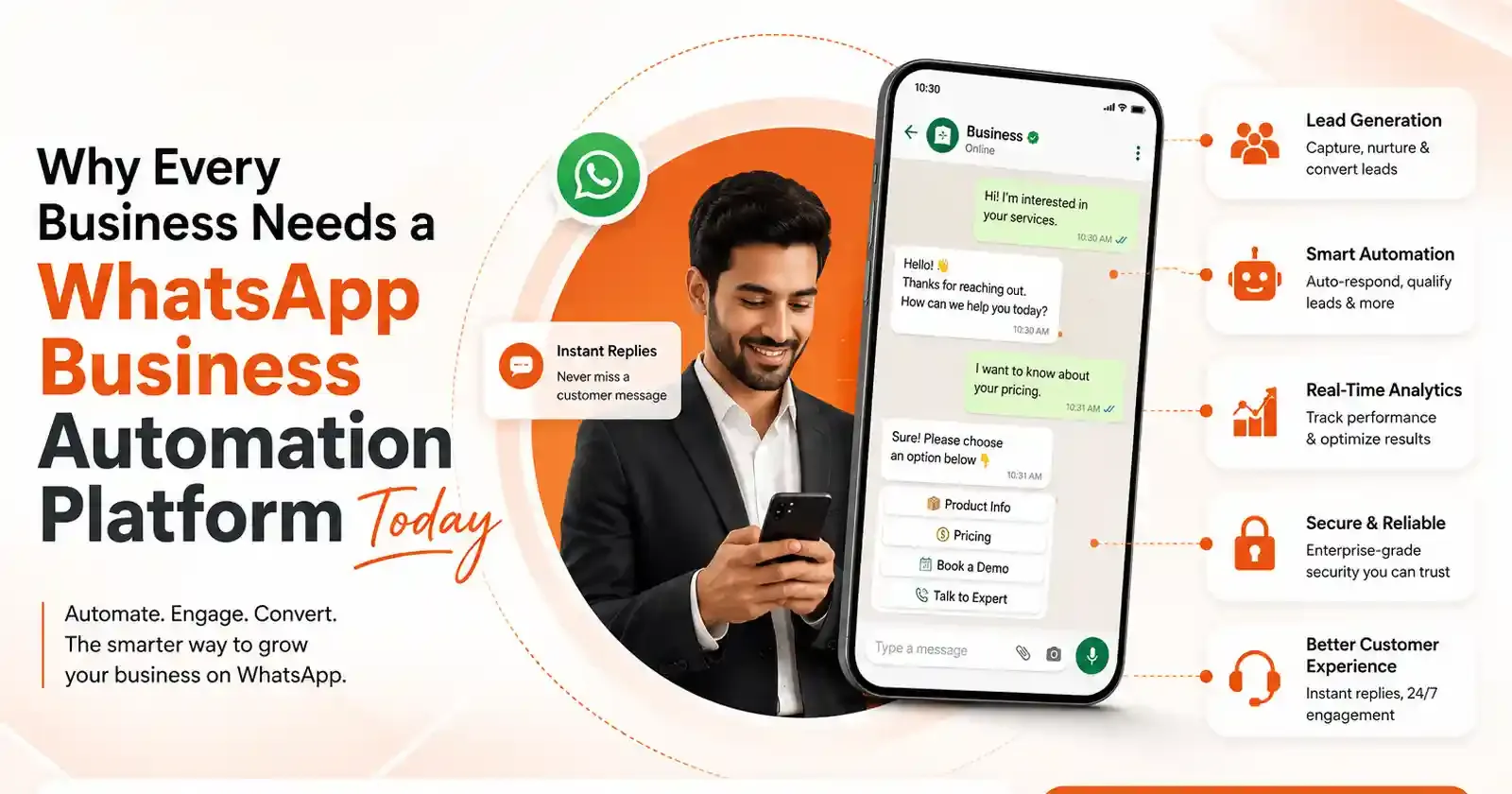

Not too long ago, businesses relied on phone calls, emails, and website enquiry forms to communicate with customers. Those channels still have their place, but customer behaviour has changed dramatically. Today, when someone wants to enquire about a product, request a quotation, schedule an appointment, or seek support, their first instinct is often to open WhatsApp.
It's not difficult to understand why. WhatsApp is already a part of people's daily lives. They use it to stay connected with friends and family, share documents, make voice calls, and exchange information instantly. Naturally, customers expect businesses to be just as accessible on the platform they already use every day.
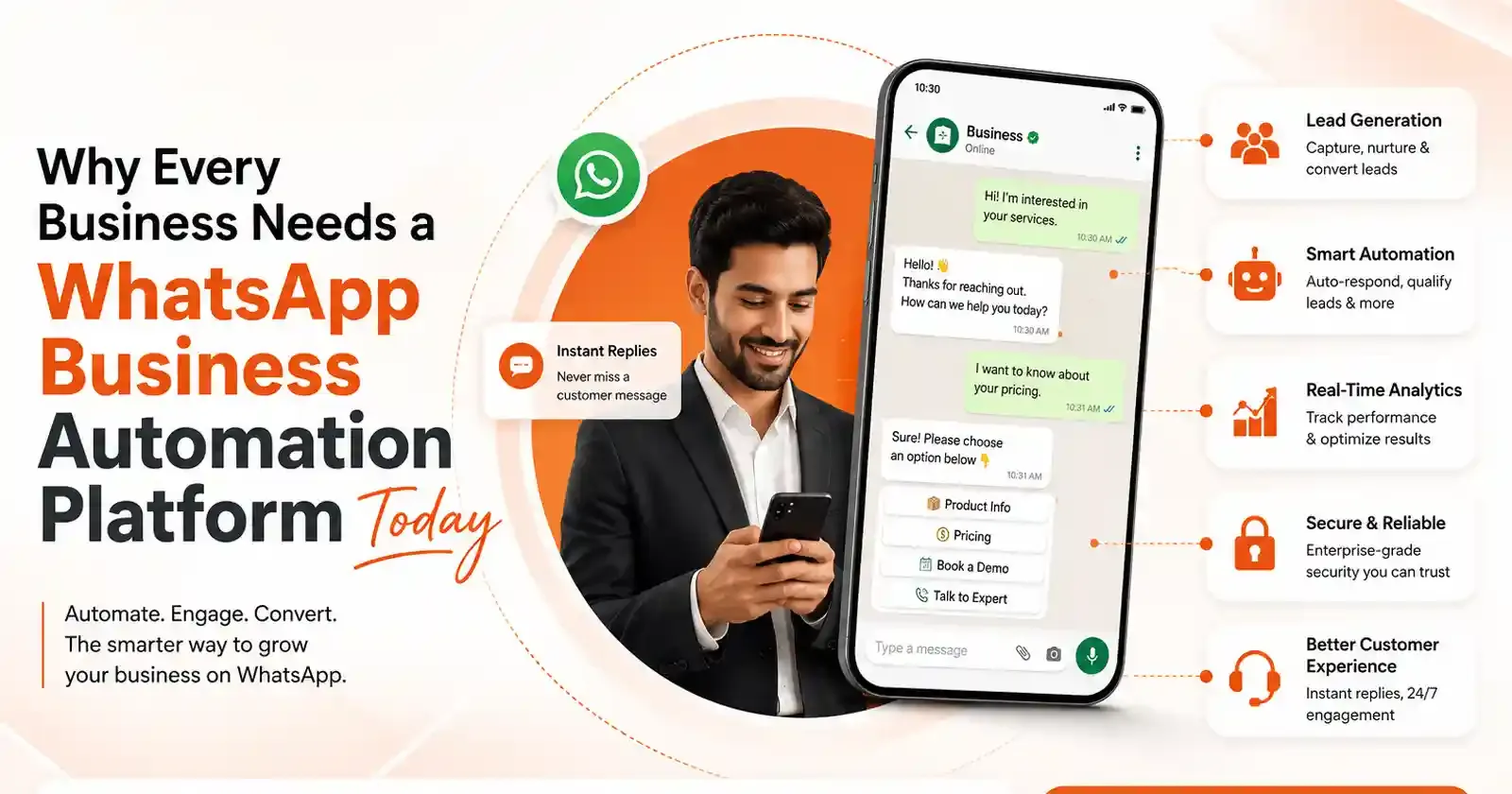
While customer expectations have evolved, many businesses continue to manage WhatsApp conversations manually. One employee answers messages from a personal phone, another handles enquiries from a separate device, and important conversations often disappear beneath newer chats. As businesses grow, this approach quickly becomes difficult to sustain.
This is why a WhatsApp Business Automation Platform has become far more than a convenience.
It has evolved into an essential business tool that helps organizations communicate faster, organize conversations efficiently, and deliver the kind of customer experience modern buyers expect.
Customers Expect Instant Communication, Not Office Hours
Modern customers don't think in terms of business hours.
If someone discovers your business while browsing at 9:30 p.m., they are unlikely to wait until the next morning to ask a question. They will simply send a message. If they don't receive a response, chances are they'll contact another business offering a similar product or service.
This doesn't necessarily mean customers expect a complete solution within seconds. More often, they simply want to know that their message has been received and someone will assist them shortly. Even a simple acknowledgement builds confidence and reassures customers that they haven't been ignored.
For most businesses, maintaining a customer support team around the clock isn't practical. Automation helps bridge that gap by instantly acknowledging enquiries, answering frequently asked questions, collecting basic information, and directing conversations to the appropriate team member. Customers receive immediate engagement while employees can focus on providing personalized assistance when required.
Manual Communication Doesn't Scale with Business Growth
Handling a handful of WhatsApp conversations each day is relatively straightforward. Teams can easily keep track of enquiries, respond individually, and follow up without much effort.
The situation changes as customer volume increases.
As businesses grow, dozens of conversations quickly become hundreds. Employees begin managing customer interactions across multiple devices, conversations overlap, follow-ups are unintentionally missed, and valuable leads disappear simply because no one realized they were waiting for a response.
The issue isn't that employees aren't working hard enough. The issue is that manual communication was never designed to support growing businesses.
A dedicated WhatsApp Business Automation Platform brings every conversation into a centralized workspace where multiple team members can collaborate seamlessly. Conversations can be assigned, tracked, and continued without confusion, ensuring customers experience a consistent and professional interaction regardless of who eventually handles the enquiry.
Speed Has Become a Competitive Advantage
Businesses often assume customers make purchasing decisions solely based on pricing, product quality, or reputation. While those factors remain important, the first impression is frequently shaped by something much simpler—how quickly a business responds.
Imagine a customer sending the same enquiry to four different companies.
One responds immediately. Another replies after twenty minutes. A third responds several hours later, while the fourth doesn't respond until the following day.
In many cases, the customer chooses the business that engaged first. Prompt communication creates confidence and demonstrates that a business values its customers' time.
Automation doesn't replace meaningful conversations. Instead, it ensures customers aren't left waiting while your team prepares to provide the right assistance. That immediate acknowledgement can often be the deciding factor between winning a customer and losing one.
Customers Prefer Conversations Over Complicated Processes
Most customers don't enjoy filling out lengthy enquiry forms simply to ask a straightforward question.
Whether they're checking a product's availability, requesting pricing, or asking if someone can call them back, they prefer the convenience of sending a quick message.
This shift has given rise to conversational commerce, where customers engage directly with businesses through messaging platforms instead of navigating multiple pages or completing detailed forms.
WhatsApp removes unnecessary friction from the buying journey. Customers already know how to use the platform, making interactions feel natural and effortless. Businesses that communicate where customers are already comfortable often find it much easier to initiate conversations and convert interest into sales.
Every Missed Message Represents a Missed Opportunity
Generating leads requires considerable investment. Businesses spend significant resources on search engine optimization, paid advertising, social media campaigns, and content marketing to attract potential customers.
However, all of that effort can be undermined if enquiries aren't answered promptly.
Every unanswered WhatsApp message represents someone who was interested enough to reach out. If they don't receive a response, they rarely wait indefinitely. Instead, they move on to another business that responds faster.
Automation ensures every incoming enquiry is acknowledged immediately and enters a structured workflow. Instead of relying on memory or manual tracking, businesses can confidently manage every customer interaction without worrying about valuable opportunities slipping through the cracks.
Automation Supports People Rather Than Replacing Them
One of the biggest misconceptions surrounding automation is that it replaces human interaction.
In reality, it removes repetitive work so employees can focus on conversations that genuinely require human expertise.
Every business receives similar questions throughout the day. Customers ask about operating hours, pricing, delivery options, appointment availability, or required documentation. While these questions are important, repeatedly answering them consumes valuable time that employees could instead devote to solving complex issues, nurturing qualified leads, or building stronger customer relationships.
By allowing automation to handle routine enquiries, businesses improve both efficiency and customer satisfaction without sacrificing the personal touch customers appreciate.
Consistent Communication Builds Customer Confidence
Consistency plays a crucial role in customer experience.
When different employees provide different answers, customers naturally begin questioning the reliability of the business itself. Small inconsistencies in pricing, product information, or response quality can gradually erode trust.
Automation helps standardize routine communication by ensuring customers receive accurate and consistent information regardless of which team member eventually joins the conversation.
The result isn't robotic communication. It's a customer experience that feels organized, dependable, and professional.
Customer Relationships Continue Beyond the First Purchase
Acquiring a customer is only the beginning of the relationship.
Businesses that remain connected after the initial sale are often far more successful at encouraging repeat purchases and strengthening customer loyalty.
Simple interactions such as appointment reminders, order updates, service notifications, festive greetings, or feedback requests keep businesses present in customers' minds without feeling overly promotional.
WhatsApp automation makes these ongoing conversations manageable. Businesses can schedule timely communications for customers who have chosen to receive updates, ensuring every interaction feels relevant rather than intrusive.
Better Conversations Lead to Better Business Decisions
Every customer conversation contains valuable insights.
Businesses can understand which marketing campaigns generate quality enquiries, identify common customer concerns, measure response times, and recognize recurring questions that may require better documentation or support resources.
When conversations remain scattered across individual devices, this information is difficult to analyse.
A centralized WhatsApp Business Automation Platform transforms everyday conversations into meaningful business intelligence through analytics and reporting. Instead of relying on assumptions, businesses can make informed decisions backed by real customer data.
Choosing the Right WhatsApp Business Automation Platform
As more organizations embrace conversational communication, selecting the right automation platform becomes increasingly important.
Businesses should look for solutions that do more than simply send automated replies. An effective platform should centralize customer conversations, support collaboration among multiple team members, integrate with existing CRM systems, automate repetitive workflows, provide actionable analytics, and enable customer engagement through compliant broadcast messaging.
These capabilities allow businesses to create a communication process that scales alongside growth instead of becoming increasingly difficult to manage.
How ItTalk Helps Businesses Simplify Customer Communication
One platform designed with these business requirements in mind is ItTalk.
Instead of relying on multiple phones and disconnected conversations, ItTalk brings every customer interaction into a centralized Shared Multi-Agent Inbox where teams can collaborate efficiently without losing context. Frequently asked questions can be automated to reduce response times while maintaining consistency, and conversations can be assigned to the appropriate team members for quicker resolution.
ItTalk also enables businesses to engage customers through Smart Broadcast Campaigns, schedule messages, capture and manage leads more effectively, and monitor conversation performance through a centralized dashboard. By combining automation with collaboration, the platform helps businesses improve operational efficiency while delivering a smoother customer experience.
Conclusion
Customer expectations have permanently shifted toward faster, more convenient communication.
People are accustomed to booking rides, ordering food, managing finances, and receiving support through digital platforms within minutes. Naturally, they now expect businesses to communicate with the same speed and convenience.
Businesses are not competing solely on product quality or pricing. They are competing on responsiveness, accessibility, and customer experience.
Adopting a WhatsApp Business Automation Platform isn't simply about automating messages. It's about ensuring every customer receives timely attention, every enquiry is managed efficiently, and every conversation contributes to stronger business relationships.
Customers may forget an advertisement or promotional campaign, but they rarely forget how a business made them feel when they reached out for help.
Organizations that embrace conversational automation today will be far better equipped to build trust, improve customer satisfaction, and scale their operations tomorrow. Platforms like ItTalk by Imbibe Tech provide businesses with the tools to make those conversations faster, smarter, and significantly more meaningful.
























Sign in to leave a comment.