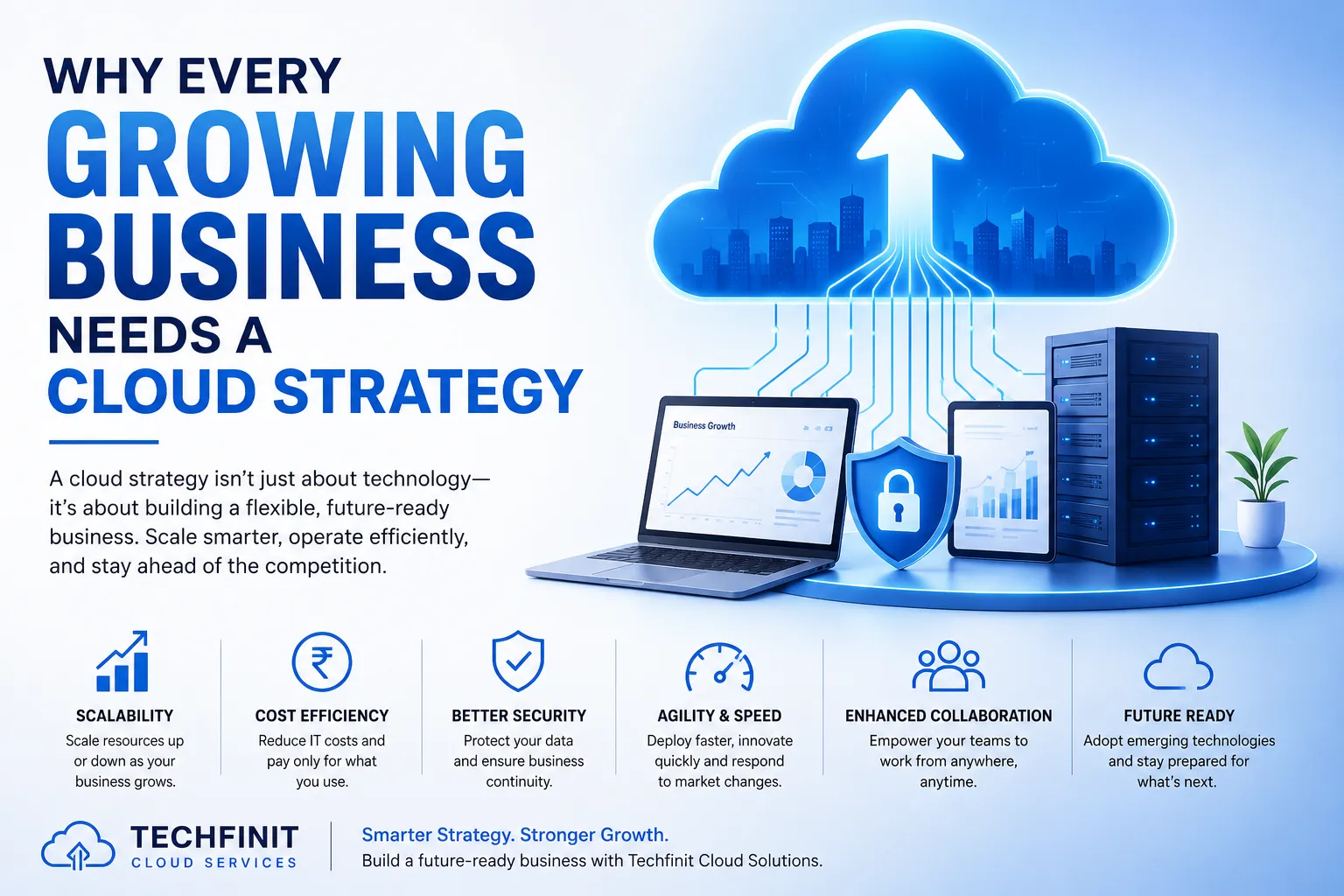

Business growth brings exciting opportunities, but it also introduces new challenges. As organizations expand, they often require additional storage, computing resources, collaboration tools, security measures, and infrastructure capabilities. Without a clear technology plan, growth can create operational inefficiencies and infrastructure limitations. This is why every growing business needs a well-defined cloud strategy.
A cloud strategy is a structured approach that outlines how an organization will use cloud technologies to support business objectives. Rather than adopting cloud services on an ad hoc basis, businesses benefit from a clear roadmap that aligns technology investments with long-term goals.
One of the primary reasons businesses need a cloud strategy is scalability. Growth often leads to increased website traffic, larger customer bases, expanding teams, and more complex operations. Cloud environments allow organizations to adjust resources based on changing requirements, ensuring infrastructure can support growth without major disruptions.
Cost management is another important consideration. Many businesses adopt cloud services to reduce infrastructure expenses, but without proper planning, cloud costs can become difficult to manage. A cloud strategy helps organizations allocate resources effectively and optimize spending while maximizing value.
Business continuity is also a key component of cloud planning. Unexpected disruptions such as cyberattacks, hardware failures, or natural disasters can affect operations significantly. A strong cloud strategy includes backup, recovery, and resilience measures that help organizations maintain operations during challenging situations.
Security must also be incorporated into any cloud strategy. Businesses manage sensitive customer information, financial records, and proprietary data. A structured approach ensures that security controls, compliance requirements, and access management policies are implemented consistently across cloud environments.
Cloud strategies also support innovation. Modern cloud platforms provide access to technologies such as automation, analytics, artificial intelligence, and advanced collaboration tools. Businesses with a clear strategy can adopt these technologies more effectively and use them to improve efficiency and competitiveness.
Another advantage of cloud planning is operational flexibility. Organizations can support remote work, multi-location operations, and digital service delivery more effectively through cloud-based infrastructure.
Many successful businesses treat cloud technology as a strategic asset rather than simply an IT solution. By aligning cloud investments with business objectives, organizations can improve efficiency, accelerate growth, and create stronger foundations for future expansion.
As digital transformation continues reshaping industries, businesses that develop clear cloud strategies are often better positioned to adapt to changing market conditions and customer expectations.
If your organization is planning for long-term growth, Techfinit provides Cloud services in Kerala that help businesses create scalable, secure, and future-ready cloud strategies tailored to their operational goals.




























Sign in to leave a comment.