
Step onto the floor of any manufacturing facility today, and you will immediately sense the tension of modern industry: the relentless drive to increase output while simultaneously pulling back on energy consumption and environmental impact. For decades, these goals were viewed as fundamentally at odds. You either ramped up production and accepted the skyrocketing utility bills and emissions, or you scaled back to meet environmental targets.
But the era of cheap energy and lax environmental oversight is firmly in the rearview mirror. Today, competitive advantage doesn't just come from what you produce—it comes from how intelligently you manage the byproducts of your production.
At the center of this shift is a resource that is completely invisible yet holds the key to the factory of the future: heat. It is time we stop looking at thermal energy as a disposable byproduct and start treating it as a premier asset. To survive and thrive, every modern factory needs a smarter thermal management strategy—one that masterfully combines emission control with energy reuse to achieve unprecedented levels of industrial efficiency.
The End of the "Siloed" Plant Mindset
Historically, plant managers have treated emission control and energy management as two entirely separate silos.
On one side of the plant, you had compliance. Environmental regulations dictated that you install abatement equipment to scrub pollutants and destroy harmful exhaust gases before they hit the atmosphere. This equipment was largely viewed as a "grudge purchase"—a massive capital expense that consumed heavy amounts of fuel and offered absolutely zero return on investment, aside from keeping the regulators at bay.
On the other side of the plant, you had operations and utilities, burning immense amounts of natural gas or electricity to generate the heat required for ovens, kilns, boilers, and chemical reactions.
The modern thermal management strategy breaks down this wall. It recognizes that the heat generated by your emission control equipment is the same thermal energy your production line is starving for. By bridging this gap, forward-thinking manufacturers are flipping compliance from a sunk cost into a lucrative energy source.
The Thermal Oxidizer: From Compliance Cost to Energy Hub
To understand how this integration works, we have to look at the workhorse of industrial emission control: the thermal oxidizer.
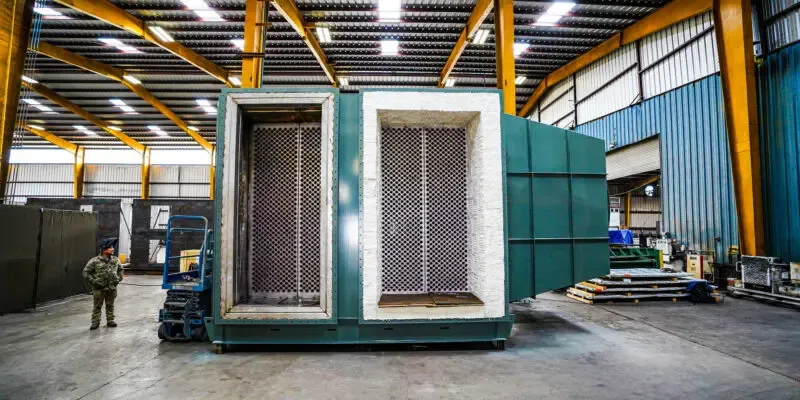
If your facility involves coating, printing, chemical processing, or any application that uses solvents, you are likely generating Volatile Organic Compounds (VOCs) and Hazardous Air Pollutants (HAPs). A thermal oxidizer acts as a high-temperature incinerator, drawing in these polluted exhaust streams and raising their temperature—often well above 1,500°F (815°C)—to break the chemical bonds of the pollutants. The result? The harmful compounds are oxidized, leaving only harmless water vapor and carbon dioxide to be released into the atmosphere.
While the environmental benefit is undeniable, the process requires massive amounts of heat. In the past, that 1,500°F clean air was simply vented out the stack. It was the equivalent of running your home’s furnace at full blast while leaving all the windows wide open.
A smarter thermal management strategy changes the narrative. Instead of viewing the thermal oxidizer merely as an incinerator, modern plant engineers view it as a high-grade thermal battery. Because VOCs actually contain their own latent energy, burning them creates a highly exothermic reaction. In many cases, once the oxidizer reaches its operating temperature, the VOCs themselves provide enough fuel to sustain the combustion process.
This means your thermal oxidizer is generating a massive, continuous stream of high-temperature, clean exhaust—often using very little auxiliary fuel. The question then becomes: why let that heat escape?
Closing the Loop with Heat Recovery Systems
This is where the magic of heat recovery systems comes into play. With the addition of a heat exchanger, economizer, or secondary fluid loop to your thermal oxidizer, you can recover that 1,500°F exhaust gas before it escapes out of the building and redirect it straight back into your production cycle.
When you couple emissions management with heat recovery, you are creating a closed-loop system for thermal energy production. The effects are revolutionary:
- Drastic Reductions in Primary Fuel Usage: By routing recovered heat to preheat incoming oven air or generate steam, your primary boilers and burners don't have to work nearly as hard.
- Extended Equipment Lifespan: Because your primary heating equipment is no longer operating at maximum capacity 24/7, you experience less thermal stress, fewer breakdowns, and reduced maintenance costs.
- Future-Proofed ESG Profiles: Capturing waste heat actively reduces your facility's carbon footprint, making it significantly easier to meet aggressive corporate sustainability goals and navigate strict environmental regulations.
Practical Manufacturing Examples in Action
It may seem perfect in theory, but what would a better system for handling heat rejection look like? Here are some actual examples of how the marriage of abatement and recovery can deliver results.
Example 1: The Automotive Paint Line
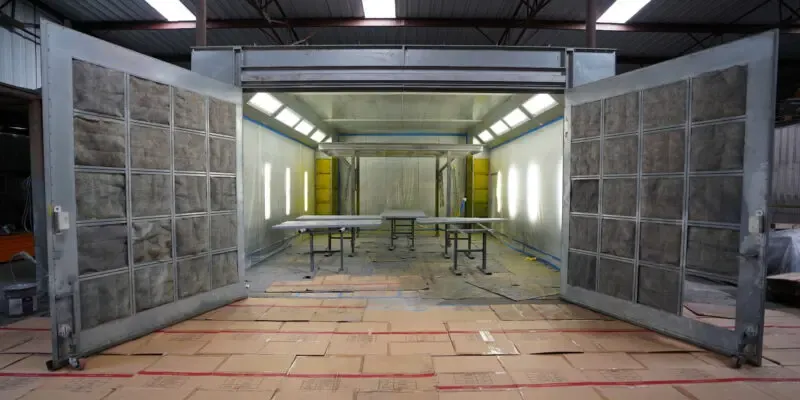
Automotive manufacturing requires massive paint booths and curing ovens. The painting process releases heavy VOCs, which must be routed to a thermal oxidizer for destruction.
- The Smart Strategy: Instead of venting the purified, ultra-hot air from the oxidizer, the plant installs an air-to-air heat recovery exchanger. The recovered heat is routed directly back to the curing ovens to dry the newly painted car bodies.
- The Result: The curing ovens now require up to 60% less natural gas, effectively turning the paint fumes themselves into the fuel that cures the paint.
Example 2: Food Processing and Packaging
Flexible packaging facility employs solvent-based ink system for printing colorful labels on snacks. The drying process produces VOCs that are introduced to the RTO (Regenerative Thermal Oxidizer).
- The Smart Strategy: The plant installs an air-to-water heat recovery boiler directly downstream of the RTO. The intense heat from the oxidizer boils water to create high-pressure steam.
- The Result: This steam is piped across the facility to power the plant’s secondary cleaning and sterilization equipment. The plant is able to decommission an ageing, inefficient boiler entirely, saving hundreds of thousands of dollars in annual energy and maintenance costs.
Example 3: Chemical Manufacturing
A speciality chemical plant generates hazardous off-gases during its batch reactions. These gases are routed to a direct-fired thermal oxidizer.
- The Smart Strategy: Using a thermal fluid heat recovery system, the heat from the oxidizer warms a specialized thermal oil. This hot oil is pumped through a closed-loop piping system back to the chemical reactors to provide the exact, controlled heat needed to trigger the next batch of chemical reactions.
- The Result: The plant dramatically lowers its reliance on external grid energy, stabilizing its operational costs against a volatile global energy market.
The Missing Link to Better Plant Performance
Ultimately, achieving elite plant performance is no longer just about optimizing your supply chain or upgrading your robotics. The factories that will dominate the next decade are the ones that learn to manipulate their own thermodynamics.
By stepping back and analyzing your facility's thermal footprint as a cohesive system, you can uncover massive hidden potential. When you integrate a thermal oxidizer with advanced heat recovery systems, you are doing much more than just checking an environmental compliance box. You are reclaiming lost capital, protecting your bottom line from volatile energy markets, and setting a new standard for industrial efficiency.
In modern manufacturing, heat is power. It is time we stop throwing it away.





























Sign in to leave a comment.