

Scroll through LinkedIn on any given day, and you will see thousands of freshers and career switchers in India posting certificates in Neural Networks, tweaking complex PyTorch models, and tagging their profiles with "Aspiring AI Specialist." Yet, four to six months into their job search, many of them find their inboxes empty, sitting through round after round of ghosting by recruiters.
Meanwhile, a candidate who quietly mastered Advanced Excel, Power Query, and Power BI lands two job offers within six weeks at an IT consultancy or Global Capability Center (GCC).
This disparity creates confusion for job seekers: Why is high-level machine learning code yielding fewer callbacks than business intelligence and data automation tools?
The answer lies in understanding the immediate needs of the Indian corporate ecosystem versus online hype. While social media algorithms push the romance of Artificial Intelligence, the vast majority of companies hire based on immediate operational utility.
The Market Reality: Demand vs. Hype
To understand why hiring managers move faster on Power BI and Power Query skill sets, you have to look at what Indian organizations actually need day-to-day.
Whether it is a mid-sized logistics company in Pune, a retail giant in Mumbai, or a multinational GCC in Bengaluru, most businesses operate on fragmented data. Their daily reality consists of:
- Disparate legacy systems spitting out inconsistent CSV and Excel files.
- Departmental heads making decisions based on outdated weekly figures.
- Hours of manual, error-prone copy-pasting by junior employees to generate basic reports.
A complex Machine Learning model cannot fix these underlying operational failures. In fact, ML algorithms require pristine, well-structured, clean data pipelines to produce any real value.
Companies do not need a predictive deep learning model to tell them why customer churn spiked by 12% last month—they need a clean, reliable, and interactive dashboard that lets the Head of Operations click into regional data and spot the bottleneck themselves.
1. Power Query Solves the #1 Problem in Data: Cleaning
Ask any seasoned data professional in India what consumes 80% of their daily bandwidth, and they will give you a one-word answer: Data wrangling.
Data in the real world is messy. Dates are formatted in three different ways, columns are misaligned, missing values abound, and duplicate records hide across multiple sheets.
- The Machine Learning Approach: Writing complex Python scripts using Pandas or NumPy to clean messy datasets. While powerful, writing custom Python code for every weekly report requires maintenance, debug time, and developer hand-offs.
- The Power Query Approach: Power Query serves as a zero-code/low-code Extract, Transform, and Load (ETL) engine integrated right into Excel and Power BI. It records every transformation step visually. When next month's messy report arrives, you simply click "Refresh," and the entire cleaning process executes automatically in seconds.
Hiring managers love candidates who know Power Query because they immediately reduce manual workload across teams. When you demonstrate during an interview how you can automate a 5-hour daily reporting task into a 5-second automated refresh, you offer instant ROI.
2. Power BI Delivers Instant Business Impact
Machine learning models are often black boxes. Explaining an XGBoost classification matrix or a hyperparameter tuning matrix to a non-technical stakeholder—such as a Finance Director or Regional Sales Lead—is an uphill battle.
Power BI bridges the gap between raw, messy database tables and strategic executive decisions:
- Visual Storytelling: Instead of delivering a static chart or a code notebook, Power BI offers interactive slice-and-dice functionality. A stakeholder can filter data by geography, product category, or time period in real-time during a meeting.
- Data Modeling & DAX: With Star Schema modeling and Data Analysis Expressions (DAX), candidates can build dynamic KPIs—like Month-over-Month growth, rolling averages, and custom profit margins—without needing full-stack development environments.
- Speed of Deployment: A functional, multi-page Power BI dashboard can be built and deployed in two days, delivering immediate visibility to leadership.
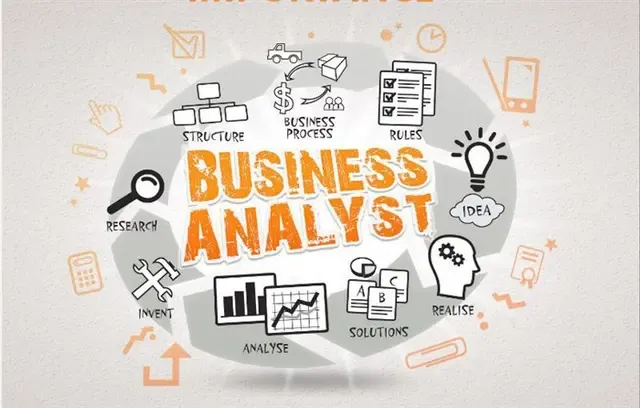
3. The "Business Analyst" Advantage
Tools are only as good as the business decisions they drive. A major reason candidates proficient in Excel, Power Query, and Power BI get hired faster is that these tools force you to speak the language of business—revenue, costs, efficiency, unit economics, and process bottlenecks—rather than purely technical metrics like loss functions or epoch runs.
To truly stand out in today's competitive job market, pairing technical tool execution with structured business problem-solving is crucial. Enrolling in a dedicated business analyst course provides the formal training needed to translate stakeholder requirements, document business processes, and design high-impact analytics solutions that corporate leaders actually pay for.
When you blend business analysis frameworks with Power Query automation and Power BI visualization, you transition from being just a "tool operator" to a strategic problem solver.
Comparing the Two Career Tracks
Here is how the two learning pathways stack up for job seekers aiming for quick career entry in India:
| Parameter | Power Query & Power BI Route | Machine Learning Code Route |
|---|---|---|
| Preparation Time | 60 to 90 Days | 9 to 12 Months |
| Entry-Level Job Openings | Abundant across IT, GCCs, Finance & Retail | Limited (Mostly reserved for M.Tech/PhDs or Senior Engineers) |
| Prerequisites | Logical thinking, basic business acumen, Excel | Advanced Calculus, Linear Algebra, Python/R, MLOps |
| Interview Assessment | Practical dashboard creation & business case studies | Complex algorithmic whiteboarding & live coding |
| Time to First Offer | Fast (1 to 3 Months) | Slow (6 to 12 Months) |
The Winning Portfolio Strategy
If your goal is to secure interview callbacks within the next 30 to 60 days, structure your portfolio projects around realistic operational problems:
- Automated Financial Reconciliation (Power Query): Build an ETL pipeline that combines multi-branch Excel files, standardizes currency formats, removes duplicate entries, and outputs a clean master table.
- Executive Sales & Operational Performance Dashboard (Power BI): Create a dynamic dashboard with regional slicers, top-performing product breakdowns, and interactive DAX measures comparing actuals against target budgets.
- Supply Chain Delay & Inventory Analysis (Excel + Power BI): Build a model identifying vendor delay trends, stockout risks, and warehouse capacity utilization.
The Smart Career Sequence
This does not mean Machine Learning is useless or dead—far from it. Advanced machine learning and predictive modeling offer fantastic long-term career growth, high salaries, and deep specialization opportunities down the road.
However, as an entry strategy into the data industry, betting entirely on machine learning code is like trying to master advanced structural architecture before learning how to build a solid foundation.
Master Excel Power Query and Power BI first. Get your foot in the door, secure your job offer, understand real-world corporate data systems from the inside, and then layer on Machine Learning as you grow into senior roles. That is the fastest, most reliable blueprint for building a resilient data career in India today.





























Sign in to leave a comment.