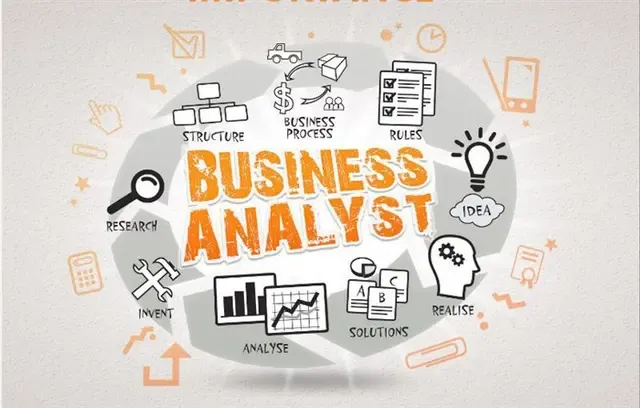

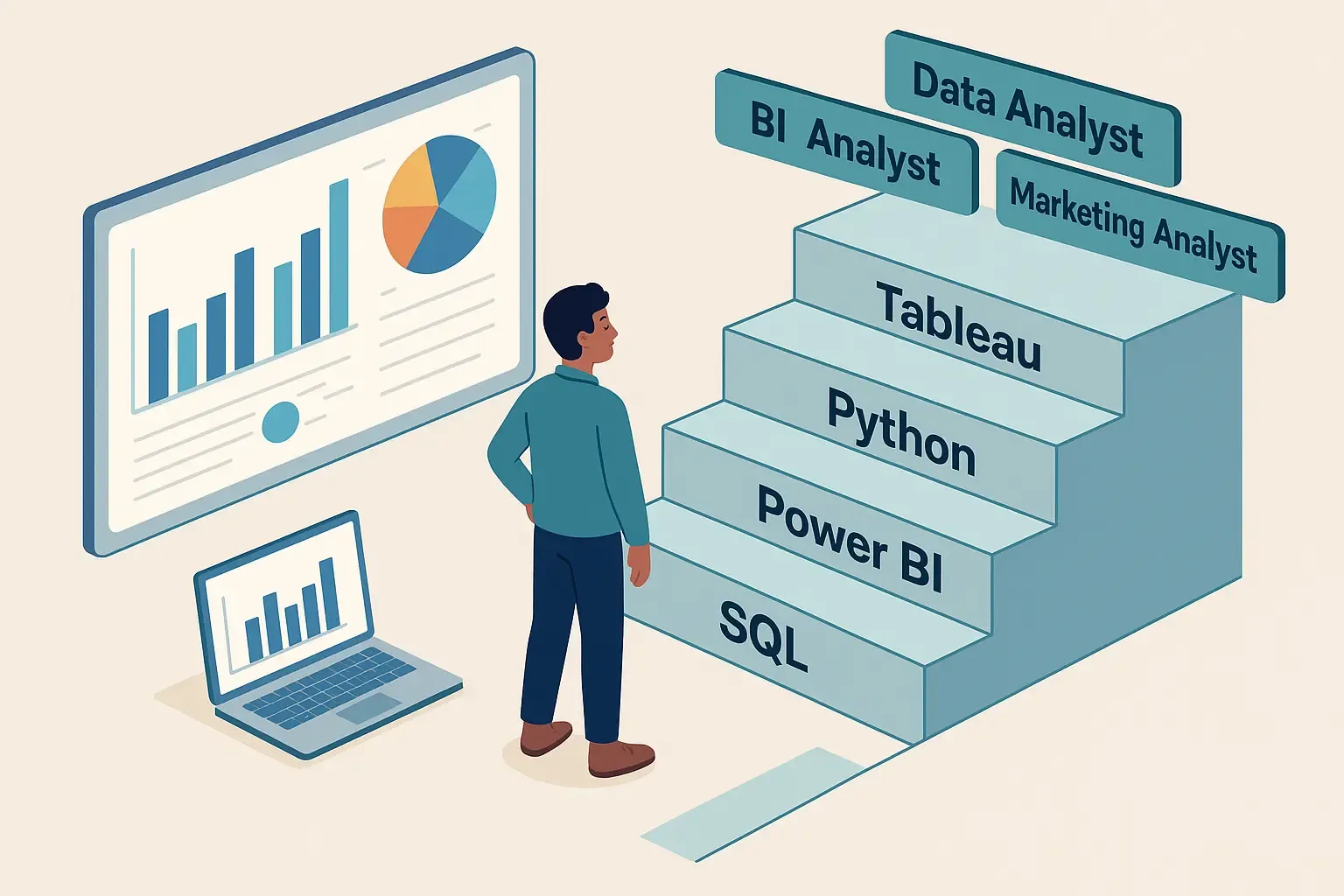
Here’s my take: Short answer: yes — if you are looking to land a lucrative Business Analyst (BA) job as a fresher, you can safely skip Python. However, SQL and Power BI are absolutely non-negotiable.
If you spend even twenty minutes scrolling through tech career groups on LinkedIn or Reddit today in 2026, the sheer volume of advice can be dizzying. You will see self-proclaimed tech influencers claiming that if you haven’t mastered Python, machine learning algorithms, and deep predictive modeling frameworks, your resume is dead on arrival. For an Indian fresher holding a BBA, B.Com, or an engineering degree with a strong aversion to complex programming, this narrative can spark immediate anxiety. You picture yourself trapped at a desk, debugging thousand-line Python script errors while trying to enter a data career.
The truth is much simpler. People often bundle "Business Analysts," "Data Analysts," and "Data Scientists" into one massive, confusing pile. A Data Scientist builds automated predictive pipelines and statistical code engines. A Business Analyst, on the other hand, is a strategic translator. Your job role focuses on problem-solving, identifying process bottlenecks, gathering explicit user requirements, and turning numbers into human corporate narratives.
Why Python is Overkill for a Junior BA
Let’s look at the situation candidly: Python is an exceptionally powerful programming language. If your career goal is to build automated algorithmic trading engines or design deep neural networks for computer vision, you absolutely must learn it. But for a junior Business Analyst operating on the front lines of agile product delivery, mastering Python is a classic case of overkill.
In 2026, the mechanical act of writing lines of code has become heavily commoditized. Advanced generative AI tools can instantly generate automated scripts from plain-English inputs. What tech startups and massive MNCs in Gurugram, Noida, and Bengaluru actually lack isn't people who know how to write code loops. They face a severe shortage of professionals who understand the core business logic behind what needs to be built.
As a junior BA, your typical workday does not involve building complex neural models. Instead, it involves reviewing product drop-off funnels, updating requirement backlogs, and leading stakeholder workshops. Your time is much better spent mastering database relationships and visual dashboards rather than getting stuck in Python syntax errors.
The Core Foundation: SQL (Structured Query Language)
If you are skipping traditional software coding, where should your technical literacy start? The absolute bedrock of your toolkit is SQL.
Every major enterprise—whether it is an e-commerce giant like Blinkit, a banking multinational like HDFC, or a food tech player like Swiggy—stores its massive user transactions, inventory catalogs, and corporate records inside relational databases. Historically, non-technical BAs had to constantly message the software engineering team, requesting them to extract custom data sheets for every client presentation. This created immense friction and slowed down project sprints.
[Raw Enterprise Data] ──> (SQL Query) ──> [Clean Visual Dashboards via Power BI]
SQL removes this bottleneck entirely. Learning basic data-retrieval commands—such as SELECT, WHERE, JOIN, and GROUP BY—allows you to pull exactly the information you need independently. If a product manager asks why order volumes dropped in North Delhi last Tuesday, a BA with strong SQL literacy can write a quick query, analyze the transaction history, and diagnose the root cause in minutes without waiting for a developer. It teaches you exactly how corporate data is structured, which makes it the single most sought-after skill on an entry-level BA resume.
The Business Communicator: Power BI
Once you use SQL to extract raw metrics, you face a second major challenge: senior directors, venture capitalists, and non-technical clients do not want to read dry rows of numbers. This is where Power BI becomes your ultimate tool for business storytelling.
Power BI acts as the final visual layer of your analytical workflow. It allows you to take raw tables and transform them into intuitive, interactive executive dashboards.
Imagine you are managing an upgrade sprint for a major digital streaming application. Instead of handing your stakeholders a long Excel file, you build a dynamic Power BI interface that clearly tracks key metrics like:
- Customer Retention Rate: Spotting exactly when a user drops off.
- Regional Demand Densities: Visualizing active consumption clusters across different states.
- Payment Gateway Failures: Highlighting specific transaction bottlenecks in real time.
Power BI gives you immediate visual results and helps you master the metrics that businesses value most. It ensures your insights can be consumed by anyone at a single glance.
The Job-Ready Analytics Matrix
To see how these competencies complement each other in real-world environments, look at this functional comparison matrix:
| Functional Area | The SQL Approach | The Power BI Layer | The Python Alternative |
|---|---|---|---|
| Data Extraction | High speed; direct query of enterprise databases. | Relies on pre-extracted data connections. | Requires custom connection scripts. |
| Data Communication | Raw tables; hard for business stakeholders to read. | Exceptional; dynamic and interactive charts. | Static plots; requires programming tweaks. |
| Learning Curve | Highly accessible; reads naturally like English. | Very intuitive; built on a drag-and-drop workflow. | Steeper; requires variable logic and libraries. |
Overcoming the Entry-Level Experience Trap
The ultimate challenge for an ambitious fresher trying to break into this lucrative space isn't a lack of intellectual capability; it is the rigid, automated HR filters used by recruitment platforms. If your resume simply lists your university subjects and general academic percentages, the software scanner will filter it out before a human manager ever sees your name. To bypass this barrier, you need to transform your academic application into a public portfolio filled with verifiable proof of work.
Figuring out how to stitch data tools, process flowcharts, and agile documentation frameworks together while navigating the pressure of off-campus placements can be completely overwhelming. To bypass this trial-and-error cycle and add immediate corporate authority to your profile, investing in a structured business analyst course is the most efficient career move. It systematically replaces abstract textbook definitions with live, hands-on enterprise case studies, giving you the precise vocabulary needed to clear tough technical rounds.
For graduates aiming to launch their corporate careers within North India's dominant employment corridors, geographic alignment and physical corporate networking are massive game-changers. The massive tech and corporate clusters operating across Noida, Gurugram, and New Delhi are constantly hunting for local, agile talent. Enrolling in a comprehensive Business Analytics Course in Delhi NCR delivered by established training leaders like SLA Consultants India provides the ultimate operational launchpad. Their project-centric methodology combines essential tool mastery with live corporate grooming portfolios, intensive mock interview loops, and robust placement networks.
The modern tech industry no longer belongs exclusively to code compilers. Drop the programming anxiety, focus heavily on your innate business logic, master the functional digital toolkits under expert guidance, and claim your place at the corporate table with absolute certainty.


























Sign in to leave a comment.