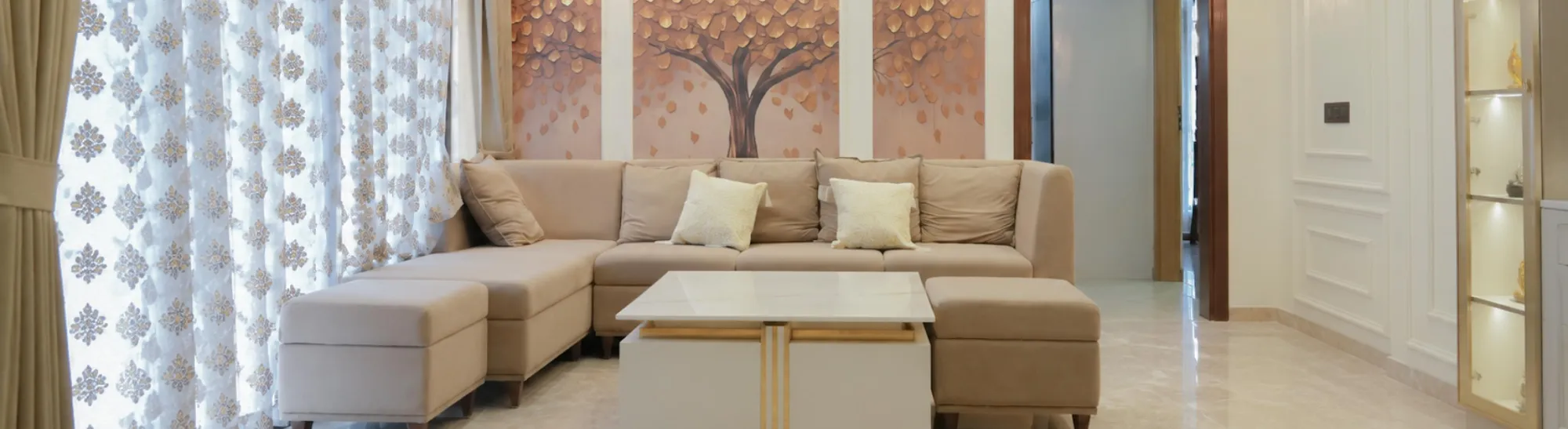

Gurgaon has more interior designers per square kilometer of luxury residential development than almost any other Indian city outside South Mumbai. The supply is not the problem. The challenge is that the market's rapid expansion has created an environment where selecting the right designer requires a more rigorous evaluation process than the city's abundant options suggest.
Why Most People Answer the Selection Question Wrong
The standard approach to finding an interior designers in Gurgaon is to ask within a social network for recommendations, shortlist based on Instagram presence, and select based on the studio consultation that feels most comfortable. This process reliably produces a designer who is aesthetically aligned and pleasant to work with. It does not reliably produce a designer who will manage the project timeline, vendor relationships, and budget with the discipline that Gurgaon's complex project environment requires.
The factors that determine whether a Gurgaon interior project completes on time, within budget, and to the quality specification agreed are primarily operational rather than aesthetic. Delhi NCR's contractor market, which supplies labor and materials to Gurgaon projects, has significant variability in reliability. Procurement lead times for imported materials arriving at Gurgaon's showroom networks vary seasonally. Society building management rules in Gurgaon's gated communities impose working hour restrictions and material entry protocols that add timeline complexity. A designer who has not worked extensively in these conditions will encounter these challenges as surprises rather than as routine project variables.
What the Data Actually Shows
According to Cushman and Wakefield India Residential Market Report, Gurgaon's luxury residential market saw over 15,000 unit deliveries in 2023 across the Dwarka Expressway, Southern Peripheral Road, and Golf Course Extension corridors. The interior design demand generated by these deliveries has sustained a large active designer community. But client satisfaction data from platforms like Houzz India and word-of-mouth survey data from NCR buyer communities consistently shows that timeline and budget adherence, rather than design aesthetics, are the primary sources of project dissatisfaction. The design quality of completed Gurgaon interiors is generally high; the project management quality is the variable that separates excellent from disappointing experiences.
A Better Framework for Evaluation
The evaluation framework that produces the best designer selection outcomes in Gurgaon moves the primary assessment criteria from aesthetics to operations. This does not mean aesthetics are unimportant. It means that after establishing aesthetic alignment (which most shortlisted designers will pass), the evaluation should focus on four operational questions.
First: how does the designer manage contractor selection and supervision? In Gurgaon's market, the contractor relationship is the single biggest variable in project outcome. Designers who work with a verified contractor panel they have established relationships with over multiple projects produce more predictable execution than those who recommend contractors they have not previously worked with on the specific project type.
Second: what is the designer's material procurement process? Many Gurgaon projects use imported furniture, Italian stone, and international hardware that has eight to fourteen week delivery lead times. A designer who does not place procurement orders at the right project stage consistently produces projects where the civil work is complete but the furniture is four months away. Ask for a specific example of how they managed procurement timelines on a recent project.
Third: how do they handle society building management rules? Every gated residential community in Gurgaon has different rules about working hours, material entry, waste removal, and labor accommodation. Designers who are not familiar with the specific society's rules will lose project time at the start while these constraints are discovered. Ask whether the designer has previously worked in your specific development or an adjacent comparable one.
Fourth: what is their change order process? Most Gurgaon interior projects see some change during execution. The process for documenting, pricing, and approving changes determines whether scope creep is managed transparently or becomes a source of end-of-project billing surprises.
Implementation Steps
- Visit at least one completed project in person, not just through portfolio photography. Request access to a project in a building similar to yours.
- Ask for the project manager or site coordinator who would be assigned to your project. Evaluate that person's experience, not just the principal designer's portfolio.
- Request a written project schedule that includes procurement milestones, civil completion dates, and furniture delivery windows before signing any agreement.
- Confirm the designer's familiarity with your specific residential society's building management rules before the design brief is finalized.
The right interior designer in Gurgaon is one who can be verified not just on taste but on process. The verification takes more effort than a studio visit, but the payoff is a project that completes as agreed rather than one that is aesthetically impressive but chronically delayed.






















Sign in to leave a comment.