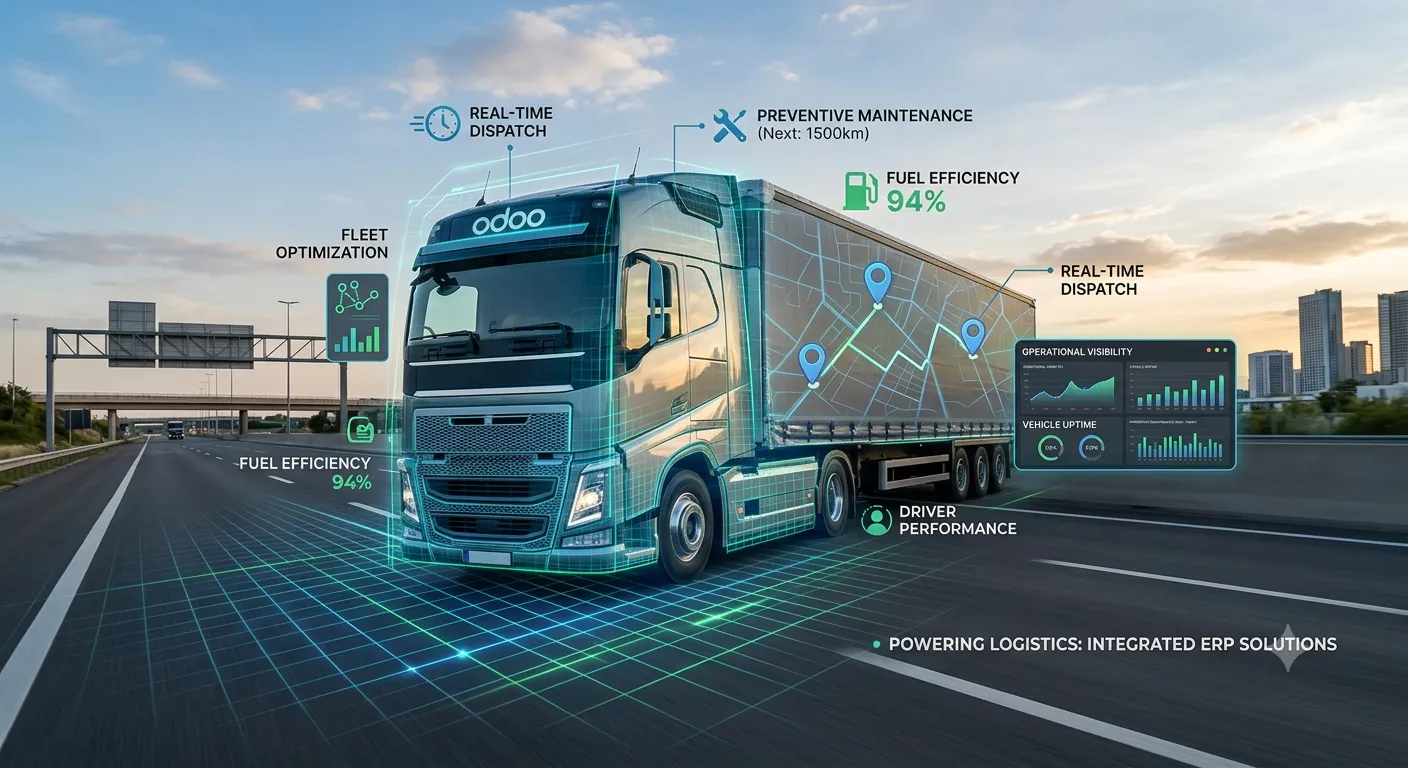

Managing a transportation enterprise requires balancing volatile fuel prices, tight delivery schedules, vehicle maintenance, and driver compliance. Operations leaders frequently struggle when operational data remains trapped inside isolated tools. Modern logistics teams are moving away from disconnected telematics and legacy dispatch systems by implementing specialized Odoo ERP Modules for transport. When fleet tracking, inventory, maintenance, and accounting work from a shared database, companies regain control. Gartner (2024) reported that 68% of logistics operations lose up to 15% of annual revenue due to operational silos and fragmented software architectures. Eliminating these silos is a vital business priority.
Why This Is Happening Now
Logistics managers face constant pressure from rising operating expenses and changing customer demands. Traditional fleet administration relied on single-purpose applications: one for dispatching, another for GPS tracking, a third for accounting, and spreadsheets for vehicle servicing records. This fragmentation forces staff to re-enter information across systems, creating data bottlenecks and errors.
Where traditional ERP systems rely on rigid, monolithic software structures that require expensive custom code, modern approaches utilize flexible architectures that adapt to specific fleet workflows. McKinsey (2023) highlighted that transport operations utilizing integrated enterprise software reduce downtime by 22% compared to those relying on legacy point solutions. As operating margins narrow, transport executives need direct visibility into cost per mile, driver efficiency, and maintenance cycles without waiting for manual month-end consolidations.
Scaling Transportation Operations with Odoo ERP Modules
Streamlining Fleet Maintenance and Asset Tracking
Unplanned vehicle downtime directly damages delivery schedules and client trust. By deploying targeted Odoo ERP Modules, fleet managers can automate preventive servicing schedules tied to vehicle mileage or engine hours. The system automatically creates work orders, assigns internal mechanics, and updates spare parts inventory when stock drops below threshold levels. This proactive approach transforms reactive repairs into scheduled maintenance, keeping haul trucks on the road longer.
Customizing Odoo ERP Modules for Real-Time Dispatch and Logistics
Efficient routing requires immediate communication between dispatchers and drivers. Where legacy tools force manual updates across disconnected systems, setting up tailored Odoo ERP Modules allows real-time synchronization between central operations and mobile drivers. Dispatch personnel assign freight loads based on driver availability, geographic location, and vehicle capacity. Drivers receive job details on mobile interfaces, upload proof of delivery documents, and notify dispatchers of completed routes instantly.
Automating Fuel Management and Financial Auditing
Fuel expenses represent one of the largest ongoing costs in freight operations. By connecting financial tools with driver expense tracking, core Odoo ERP Modules automate fuel receipt reconciliation and eliminate accounting errors. Drivers submit fuel receipts digitally through mobile devices, which match against fuel card statements and vehicle mileage logs. This automated verification flags unusual fuel consumption spikes, helping companies identify mechanical issues or inefficient driving habits before costs escalate.
What Oodles Has Seen in Practice
From our experience working with mid-sized regional transport providers on Odoo ERP Modules integration, operational inefficiencies usually stem from fragmented software systems rather than staff capability.
A regional logistics provider managing 120 freight vehicles faced persistent challenges: a 14% fleet idle rate, frequent missed maintenance windows, and manual fuel logging that delayed monthly financial closes by 12 business days. The team at Oodleserp restructured their software architecture into a unified system. We deployed integrated tools for fleet administration, maintenance scheduling, inventory tracking, and financial ledgers.
By automating maintenance triggers based on telematics data and establishing mobile fuel logging for drivers, the client transformed their operations. Within six months, the transport company reduced vehicle downtime by 28%, cut fuel receipt errors by 45%, and compressed their monthly financial close cycle from 12 days to just 3 days.
Conclusion
Transportation leaders no longer need to settle for rigid legacy platforms or disconnected point solutions. A strategic software architecture centered on Odoo ERP Modules brings dispatch, driver tracking, preventive maintenance, and financial reporting into a clear operational framework. Unifying these functions eliminates duplicate data entry, lowers vehicle downtime, and provides executive leadership with real-time visibility into operating margins. As fuel prices fluctuate and regulatory requirements evolve, transport companies that build adaptable digital foundations will maintain higher profitability and respond faster to industry disruptions.
Next Steps for Your Enterprise
If you are ready to modernize your fleet management framework and streamline daily dispatch workflows, reach out to our team to discuss how custom Odoo ERP Modules can fit your operational requirements.
Frequently Asked Questions
How do Odoo ERP Modules improve fleet management efficiency?
By consolidating dispatch, maintenance tracking, and fuel expense logging into a unified platform, core Odoo ERP Modules eliminate manual data entry. Operations leaders gain direct visibility into driver schedules, active routes, and vehicle health from a central dashboard.
Can custom Odoo ERP Modules integrate with existing GPS devices?
Yes. Specialized Odoo ERP Modules connect through APIs to telematics hardware and GPS platforms. This integration feeds live location coordinates and engine diagnostic codes directly into your enterprise workspace.
What are the advantages of modular ERP software over legacy transport platforms?
Legacy transport software forces companies into rigid workflows with costly upgrades. Modular software lets organizations implement only the functional components they require, reducing setup overhead while allowing flexible operational expansion.
How does preventive maintenance tracking function in an enterprise ERP?
Fleet and servicing features track vehicle mileage, engine hours, and service history. Automated triggers notify maintenance teams when servicing is due, preventing unplanned breakdowns and extending asset lifespans.
What is the typical implementation timeline for a transportation company?
Implementation timelines vary depending on fleet size and custom workflows. Standard deployments typically span eight to twelve weeks, while complex enterprise projects involving extensive telematics integrations may require sixteen weeks.




















Sign in to leave a comment.