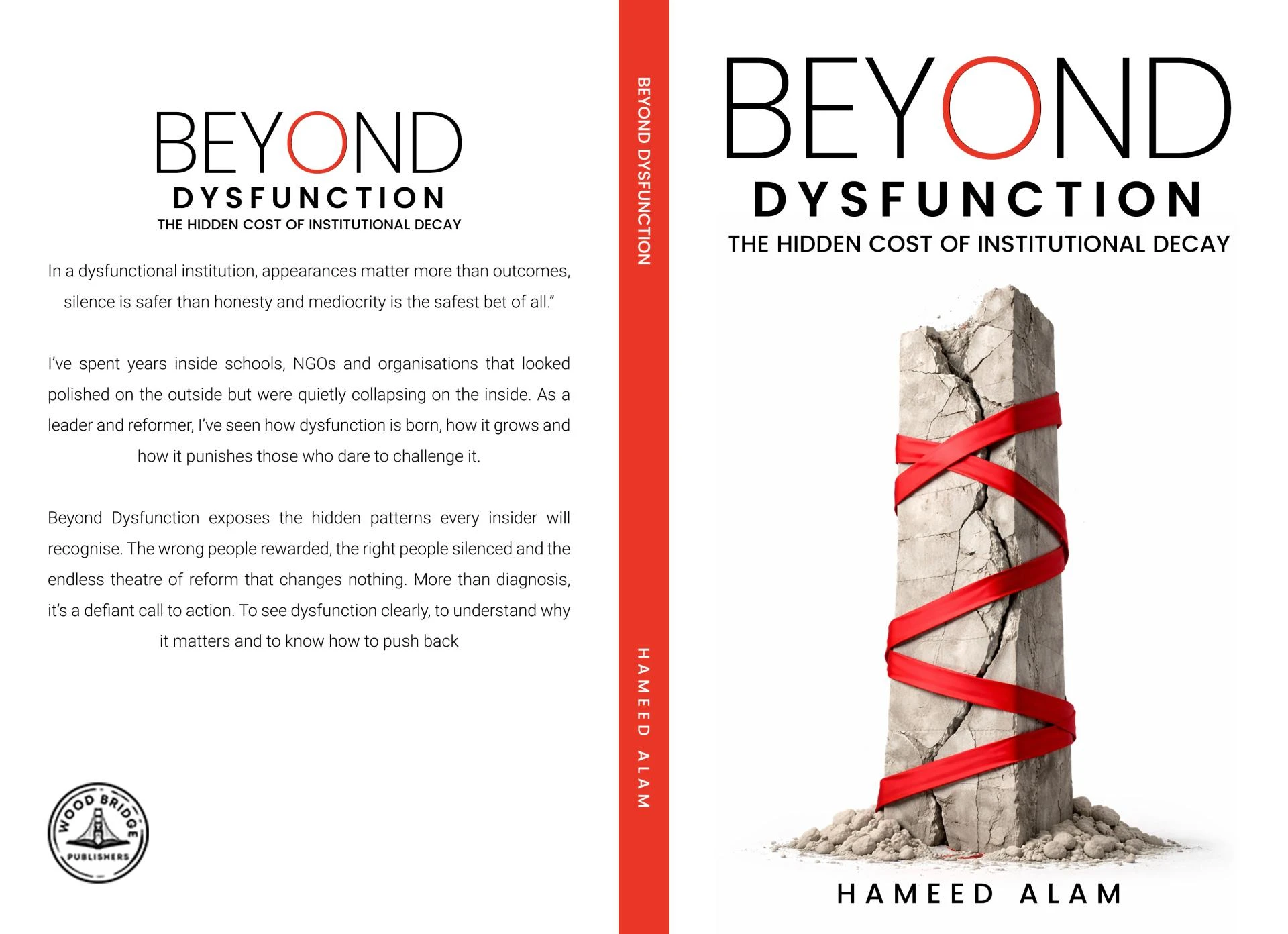

The Human Cost of Institutional Dysfunction
When dysfunction takes root inside an organisation, the first casualties are rarely budgets or branding. They are people.
In Beyond Dysfunction, Hameed Alam addresses one of the most painful truths about failing systems: the strongest professionals often leave first.
This might seem counterintuitive. Wouldn’t the least capable struggle most? In reality, high performers are typically the first to recognise when standards are slipping. They see the gap between what is possible and what is tolerated. And when that gap remains unaddressed, they begin to disengage.
Dysfunctional systems place disproportionate burdens on their most committed staff. These individuals compensate for weak processes. They stay late to fix avoidable problems. They protect quality despite insufficient resources. Their dedication keeps the institution functioning long after cracks have formed.
But dedication without support leads to burnout.
Burnout in this context is not a personal failing. It is structural. When effort is repeatedly blocked by bureaucracy, when ideas are absorbed and diluted, when initiative results in resistance rather than progress, even the most resilient professionals begin to question their impact.
Eventually, many choose to leave quietly.
Their departure is often framed as a “career move.” Rarely is it acknowledged as a systemic loss. What remains unspoken is the amount of invisible labour they carried. When they exit, that labour either redistributes to already strained colleagues or disappears entirely.
As more capable individuals leave, a cultural shift occurs. Cynicism spreads. Remaining staff internalise the lesson: pushing too hard is risky. Caring too much is exhausting. Challenging the system rarely changes it.
Over time, the workplace adapts to a lower standard of engagement.
Alam describes how this creates a self-reinforcing cycle. The institution loses reformers. It promotes those who adapt to the status quo. New hires quickly learn which behaviours are safe. Excellence becomes optional; compliance becomes rewarded.
The most troubling consequence is not just employee dissatisfaction, it is the impact on those served by the institution. Students receive diluted instruction. Clients experience transactional service. Communities feel the decline in ways they cannot always articulate.
The tragedy is that many of these organisations still believe they are functioning well. Metrics may support that belief. External praise may reinforce it. But internally, morale tells a different story.
Breaking this cycle requires leaders to ask difficult questions:
Are we retaining our best people or exhausting them?
Are we rewarding courage or penalising it?
Are we building systems that empower or constrain?
Dysfunction does not begin with dramatic failure. It begins when good people feel their efforts no longer matter.
Preventing that outcome demands intention. It demands accountability. And above all, it demands the courage to listen before the quiet leavers become the majority.






















Sign in to leave a comment.