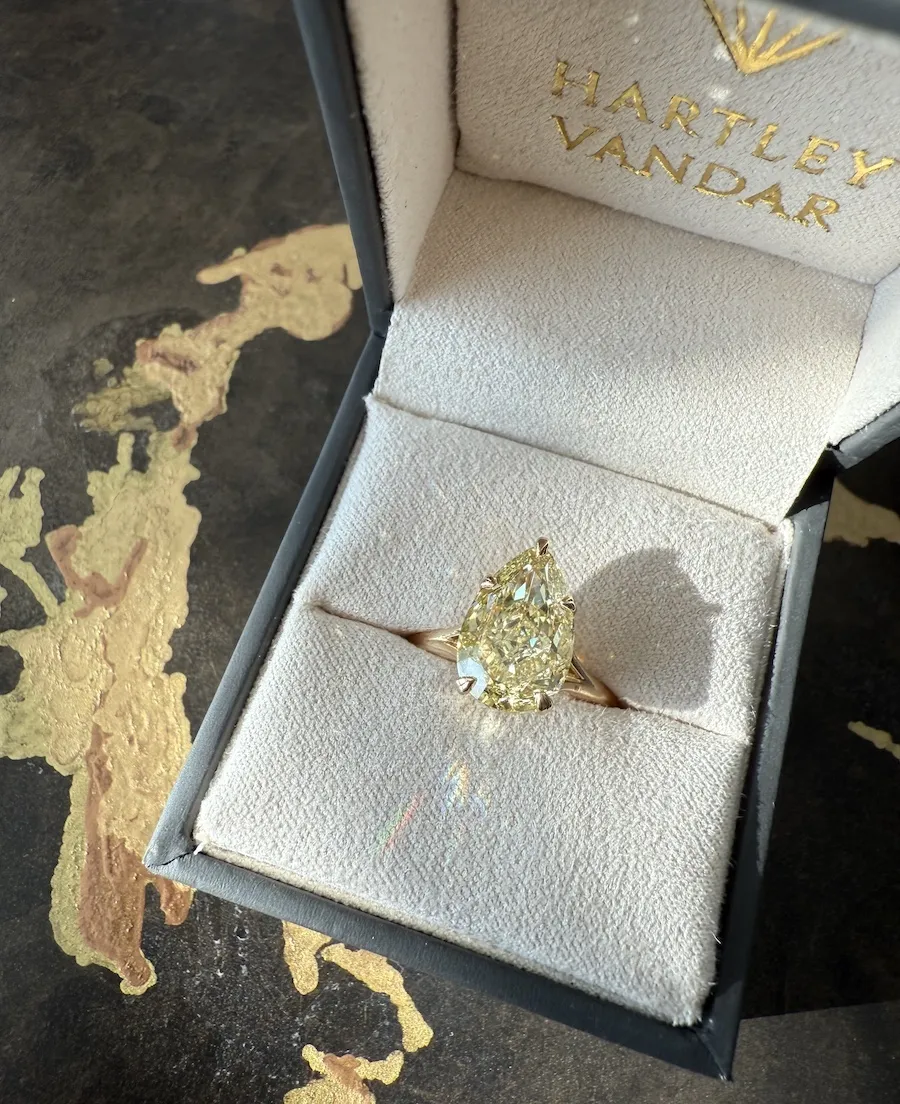

Luxury jewelry has always carried a certain weight—heritage houses, iconic collections, and designs that stay recognizable across decades. But the way people approach luxury is shifting.
More buyers today are less interested in wearing what everyone else can buy and more drawn to pieces that feel personal, even private in meaning.
That shift is where custom jewelry stands apart, especially when it’s built around individuality rather than repetition.
What commissioned jewelry really means
Commissioned jewelry is often misunderstood as just “custom-made.” In reality, it’s closer to a collaborative process than a purchase.
Instead of selecting something from a display, the piece begins with an idea—sometimes very clear, sometimes just a feeling. That idea is then shaped into something wearable through a back-and-forth process between the client and designer.
What makes this different is that nothing is pre-decided. There’s no fixed catalog guiding the outcome. Every decision is built around the person it’s being created for.
Custom design vs traditional retail jewelry
Traditional luxury jewelry brands rely heavily on established designs. Even when new collections are released, they usually build on familiar silhouettes or repeating themes. That consistency is part of their identity, but it also means the pieces are never truly unique.
Custom design works in the opposite direction. It doesn’t start with a collection—it starts with a blank page.
Settings, proportions, metal tone, stone shape—everything is open to change. Even small adjustments can completely shift the personality of the final piece. That’s why people drawn to bespoke jewelry often prefer the freedom it offers over the predictability of retail luxury.
One-of-one pieces and why they matter
There’s something inherently different about owning a piece that no one else will ever have. Not a variation. Not a replica. Just one.
One-of-one jewelry isn’t only about exclusivity—it’s about intention. These pieces are often tied to specific moments or stories, which naturally gives them more emotional weight.
Rare diamonds and unique gemstones play a big part here. Instead of selecting a stone based only on standard categories, the focus often shifts to character—how it catches light, its subtle imperfections, or what makes it visually distinct from anything else available.
That’s where commissioned jewelry starts feeling less like a product and more like a personal object with meaning attached to it.
How the design consultation actually works
The consultation stage is where things start to take shape. It usually begins with a conversation rather than a design brief. People talk about memories, references, styles they are drawn to, and sometimes even pieces they dislike.
From there, sketches or digital concepts begin to form. These aren’t final designs—they’re working ideas meant to be refined.
What’s interesting is that the process rarely moves in a straight line. Clients often adjust their thinking as they see ideas visualized. Designers refine details based on feedback, and slowly the piece becomes more defined with each step.
It’s less about selecting a design and more about discovering it together.
Diamond selection and why it feels different
In traditional jewelry shopping, diamond selection usually means choosing from available stones within a fixed range. In custom work, the process feels more curated.
Stones are often sourced specifically for a design rather than the other way around. That subtle shift changes everything. Instead of fitting a diamond into a setting, the design evolves around the stone itself.
Cut, brilliance, and rarity still matter—but there’s often a stronger emphasis on how the diamond “feels” in context with the design. Two stones with similar grading can look completely different once placed in a setting.
This is also where Hartley Vandar custom jewelry often emphasizes individuality through sourcing rare and distinctive diamonds rather than standard inventory-based selection.
Craftsmanship built for longevity
Good custom jewelry isn’t just about how it looks on day one. It’s about how it holds up over time—physically and emotionally.
Heirloom-quality craftsmanship focuses on durability as much as design. Settings are reinforced, proportions are balanced for long-term wear, and finishing details are done with precision rather than speed.
The idea is simple: the piece should age well, not just shine initially.
Over time, these pieces often become part of family history. Not because they were designed to be passed down, but because they naturally last long enough—and mean enough—to be kept.
Final thoughts
Luxury is no longer just about brand recognition or established design language. For many people, it’s becoming more personal, more intentional, and far less predictable.
Custom jewelry reflects that change. It removes the distance between designer and wearer and replaces it with collaboration.
Within that space, Hartley Vandar custom jewelry reflects a modern approach to fine jewelry—focused on rare stones, individual creation, and designs that exist only once. It’s less about following tradition and more about creating something that doesn’t already exist in the world.



















Sign in to leave a comment.