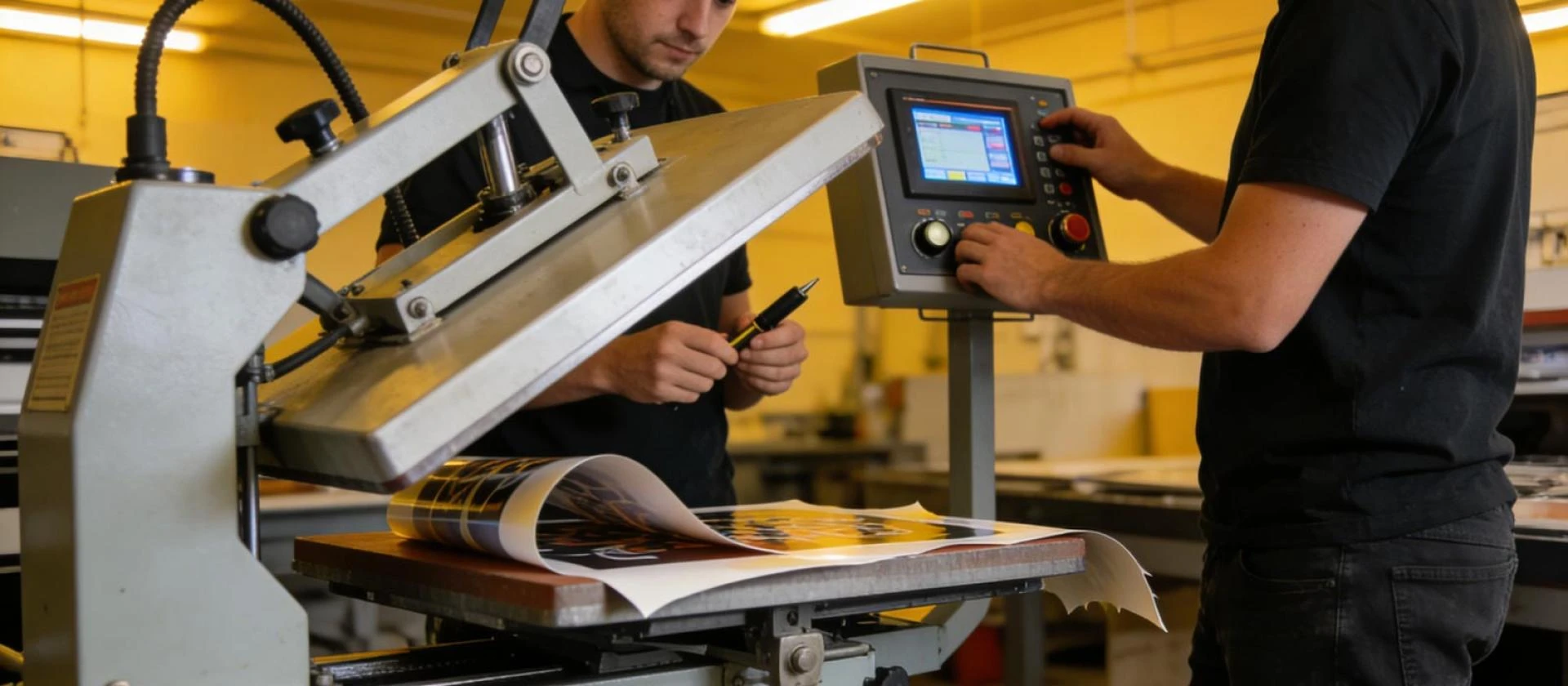

You finish pressing a design, lift the heat press, peel the carrier sheet… and your heart sinks.
Instead of a smooth, professional finish, the vinyl lifts at the edges. Maybe it wrinkles. Maybe it looks fine at first, but starts peeling the next day. Or worse — it survives the press but cracks after the first wash.
If you’ve experienced heat transfer vinyl peeling, you’re not alone. It’s one of the most common problems in the heat press world, especially for beginners. The good news? Vinyl doesn’t peel randomly. There’s always a reason.
Once you understand how heat transfer vinyl (HTV) actually bonds to fabric — and what can interfere with that bond — peeling becomes much easier to prevent.
This guide breaks down what causes vinyl to peel after heat pressing, how to fix it (if possible), and how to avoid it entirely — with practical advice relevant to UK crafters and small print businesses.
What’s Really Happening When Vinyl Peels?
Heat transfer vinyl works through a heat-activated adhesive layer. When the correct temperature, pressure, and time come together, that adhesive melts slightly and flows into the fabric fibres. As it cools, it forms a strong bond.
When vinyl peels, it means that the bond never fully formed, or it weakened afterwards.
There are generally three scenarios:
- Vinyl lifts immediately during carrier sheet removal
- Vinyl looks fine, but peels after cooling
- Vinyl survives pressing but fails after washing or stretching
Each one points to a slightly different cause.
The Five Main Reasons HTV Peels After Heat Pressing
1. Temperature Wasn’t Actually Correct
This is more common than most beginners realise.
Your heat press might display 160°C — but that doesn’t guarantee the platen surface is truly at that temperature. Over time, heat presses can drift out of calibration.
Common UK beginner mistakes:
- Trusting the display without testing
- Using a “standard” temperature for all vinyl brands
- Not adjusting for cold workshops or garages
In colder UK months, especially in unheated garden studios or sheds, the fabric itself can absorb heat before the adhesive activates properly.
Tip: Consider checking your platen temperature occasionally with an infrared thermometer or heat strips. And allow garments to warm slightly indoors before pressing.
2. Pressure Was Too Light
Heat alone doesn’t bond vinyl — pressure is equally important.
If pressure is too light:
- The centre might stick
- Edges and fine details lift
- Letters peel at corners
If pressure is uneven:
- One side bonds
- The opposite side fails
This often happens when pressing:
- Thick hoodies
- Sweatshirts with seams under the design
- Zipped garments
- Heavy cotton blends
In the UK market, hoodies and sweatshirts are hugely popular — especially for school leavers, sports teams, and small business branding. These thicker garments require firmer pressure than lightweight T-shirts.
A good rule of thumb: when closing your heat press, you should feel resistance — but not struggle.
3. Press Time Was Incorrect
Under-pressing is one of the biggest causes of peeling.
If the adhesive doesn’t fully activate, it will appear attached — but lift later.
Over-pressing can also create issues:
- Adhesive burns
- Vinyl becomes brittle
- Cracking appears after stretching
Many beginners rely on generic settings found online. However, different vinyl types require specific timing.
Always follow the manufacturer’s recommended time and temperature rather than guessing.
4. Peeling at the Wrong Stage
Not all vinyl is peeled the same way.
- Hot peel: Remove carrier immediately
- Cold peel: Wait until completely cool
- Warm peel: Peel when slightly warm
Peeling cold peel vinyl too early is a very common beginner mistake. The adhesive hasn’t fully set, so the vinyl lifts with the carrier.
Check your vinyl instructions every time — especially if switching brands.
5. Fabric Compatibility Issues
Not all fabrics work with standard HTV.
In the UK market, popular garments include:
- Cotton T-shirts
- Poly-cotton blends
- Performance polyester sportswear
- School uniform jumpers
High-risk fabrics include:
- Waterproof jackets
- Nylon
- Heavily dyed polyester
- Stretch athletic wear without stretch vinyl
Standard HTV can struggle with these materials, leading to peeling after washing.
Matching vinyl type to fabric type is essential — particularly when printing sportswear or activewear, which is common in UK small business orders.
Can You Fix Vinyl That’s Already Peeling?
Sometimes — but not always.
When It Might Be Fixable
If the vinyl lifted cleanly during initial peeling and the adhesive hasn’t distorted, you can try:
- Lay garment flat
- Reposition design carefully
- Cover with parchment paper or Teflon sheet
- Increase pressure slightly
- Press for 5–10 seconds
Let it cool completely before testing.
If it still lifts, stop. Repeated pressing can damage both vinyl and garment.
When It’s Not Worth Saving
Vinyl usually cannot be reused if:
- Adhesive layer has torn
- Design has stretched out of shape
- Carrier sheet has residue
- Vinyl has wrinkled
Once adhesive integrity is compromised, reheating won’t restore it properly.
Sometimes starting fresh is the more professional choice.
Common Beginner Mistakes in the UK Heat Press Scene
Beyond temperature and pressure, there are subtle errors that cause recurring peeling issues.
Skipping the Pre-Press
A quick 3–5 second pre-press:
- Removes moisture
- Flattens fibres
- Creates a better bonding surface
In the UK’s damp climate, moisture in fabric is more common than you think. Pre-pressing is especially important in autumn and winter.
Not Letting Garments Rest Before Washing
Most HTV needs 24 hours before washing.
Customers washing items too early is a hidden cause of peeling. If you run a small print business, include care instructions with every order.
Pressing Over Seams
If your design crosses a seam, pocket edge, or thick stitching, pressure becomes uneven.
Use a pressing pillow or raise the print area so the design sits on a flat surface.
Ignoring Stretch Testing
After pressing and cooling:
Gently stretch the garment.
The vinyl should move with the fabric — not lift.
If lifting occurs, repress immediately before packaging or wearing.
Why Experienced Printers Rarely Have Peeling Issues
It’s not about luck — it’s about process control.
Professionals:
- Keep detailed time and temperature records
- Use consistent materials
- Test new garment batches
- Calibrate presses periodically
- Adjust pressure per garment type
They treat heat pressing like production, not guesswork.
Once you develop a repeatable process, peeling becomes rare rather than frequent.
Choosing the Right Workflow as a Beginner
If you’re just starting out in heat transfer printing:
- Stick to cotton or cotton-blend garments
- Use a reputable HTV with clear instructions
- Record every successful setting
- Avoid switching materials constantly
- Invest time in testing rather than rushing orders
Building confidence with consistent materials is far more valuable than experimenting too widely at the beginning.
UK-Specific Considerations
Because many UK home printers work from:
- Spare bedrooms
- Garages
- Garden offices
Ambient temperature fluctuates more than in industrial settings.
If your workspace drops below 15°C, vinyl performance can suffer. Bringing garments indoors overnight before pressing can help.
Humidity also affects results. A dehumidifier in colder months can make a noticeable difference.
Preventing Vinyl Peeling Long-Term
Here’s a simple checklist to reduce issues dramatically:
1. Pre-press every garment
2. Match vinyl to fabric
3. Use the correct peel method
4. Apply firm, even pressure
5. Let cool fully before testing
6. Wait 24 hours before washing
7. Keep notes on successful settings
Consistency matters more than anything else.
Building Confidence With Heat Transfer Vinyl
Vinyl peeling after heat pressing feels frustrating — especially when you’ve followed instructions carefully. But peeling is rarely random.
It’s almost always a mismatch between:
- Heat
- Pressure
- Time
- Fabric
- Vinyl type
Once you understand how these elements interact, you move from trial-and-error to controlled results.
For beginners, the key is patience and documentation. Take the time to test properly. Adjust gradually. Observe how fabric behaves.
With the right settings and a disciplined approach, your heat transfer vinyl designs can withstand stretching, washing, and regular wear — delivering the clean, professional finish you were aiming for in the first place.




























Sign in to leave a comment.