
Introduction
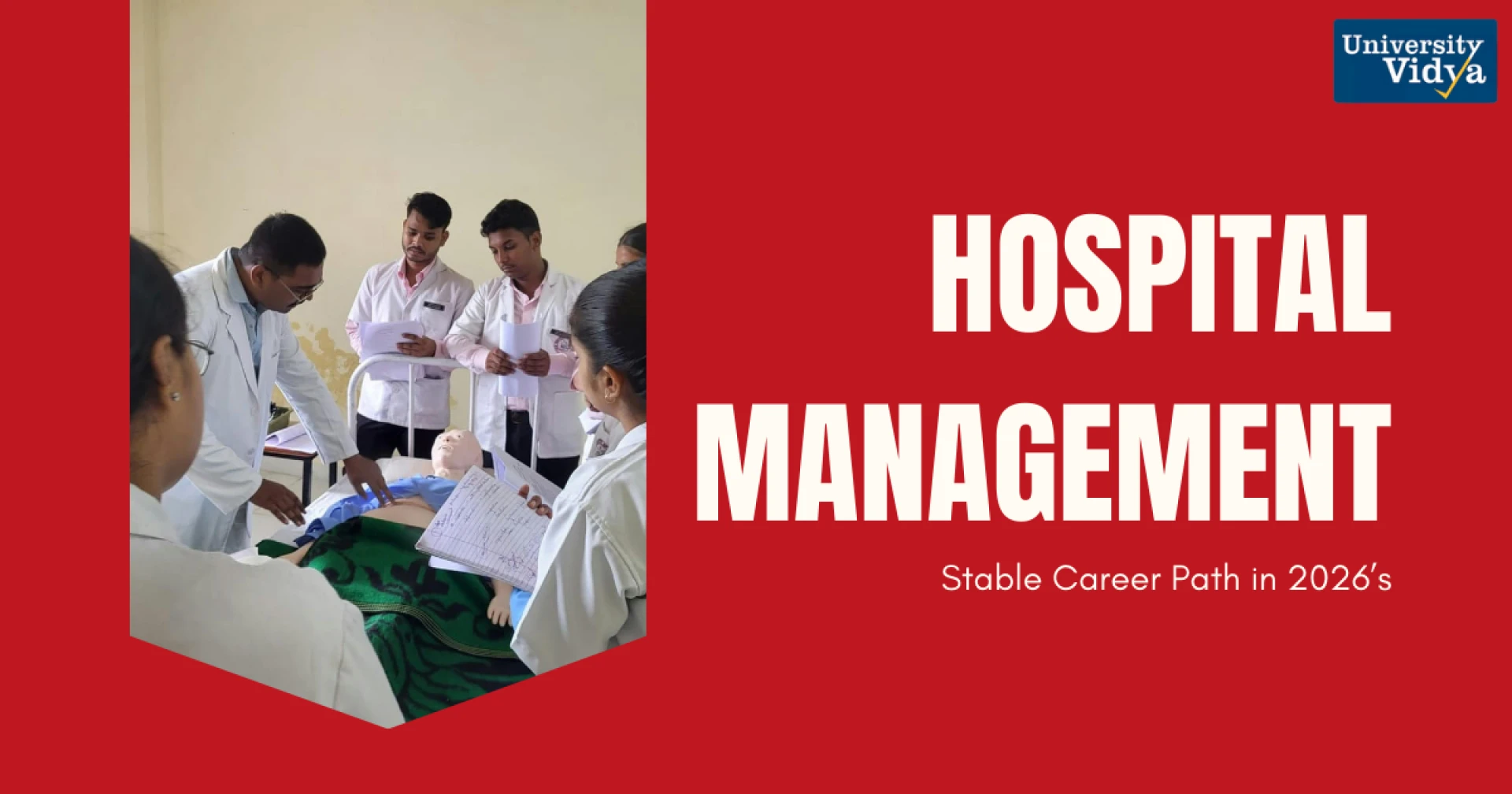
In 2026’s unpredictable global economy, Hospital Management stands out as one of the most stable and recession-resistant career paths. With continuous demand for healthcare services, expanding hospital infrastructure, and rising regulatory standards, trained healthcare administrators are essential. This field offers long-term job security, leadership growth, and strong earning potential while playing a critical role in maintaining operational efficiency in modern healthcare systems.
Healthcare: A Recession-Resilient Industry
Economic volatility affects industries differently. Real estate, technology startups, and luxury markets often fluctuate during downturns. Healthcare, however, remains essential regardless of market cycles.
Hospitals, diagnostic centers, specialty clinics, and multi-specialty chains require structured administration to function efficiently. As populations grow and life expectancy increases, healthcare demand rises steadily. This consistent demand ensures that Hospital Management professionals remain relevant even during economic slowdowns.
Unlike industries driven purely by consumer trends, healthcare operates on necessity. That fundamental demand creates long-term career security.
The Expanding Healthcare Infrastructure in 2026
Governments and private investors continue to invest heavily in healthcare infrastructure. From smart hospitals and telemedicine centers to multi-city hospital networks, expansion is ongoing.
With expansion comes complexity. Hospitals require:
- Operational efficiency
- Financial oversight
- Regulatory compliance
- Human resource coordination
- Technology integration
Professionals trained in Hospital Management are equipped to handle these responsibilities. Their expertise ensures that healthcare institutions maintain both patient satisfaction and financial sustainability.
Bridging Clinical Expertise and Administrative Leadership
Doctors and clinical staff focus on patient care. However, the healthcare system also requires strategic administrators who can optimize resources and implement policies effectively.
A structured Hospital Management program teaches:
- Healthcare operations planning
- Medical ethics and compliance
- Healthcare finance management
- Quality assurance systems
- Healthcare marketing strategies
These competencies position graduates as essential decision-makers within hospitals. They become the link between medical teams and executive leadership.
Job Stability Through Operational Necessity
Hospitals operate 24/7. Emergency departments, critical care units, and specialized departments cannot pause operations during economic downturns.
Because operational continuity is non-negotiable, Hospital Management professionals remain indispensable. Their roles include workforce management, vendor coordination, budgeting, and crisis management functions critical to uninterrupted healthcare delivery.
Even in periods of economic contraction, hospitals must maintain staffing and management structures. This makes healthcare administration one of the most stable white-collar career paths.
Leadership Roles with Long-Term Growth
The career progression in Hospital Management is structured and growth-oriented. Entry-level roles such as hospital coordinator or operations executive can evolve into positions like:
- Hospital Administrator
- Healthcare Operations Manager
- Quality Control Head
- Medical Superintendent
- Regional Healthcare Director
With experience and advanced qualifications, professionals can lead multi-hospital chains or healthcare consultancy firms. Stability does not mean stagnation; it means sustainable upward mobility.
Digital Healthcare and Administrative Innovation
Healthcare in 2026 integrates advanced technologies such as electronic health records (EHR), AI-based diagnostics, telemedicine platforms, and automated billing systems.
Administrators must understand both healthcare regulations and digital systems. Modern Hospital Management programs include modules on:
- Health informatics
- Data-driven decision-making
- Telehealth operations
- Healthcare analytics
This ensures graduates can manage technologically advanced healthcare ecosystems while maintaining compliance and efficiency.
Global Demand and Cross-Border Opportunities
Healthcare is a global priority. From developing nations expanding primary care systems to advanced economies investing in specialized treatments, healthcare management expertise is internationally relevant.
Professionals trained in Hospital Management can explore opportunities in private hospitals, government institutions, health insurance companies, pharmaceutical firms, and international healthcare consultancies.
The versatility of the qualification enhances employability across regions and sectors.
Earning Potential and Professional Credibility
A stable career must also provide financial security. Healthcare administrators often receive competitive salary packages due to the responsibility associated with managing high-value infrastructure and large medical teams.
Additionally, structured programs offered through recognized institutions increase credibility. Advisory platforms like University Vidya assist students in identifying accredited hospital management courses aligned with industry standards, ensuring long-term professional value.
Choosing a credible institution strengthens both job prospects and professional recognition.
Crisis-Proof Career in an Uncertain Economy
Global events over the past decade have demonstrated the resilience of healthcare systems. During crises whether economic, public health, or geopolitical hospitals remain operational and often expand services.
This resilience reinforces the stability of Hospital Management as a profession. Administrators play central roles in crisis coordination, emergency resource allocation, and compliance with evolving health policies.
Their importance becomes even more visible during uncertain times.
Final Analysis
In 2026’s volatile economic landscape, career security is a primary concern for professionals. Industries may fluctuate, but healthcare remains fundamental to society.
Hospital Management offers a rare combination of stability, leadership growth, financial security, and meaningful impact. With expanding infrastructure, technological integration, and consistent global demand, it stands as one of the most reliable professional pathways in modern economies.
For individuals seeking long-term career assurance in an unpredictable world, healthcare administration represents not just employment but sustainable professional resilience.

































Sign in to leave a comment.