
A joint family in Lucknow, three generations under one roof, recently had to deal with a medical emergency involving the grandfather. In the middle of arranging treatment, nobody could immediately locate his health policy documents. His son found an old LIC policy instead. His daughter-in-law found her own health cover. The grandfather's actual policy turned up an hour later, in a drawer nobody had checked first.
This is not a story about one missing folder. It is what happens when a household with five policyholders, and roughly a dozen policies between them, has no shared system for knowing what exists, who holds it, and where to find it.
The Hidden Cost of Fragmented Insurance Records
Most Indian households do not have one insurance policy. They have several, spread across several people, bought at different times, through different channels, from different insurers. A working professional's term plan, a parent's health cover, a grandparent's decades-old LIC policy, and a spouse's employer-linked group policy can all exist in the same home without ever being viewed together.
Each policy on its own is manageable. The household as a whole is not, because nobody besides the individual policyholder usually knows the full picture. That gap only becomes visible at the worst possible time: during a claim, a hospitalization, or a sudden loss.
This is not a problem unique to large joint families either. Even a smaller nuclear household, with two working parents and one or two children, can end up with policies scattered across employer benefits, a bank-sold plan, and an agent-recommended cover, none of which any one person has a complete view of.
What a Centralized Record System Actually Solves
One Household, Multiple Policyholders, One Underlying Risk
A centralized system does not mean pooling everyone's policies into a single shared account. Under IRDAI rules, an e-Insurance Account (eIA) belongs to one individual, and each person can hold only one. What changes is that every adult family member can maintain their own complete, organized digital record instead of a private pile of paper only they understand.
Multiply that across a household, and a family goes from a dozen scattered paper policies to a small, known set of digital accounts, one per adult, each fully accounted for. That is the real shift: not fewer accounts, but zero policies nobody else in the family can locate.
The e-Insurance Account: CIRL's Answer to Fragmentation
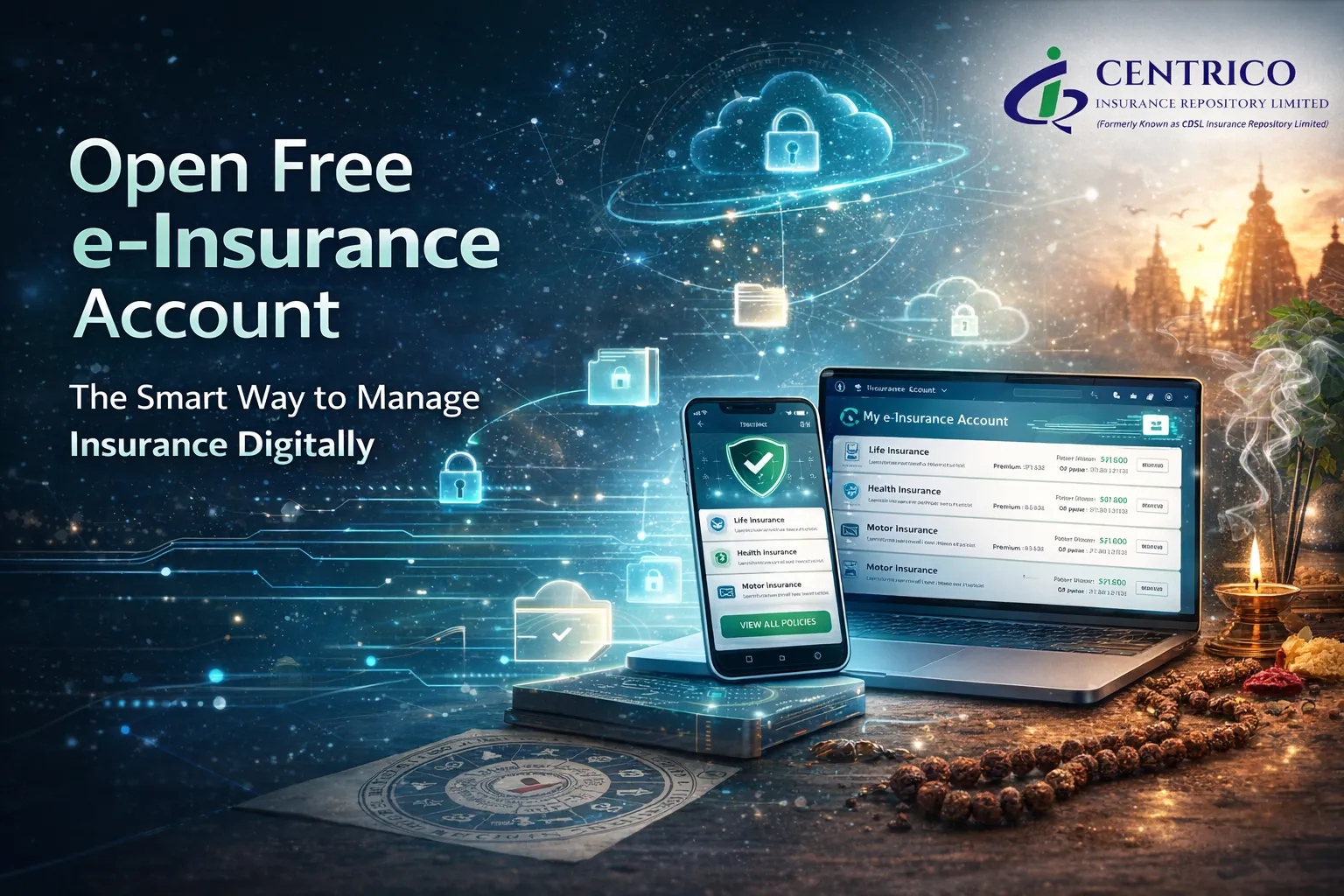
Centrico Insurance Repository Limited (CIRL) operates as an IRDAI-certified Insurance Repository, offering every eligible policyholder a single eIA that can hold their life, health, and general insurance policies together.
What Is an eIA Number and How to Get It in India
An eIA number is generated once a policyholder completes CIRL's online registration and KYC process, typically through DigiLocker or PAN. Once issued, it becomes the single reference point for every eligible policy that person owns, regardless of which insurer issued each one.
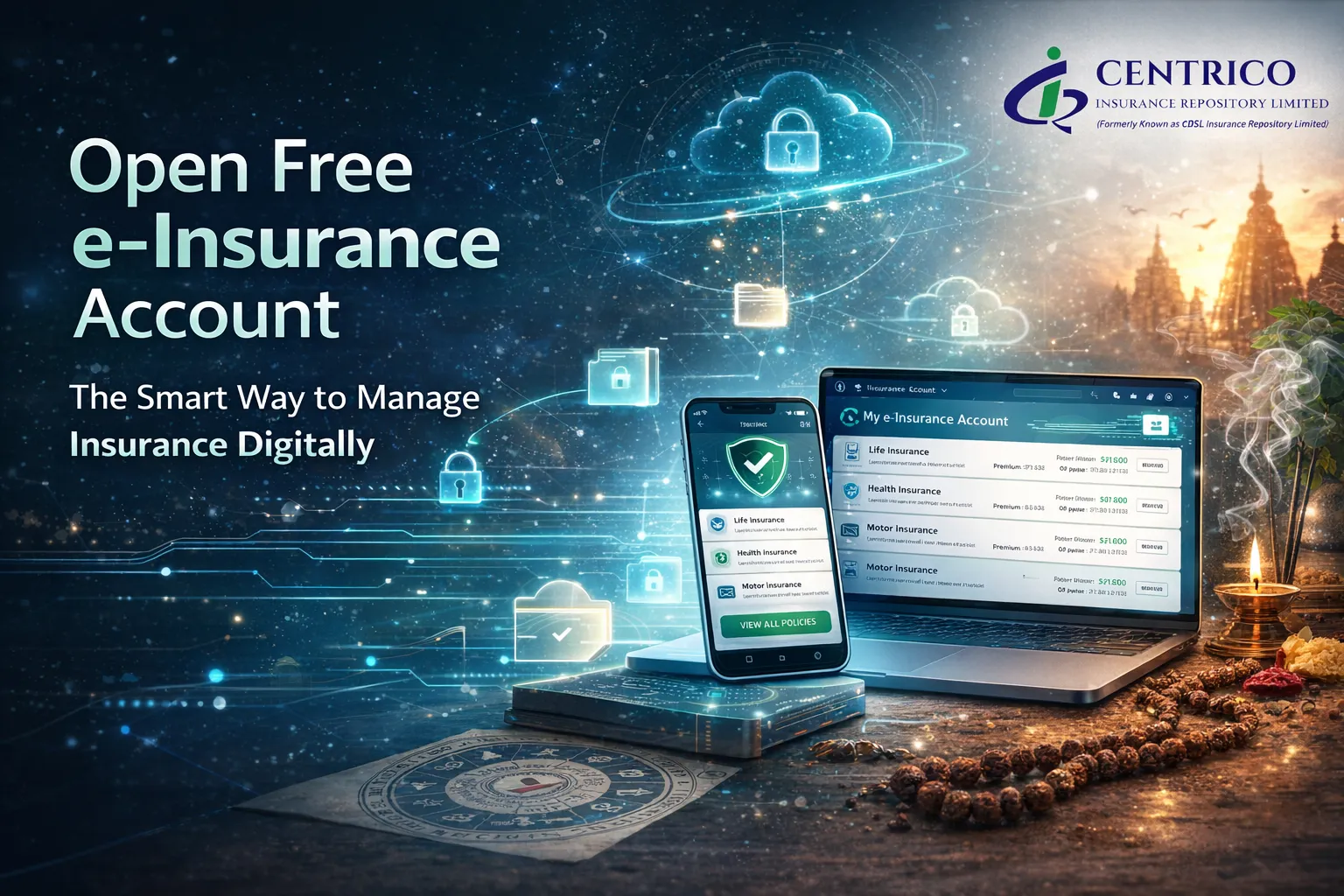
e-Insurance Account for Policy Management
The e-Insurance Account for policy management gives each family member a personal, organized view of everything they hold, viewable online instead of relying on physical files. For a household, this means five organized accounts instead of one disorganized pile.
Bringing Every Family Member's Policies Into One Place
Each family member can gradually add insurance policy to existing eIA account over time. Existing paper policies can be converted into electronic form and linked, and new policies can be credited to the same account simply by quoting the eIA number in the proposal form when buying.
For the grandfather in Lucknow, this would have meant his health policy, along with any other cover he holds, sitting in one account that his son or daughter-in-law could be told about and shown once, rather than a drawer nobody thought to check during an emergency.
Store All Your Insurance Policies Online: Life, Health, and General Together
An eIA is not limited to one category of cover. As per CIRL's own FAQ, all life, health, general, and annuity policies issued by IRDA-registered insurers that have signed up with CIRL are eligible to be held electronically. Family members can store all your insurance policies online in a single account each, rather than tracking life cover, health cover, and motor insurance separately.
Manage Your Insurance Portfolio Digitally as a Family
Once policies are linked, every family member can manage your insurance portfolio digitally, checking renewal dates and policy status from their own account instead of waiting for a paper notice to arrive at the right time.
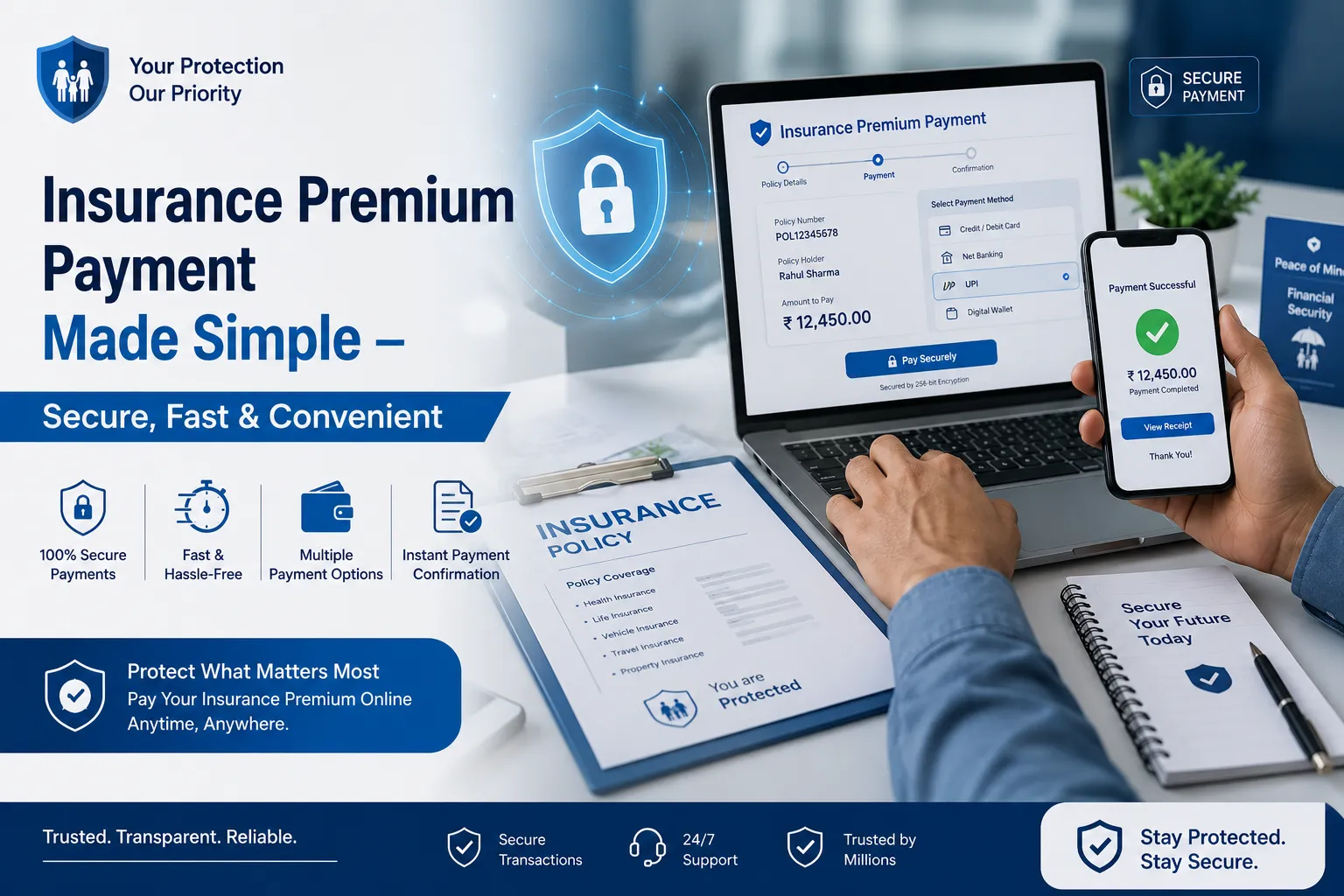
CIRL's Instant Premium Payments service also supports multiple payment options, including modern digital rails such as Bharat Connect, so premiums across different family members' policies can each be paid quickly, without logging into separate insurer apps for every person in the household.
Our Motor Insurance Partners
Motor insurance in India is underwritten by general insurance companies, and a household's vehicles are often one of the more overlooked parts of a family's overall insurance picture. Based on the general insurance companies listed in CIRL's most recently published annual report, the following insurers form part of CIRL's general insurance partner network through which motor policies can be held:
- Acko General Insurance Company Limited
- Bharti AXA General Insurance Co. Ltd.
- Cholamandalam MS General Insurance Co. Ltd
- Future Generali India Insurance Company Limited
- Go Digit General Insurance Limited
- HDFC Ergo General Insurance Company Limited
- ICICI Lombard General Insurance Company Limited
- Liberty General Insurance Company Limited
- Magma General Insurance Limited
- Raheja QBE General Insurance Company Limited
- Reliance General Insurance Company Limited
- Royal Sundaram General Insurance Company Limited
- SBI General Insurance Company Limited
- Shriram General Insurance Company Limited
- Universal Sompo General Insurance Company Limited
- Zurich Kotak General Insurance Company (India) Limited
This list reflects CIRL's published general insurance partner network as of its latest annual report and may change as new insurers sign up. It excludes insurers in this network that underwrite health insurance exclusively, since they do not issue motor policies.
How a Family Can Start Building This System
- Each adult opens a free eIA. There is no charge to open or maintain one, and no existing policy is required to begin.
- Link what already exists. Convert and link existing paper policies for each family member, one at a time.
- Quote the eIA number going forward. Every new policy bought after that can be credited to the right account directly.
- Tell one other family member. Make sure at least one trusted relative knows each account exists and roughly what it holds, so the information is never locked to a single person.
Conclusion
Indian families do not lack insurance. They lack a shared way of knowing what insurance exists across the household, who holds it, and how to reach it quickly. A centralized record system does not merge everyone's policies into one account. It gives each family member their own organized, IRDAI-regulated record, and turns a household's scattered paperwork into a small, known set of accounts instead of a drawer nobody has fully checked.
The value is not only in an emergency. It shows up in smaller ways too, such as a renewal date that would otherwise be missed, or a policy that nearly gets bought twice because nobody remembered an older one already existed.
For the family in Lucknow, and for any household juggling policies across multiple generations, that shift is what turns an hour spent searching during an emergency into a two-minute lookup.
FAQs
Can one eIA account cover an entire family?
No. Under IRDAI rules, an eIA belongs to one individual, and each person may hold only one. Each adult family member needs their own account to hold their own eligible policies.
Is there a charge for opening an eIA for each family member?
No. Opening and maintaining an eIA is offered free of cost for every policyholder, with no hidden charges.
Can policies bought years ago still be added to an eIA?
Yes. Existing paper policies can be converted into electronic form through a service request to the insurer, the repository, or an approved person, and then linked to the relevant eIA.
What documents are typically needed to open an eIA?
CIRL's process is built around DigiLocker or PAN-based verification, keeping documentation minimal rather than requiring a stack of physical paperwork.























Sign in to leave a comment.