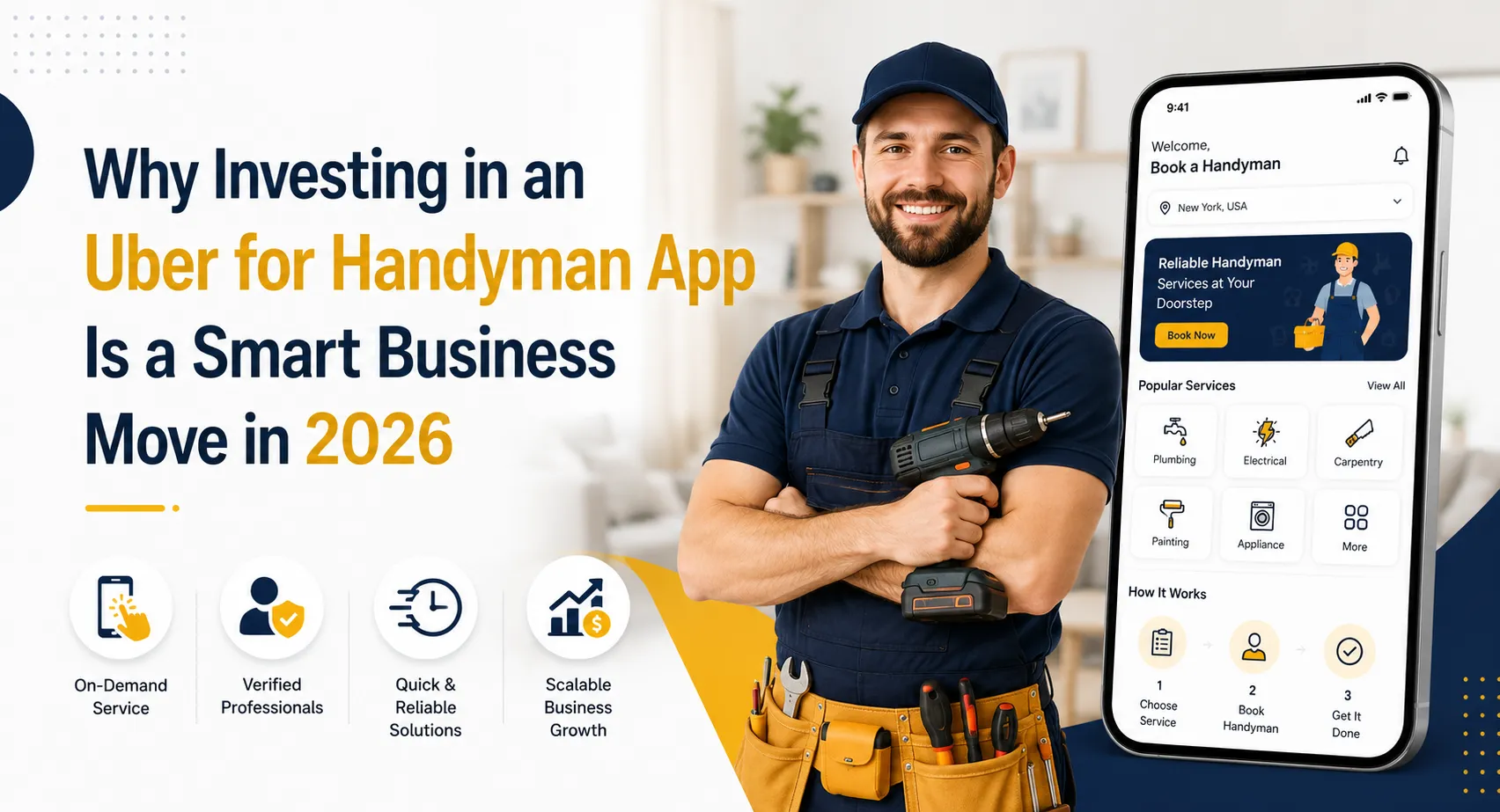

The home services sector is undergoing a remarkable transformation. Consumers no longer want to spend hours searching for reliable technicians, electricians, plumbers, or repair specialists. They expect immediate access to trusted professionals through intuitive digital platforms.
This shift has created substantial opportunities for entrepreneurs seeking sustainable business models. Investing in an Uber for Handyman platform in 2026 represents more than a technological decision. It is a strategic move toward participating in a rapidly expanding on-demand economy.
The Rise of the Handyman Marketplace
The traditional handyman industry relied heavily on referrals, local advertising, and fragmented communication channels. While these methods still exist, customer behavior has changed dramatically.
Modern users prioritize convenience. They want the ability to:
- Book services instantly
- Compare providers
- Track appointments in real time
- Make secure digital payments
As a result, marketplace platforms have become increasingly influential. Businesses that embrace digital service aggregation are gaining a competitive edge while meeting contemporary customer expectations.
Evolution of Home Service Platforms
The marketplace model has proven successful across multiple industries. Transportation, food delivery, and logistics services have demonstrated the effectiveness of connecting customers with providers through mobile applications.
The home services segment is now experiencing a similar evolution, creating fertile ground for innovative entrepreneurs.
Expanding Market Opportunities in 2026
Several macroeconomic and societal trends continue to fuel demand for handyman solutions.
Urban populations are expanding. Simultaneously, consumers are juggling demanding professional and personal commitments. This combination increases reliance on professional service providers for maintenance and repair tasks.
The proliferation of smartphones has also accelerated digital adoption. Consumers increasingly prefer app-based interactions rather than traditional phone calls or in-person scheduling.
Growing Demand for Convenience
Convenience has become a primary purchasing factor. Businesses capable of reducing friction throughout the customer journey often achieve stronger retention and higher lifetime value.
This trend creates ideal conditions for Uber for Handyman Services that deliver seamless booking experiences and transparent service management.
Revenue Potential for Entrepreneurs
One of the most compelling advantages of this business model is revenue diversification.
Rather than depending on a single income stream, platform owners can monetize operations through multiple channels.
Common revenue sources include:
- Service commissions
- Subscription plans
- Featured provider listings
- Advertising placements
- Surge pricing opportunities
This diversified structure contributes to financial resilience while supporting long-term scalability.
Sustainable Profitability
As transaction volume grows, operational efficiency often improves. This creates opportunities for increased margins without proportionally increasing expenses, making the model particularly attractive for growth-focused businesses.
Technology as a Competitive Advantage
Technology is no longer an auxiliary component of service businesses. It is the central engine driving efficiency and customer satisfaction.
Advanced scheduling systems automatically assign jobs based on proximity, availability, and expertise. Integrated payment systems streamline transactions, while analytics dashboards provide valuable operational insights.
Effective Handyman App Development enables businesses to automate repetitive processes and focus on strategic expansion initiatives.
Enhancing Operational Efficiency
Automation minimizes administrative burdens. Consequently, service providers can complete more jobs while maintaining high service standards.
This creates a virtuous cycle of improved customer satisfaction and stronger marketplace engagement.
Benefits for Customers and Service Providers
Successful platforms create value for all stakeholders.
Customers gain access to dependable professionals through a streamlined interface. Meanwhile, service providers receive consistent job opportunities without substantial marketing expenditures.
A well-designed Handyman App Like Uber fosters trust through ratings, reviews, transparent pricing, and communication features.
Building Long-Term Loyalty
When customers consistently receive reliable service experiences, repeat bookings become more frequent. Strong retention often translates directly into sustainable revenue growth.
Scalability and Business Growth
Scalability remains one of the most significant advantages of the marketplace model.
Once operational processes are established, expansion into additional regions becomes substantially easier. Digital infrastructure allows businesses to onboard providers, manage transactions, and monitor performance across multiple territories.
Solutions offered by spotnrides are designed to support this growth trajectory while helping businesses accelerate market entry and operational maturity.
Future-Proofing the Business
Organizations that invest in scalable technology today position themselves to capitalize on future demand while maintaining agility in evolving market conditions.
Choosing the Right Development Partner
Technology selection plays a critical role in long-term success. Entrepreneurs should prioritize platform reliability, security, scalability, and user experience when evaluating development options.
A robust foundation reduces future maintenance challenges while supporting continuous innovation.
Key considerations include technical expertise, customization capabilities, and post-launch support services.
Conclusion
The convergence of digital transformation, consumer convenience, and marketplace economics makes 2026 an exceptional time to enter the home services industry. Demand continues to rise, technology continues to mature, and customers increasingly prefer app-based solutions.
Businesses that invest early can establish strong market positions, diversify revenue streams, and create scalable operations capable of long-term growth.
As the on-demand economy continues expanding, is now the ideal moment to launch your handyman marketplace platform?


























Sign in to leave a comment.