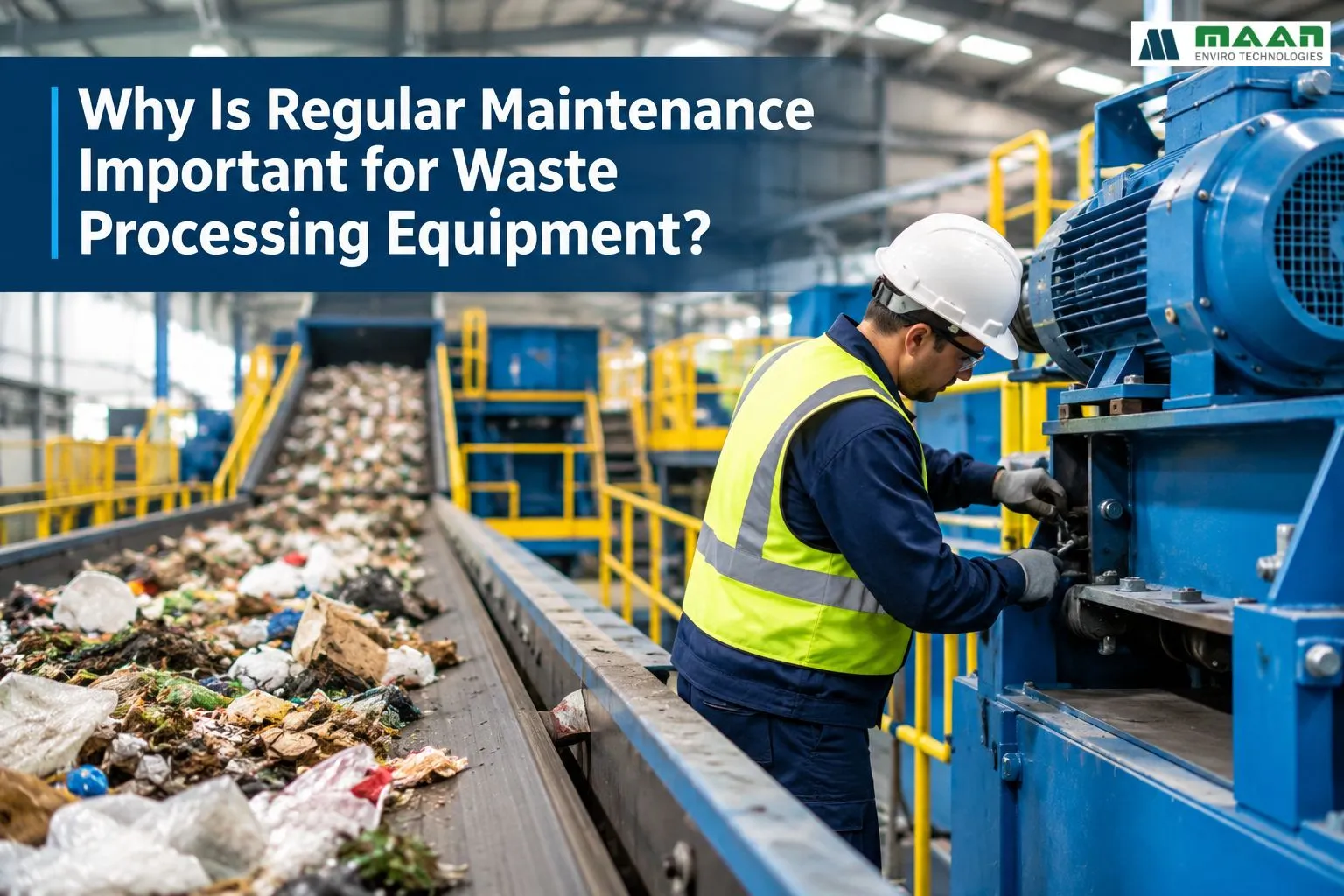

Waste processing equipment doesn't get an easy life. Every day it's chewing through mixed waste, dust, moisture, and wet organic gunk and honestly, most machines just aren't built to shrug that off forever. In a municipal solid waste processing plant in India, regular maintenance isn't a nice-to-have. It's what keeps equipment running, reduces unexpected breakdowns, and keeps the whole line moving without drama.
Here's the thing: a machine can keep running even as a part quietly wears out. Ignore that, and a small fix turns into a big, expensive one. That's really the whole point: maintenance should be a normal part of running the plant, not something you only think about once a machine has already stopped.
What Does Regular Equipment Maintenance Mean?
Regular maintenance means checking, cleaning, servicing, and fixing equipment on a set schedule. The idea is simple: catch problems early, before they turn into real downtime.
What gets checked depends on the machine, but it usually covers things like:
- Moving and rotating parts
- Belts, bearings, shafts, and rollers
- Waste and dust buildup
- Lubrication where it's needed
- Electrical and control systems
- Loose bolts and connections
- Screens and other wear parts
- Damaged or worn-out components
- Safety guards and emergency systems
How often and how deep you go depends on the machine, the waste it's handling, and how hard it's been running.
Why Is Maintenance Important for Waste Processing Equipment?
1. It Helps Prevent Unexpected Breakdowns
A sudden failure can throw off the whole line. If a conveyor dies, material just stops moving, and every machine after it is now sitting idle too. Routine checks are what catch a worn part before it turns into a full stoppage nobody saw coming.
2. It Reduces Equipment Downtime
Unplanned downtime messes with the day's schedule and puts extra pressure on operators who now have to scramble. Good maintenance catches the common problems early, so repairs get planned instead of forced. Planned work is just easier to deal with than a breakdown mid-shift.
3. It Supports Consistent Processing
A well-maintained machine just runs steadier. Screens rotate the way they should, conveyors move properly, and handling components don't randomly hiccup. Checking equipment regularly lets operators catch anything that's starting to mess with flow or separation before it becomes a bigger issue.
4. It Can Extend Equipment Service Life
Wear happens no matter what that part's unavoidable. But bad maintenance speeds it up. Cleaning, lubricating, checking alignment, and swapping worn parts on time stops one small problem from dragging down the rest of the machine.
5. It Improves Workplace Safety
Loose parts, damaged guards, exposed moving components, wiring issues, weird vibration all of it adds risk. Safety checks need to be part of the routine, not an afterthought. Anything damaged, noisy, or leaking should get flagged and fixed before the machine goes back to normal work.
What Is Preventive Maintenance for Waste Equipment?
Preventive maintenance basically means checking and servicing equipment before it fails, not after. Instead of waiting for a bearing to seize or a screen to wear down to nothing, the maintenance team looks at these parts on a schedule.
A decent preventive routine usually looks something like this:
- Daily checks – Listen for weird sounds, check for vibration, leaks, blockages, or anything visibly off.
- Weekly checks – Belts, bearings, fasteners, guards — the stuff that takes the most beating.
- Periodic servicing – Lubrication, alignment, electrical checks, whatever the manual actually recommends.
- Wear-part inspection – Keep an eye on anything that's constantly touching waste, because that stuff wears out fast.
- Record keeping – Write down what got checked, what got fixed, and what keeps coming back as a problem.
Common Signs That Equipment Needs Attention
Operators are often the first people to notice that something is not working normally. Small changes should not be ignored.
Watch for signs such as:
- Unusual noise or vibration
- Reduced material flow
- Frequent blockages
- Belt slipping or misalignment
- Excessive dust around moving parts
- Oil or grease leakage
- Loose or damaged components
- Irregular machine movement
- Repeated electrical faults
- Increasing frequency of breakdowns
For example, a conveyor that starts making an unusual sound may still operate normally for several days. But that sound could indicate a developing problem with a bearing or another moving component. Investigating it early may prevent a much bigger repair later.
A Practical Maintenance Checklist
A simple checklist can honestly save you a lot of headaches when it comes to maintaining waste processing machinery. The main things worth checking:
- Conveyors – Belts, rollers, alignment, and tension.
- Screens – Condition, blockages, and any wear starting to show.
- Bearings – Weird noise, temperature changes, lubrication problems, or rough movement.
- Motors – Odd noise, overheating, loose connections.
- Electrical systems – Cables, panels, controls, connections.
- Safety systems – Guards, emergency stops, warning systems.
- Structural parts – Cracks, loose fasteners, visible damage.
- General condition – Waste buildup, leaks, dust, unusual vibration.
The checklist shouldn't just sit there unchanged forever — update it when the same problem keeps showing up. That's how the team learns which parts actually need more attention.
How to Build a Better Maintenance Routine
Good maintenance is not only about repairing machines. It is also about creating a routine that operators and maintenance teams can follow consistently.
1. Start With Equipment Records
Keep basic information about each major machine, including inspection dates, repairs, replaced components, and recurring issues.
2. Prioritise High-Use Components
Parts exposed to continuous movement, friction, impact, or waste contact may require closer monitoring.
3. Train Operators to Report Early Signs
Operators do not need to perform every repair themselves. However, they should know how to identify unusual sounds, vibration, blockages, and other warning signs.
4. Keep Critical Spare Parts Available
Plan for frequently replaced components in advance where practical. This can reduce delays when a replacement is required.
5. Review Recurring Problems
If the same component fails repeatedly, simply replacing it may not solve the underlying issue. Investigate the cause to determine whether operating conditions, alignment, loading, wear, or another factor is contributing to the problem.
Maintenance Is Part of Efficient Waste Processing
The real value of maintenance is not simply keeping machines clean or repairing damaged parts. It is about keeping the entire processing operation dependable.
Maan Enviro Technologies works with waste processing and material-handling requirements, where equipment condition plays an important role in maintaining organised operations. If you are planning waste processing equipment or reviewing your plant requirements, connect with us today to discuss your needs.
Conclusion
Regular maintenance is what actually keeps waste processing equipment reliable day after day. Unusual noise, a loose bolt, a worn belt, too much vibration — none of it looks serious at first, but that's exactly why it needs checking before it turns into a real problem.
A solid routine of regular inspections, some preventive servicing, decent records, and swapping worn parts on time goes a long way in cutting downtime and keeping the line running more smoothly. At Maan Enviro Technologies, this is basically the approach we push for: don't wait for equipment to tell you it's broken. Over time, that kind of consistency just makes day-to-day plant operations easier to manage, and honestly, a lot less stressful too.
Frequently Asked Questions
1. Why is regular maintenance important for waste processing equipment?
Regular maintenance helps prevent breakdowns, reduce downtime, improve safety, and keep equipment working properly.
2. What does waste processing equipment maintenance include?
It includes cleaning, inspections, lubrication, safety checks, and replacement of worn or damaged parts.
3. What is preventive maintenance for waste equipment?
It means regularly inspecting and servicing equipment before problems or breakdowns occur.
4. How often should waste processing equipment be maintained?
Maintenance frequency depends on the equipment, operating hours, waste type, and working conditions.
5. What are common signs of equipment problems?
Unusual noise, vibration, overheating, blockages, leakage, and irregular movement can indicate equipment problems.
6. Can regular maintenance reduce equipment downtime?
Yes. Early inspections and planned repairs can help prevent unexpected breakdowns and reduce downtime.

























Sign in to leave a comment.