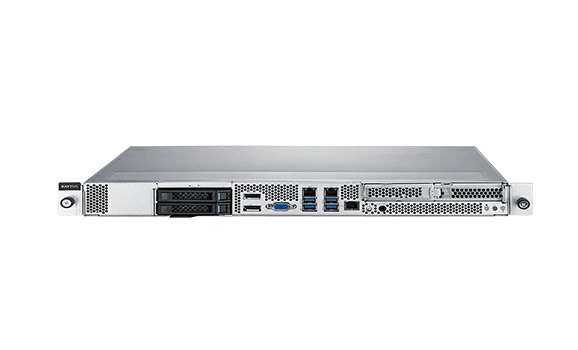

Advantages of liquid-cooled data center:
Efficiency: Compared with air cooling, liquid cooling provides better heat dissipation. By directly cooling components with liquid coolant, heat can be effectively transferred from sensitive equipment, reducing the risk of overheating and improving the overall system performance.
Energy saving: A liquid-cooled data center solution can reduce the energy consumption of the data center. Cooling equipment requires less electricity, thus saving a lot of energy, reducing the power utilization efficiency (PUE) and reducing the operating cost.
Immersion can cope with high chip wattage: it is difficult for chips with total dissipation power (TDP) exceeding 270 watts to be cooled by air only. Given that tdp is expected to exceed 1000 watts by 2025, liquid cooling is becoming more and more popular in modern devices serving artificial intelligence and high-performance computing applications.
Adapting to generative artificial intelligence: In order to promote generative artificial intelligence, the latest data center, GPU and system design requires changing power supply and cooling methods. S. Jay Lawrence, CEO of Equus, said: "We are entering a new field in the field of data centers, and the computing level and ability running through these systems are unprecedented." "It has never been more important to implement sustainable and efficient cooling methods."
Types of liquid-cooled data center
Various designs can be adopted to effectively manage heat dissipation and ensure optimal performance. Three popular liquid cooling technologies for data centers are:
Single-phase cooling directly to the chip: This technology includes circulating single-phase coolant directly to the chip of the server. By using the liquid-air heat exchanger, the heat generated by the chip is effectively transferred to the coolant to prevent overheating and maintain reliable operation.
Direct Chip-Two-phase Cooling: In this method, two-phase coolant is used to directly cool the chip. The coolant evaporates after contact with the heat source, and absorbs a lot of heat in the process. Then the steam condenses back to the liquid state, releasing heat and repeating the cycle.
Immersed liquid cooling-it-chassis single-phase cooling: this technology involves immersing the whole it-chassis in dielectric liquid coolant. The coolant absorbs the heat generated by the server, effectively dissipates heat, and keeps the components at the optimal temperature. This method provides excellent cooling efficiency and can significantly reduce energy consumption.
One of the key elements of liquid cooling infrastructure is the pump. The pump is responsible for circulating the coolant throughout the system to ensure that the coolant continuously flows to the equipment. Coolant acts as a medium to absorb and take away the heat generated by the equipment.
The maintenance and monitoring of the liquid cooling system is the key to ensuring its continuous effectiveness. Regular maintenance includes tasks such as checking leakage, checking pump performance, and monitoring coolant (level and quality). In addition, continuous monitoring of temperature, pressure, and flow rate helps to find any potential problems early, to take timely actions to prevent system failures. Due to the importance of monitoring system performance and pump status, Armstrong's Design Envelope technology has added important value elements to liquid-cooled data center operators. The envelope pump is designed to dynamically adjust the output to provide accurate pressure and flow time. The subscription service of Pump Manager also provides detailed reports, alarms and data storage to help operators monitor and optimize cooling effect and energy consumption.
It is worth noting that some challenges need to be paid attention to when considering the liquid immersion cooling system.
Liquid toxicity-A problem that has emerged in recent years is the toxicity of chemicals used. These toxicity problems are mainly related to two-phase immersion cooling.
Corrosion-Some liquids used in immersion cooling are more corrosive than initially thought.
Bacteria heat is a catalyst that can lead to more bacteria.
Leakage-Leakage can have serious consequences for liquid cooled data center equipment, so OEMs of immersion cooling solutions usually do their best to prevent leakage.
Space immersion cooling brings unique limitations to the design of the data center. Immersion racks are usually wider and deeper than traditional racks, so it may be necessary to reconfigure the room.
Despite all the above challenges, liquid immersion cooling still has great prospects for data center operators and owners. A recent report introduced the experience of NTT global liquid cooled data center. The company deployed an immersion cooling system in a park in Mumbai, which improved energy efficiency by 30%.
Armstrong is the best choice in the fields where HVAC systems involve fluid flow, heat exchange and need to optimize performance and efficiency.






















Sign in to leave a comment.