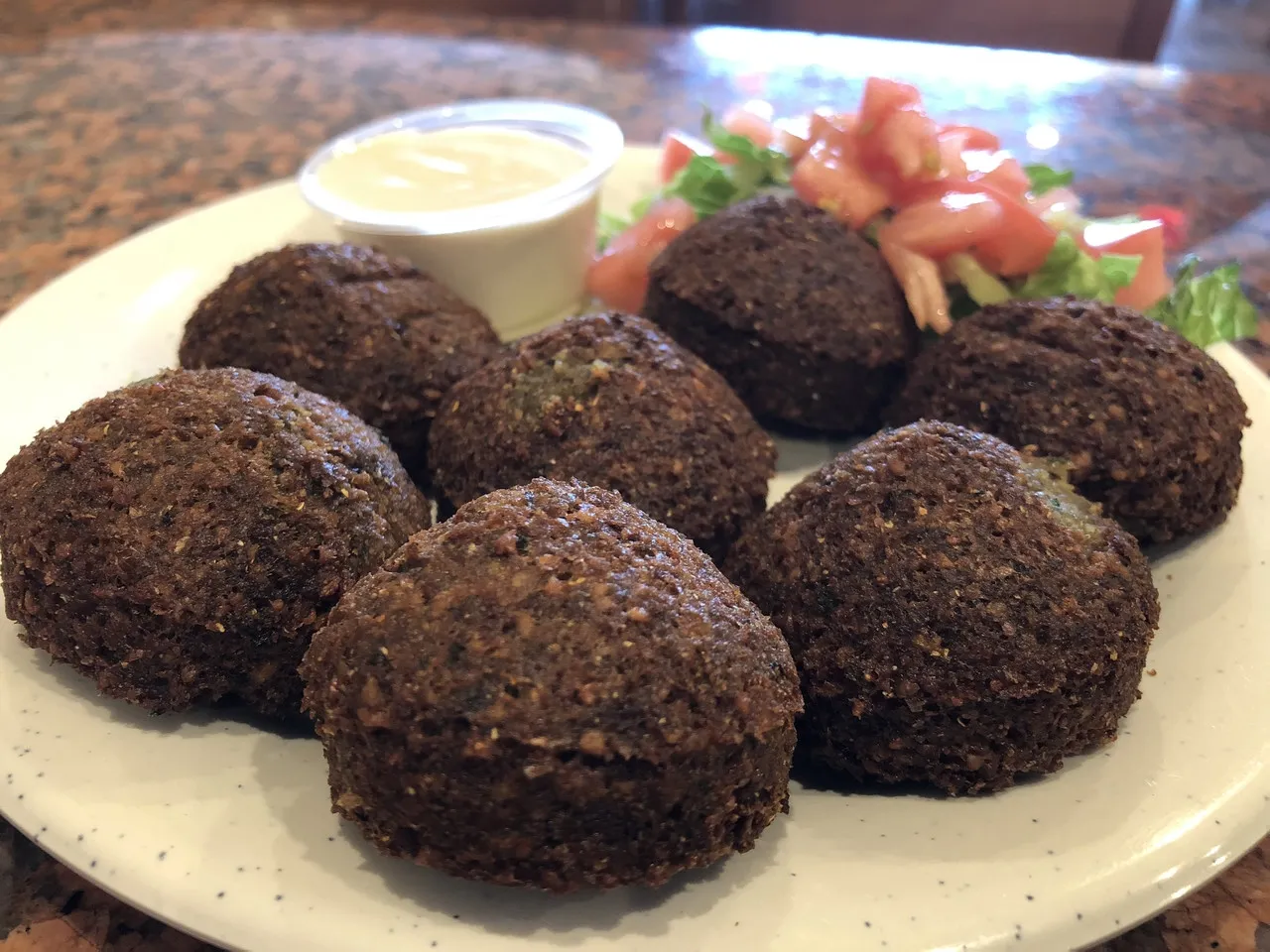

There is a moment in every growing Middle Eastern restaurant when the kitchen hits a wall. The menu is working. Customers keep coming back. Word is spreading. And then, falafel prep — of all things — becomes the thing that cannot keep up.
It sounds almost absurd. But falafel is deceptively demanding at volume. It requires soaking, draining, grinding, mixing, chilling, and then rolling — hundreds, sometimes thousands of individual pieces — before a single service. Do it well by hand, and the result is extraordinary. Try to scale that by hand, and you run into a hard ceiling very quickly.
This is why the shift toward an automatic a falafel maker machine in commercial kitchens is not driven by trends or technology for its own sake. It is driven by a straightforward operational problem that hand-rolling cannot solve past a certain point. This article explains the problem honestly, and why the machine has become the answer for so many restaurants that take their falafel seriously.
A Brief History of Falafel in the Commercial Kitchen
Falafel has ancient roots across the Middle East, with Egypt, Lebanon, Israel, Jordan, and Palestine each claiming versions of it as part of their food identity. For most of its history, it was street food — made fresh in small batches by vendors who rolled each piece by hand, dropped it into oil, and served it immediately.
That model works beautifully at a small scale. A street vendor making a few hundred pieces a day can maintain complete control over every aspect of production. The tactile feedback of hand-rolling lets an experienced cook sense when the mixture is too wet, too dense, or slightly off — adjustments happen naturally and immediately.
The challenge emerged when falafel moved into fast-casual restaurants, catering operations, and multi-location businesses. Suddenly, the same process that one skilled person could manage at a street stall was expected to produce thousands of consistent pieces per day, across multiple shifts, with varying staff. The craft had not changed — but the environment it was operating in had changed completely.
The recipe stayed the same. The scale did not. That gap is what automatic falafel machines were built to close.
What an Automatic Falafel Machine Actually Does
There is a common misconception worth addressing directly: an automatic falafel machine does not make falafel. The chef still makes the falafel — from scratch, using whatever recipe, spices, and techniques they have developed or inherited. The mixture is prepared by human hands with full culinary intention.
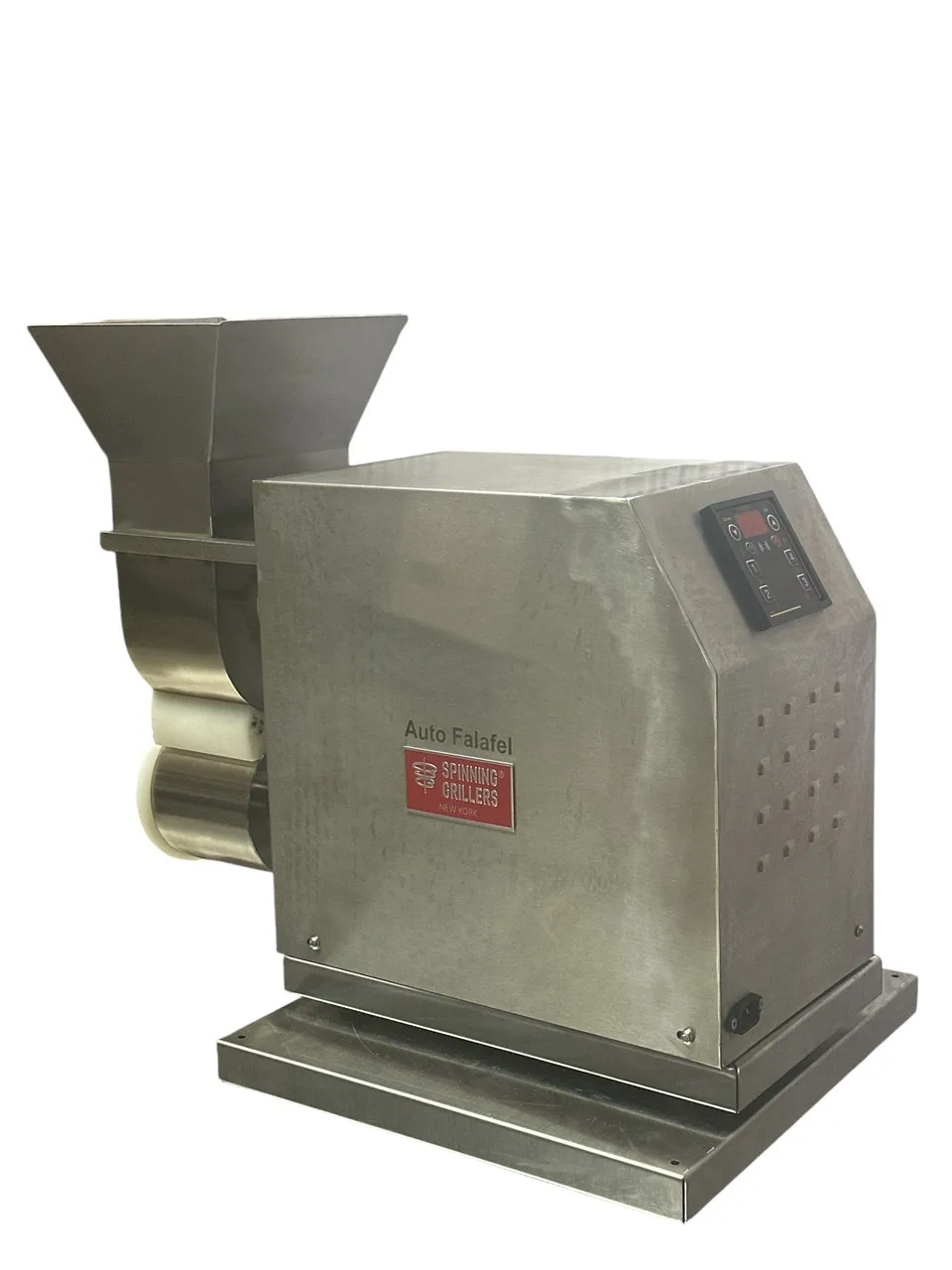
What the machine does is take over the single most physically repetitive step: portioning and forming each piece. The operator loads the prepared mixture into a hopper, and the machine portions it into equal segments and shapes each one — ball, disc, or cylinder, depending on the mould — then dispenses them directly into the fryer or a collection tray.
That is the entirety of the machine's involvement. It does not affect flavour, seasoning, or texture. It is, in the most literal sense, a forming tool — the industrial equivalent of a pastry cutter or a meatball roller. The skill and knowledge of the kitchen remain exactly where they were.
Understanding this distinction matters because it reframes the question. Buying a falafel machine is not a decision about whether to make falafel differently. It is a decision about whether to spend skilled kitchen time on a task that a machine can do faster and more consistently.
The Real Reasons Restaurants Make the Switch
1. Consistency Becomes Structurally Impossible at Scale
Every experienced restaurant operator knows that consistency is the hardest thing to maintain as a business grows. Recipes can be written down. Techniques can be taught. But the physical act of hand-rolling falafel is subject to variation in a way that written instructions cannot fully eliminate.
A cook who rolls falafel for four hours on a busy prep day will produce pieces in the first hour that are different from those in the fourth. Fatigue, interruptions, and the natural variation between individuals all contribute. Across a full service — hundreds or thousands of pieces — those variations mean falafel that cooks unevenly, arrives at the table with different textures, and occasionally disappoints a customer who had a better experience the last time.
An automatic machine removes this variable entirely. Every piece is formed to the same dimensions and weight. Cooking time is predictable. The customer's experience is reproducible. For a business that has built its reputation on a specific falafel, that reproducibility has real commercial value.
2. The Labour Calculation Stops Making Sense
Rolling falafel by hand is skilled, tiring work. It requires practice to do well and stamina to sustain over a long prep session. Most kitchens that produce falafel at scale dedicate two or more people to prep, with a significant portion of their working hours going to rolling alone.
When you calculate the true labour cost of that — not just the hourly wage, but the training time, the management overhead, and the operational risk of those people being unavailable on a given day — the economics become difficult to justify. A machine that one person can operate after a brief orientation, while simultaneously managing other prep tasks, changes that calculation meaningfully.
This is not about replacing kitchen staff. Kitchens that adopt falafel machines typically redirect that labour to higher-value work — sauce preparation, customer-facing service, quality control — rather than eliminating positions. The machine absorbs the repetitive physical work; the people do everything else.
3. Speed Creates a Real Competitive Difference
In a competitive restaurant market, the speed at which a kitchen can turn tables and fulfil orders is a genuine differentiator. A kitchen that can produce falafel as fast as orders come in serves more customers, generates more revenue, and handles peak periods with less stress than one that is perpetually trying to catch up.
The output difference between hand-rolling and machine production is not marginal — it is dramatic. A skilled cook rolling falafel by hand is doing extraordinarily well to produce 200 pieces per hour. A commercial machine produces multiples of that figure continuously, without fatigue, and without the bottleneck that builds during a lunch rush when the fryer is ready, and the rolled falafel is not.
For kitchens that include falafel across multiple menu items simultaneously — in wraps, on platters, in salads — the machine does not just speed up one dish. It removes a constraint that was slowing down the entire service.
4. Food Cost Control Becomes Measurable
Restaurant margins are thin. Food cost percentage is one of the few variables that operators can meaningfully control, and falafel — despite being made from inexpensive ingredients — is a food cost risk when portions are inconsistent.
A piece that is ten percent heavier than intended costs ten percent more to produce. Multiply that across thousands of pieces per week, and the drift from budget is real. Hand-rolling naturally produces this kind of variation — not through carelessness, but simply because human hands are not calibration instruments.
A machine that portions every piece to the same weight makes food cost calculation genuinely reliable. Operators can calculate cost per piece with accuracy, price their menu with confidence, and track actual versus theoretical food cost without the uncertainty that hand-rolling introduces.
5. Hygiene Standards Have Raised the Bar
Food safety requirements in commercial kitchens have become more stringent in every market. Health inspections, HACCP compliance, and increased customer awareness around food handling have changed what acceptable kitchen practice looks like.
Extended hand contact with raw food product during high-volume prep is a hygiene consideration that is increasingly difficult to defend when an alternative exists. Automatic falafel machines minimise direct hand contact with the mixture throughout the forming process. When the machine is built from food-grade stainless steel with fully removable components, cleaning and sanitising between service periods is fast and verifiable.
For kitchens that supply food to schools, hospitals, catering clients with formal procurement requirements, or any setting where food safety certification matters, this is not a minor point.
6. Growth Requires Infrastructure, Not Just Ambition
Many restaurant owners describe a version of the same experience: the business is doing well enough to consider expansion — a second location, a catering arm, a ghost kitchen — but the production process cannot support it without proportionally increasing staff, training, and management complexity.
Scaling hand-rolled falafel production means hiring and training more people, managing a larger team, and accepting the consistency risks that come with that. Scaling machine production means adding equipment and adjusting scheduling. The operational difference is significant.
For franchise operations or restaurant groups with multiple locations, the machine also solves a problem that no amount of training can fully address: ensuring that falafel served at one location is indistinguishable from falafel served at another. Customers develop expectations based on their first visit. Meeting those expectations at every location, every time, requires standardisation that only equipment can deliver.
The Authenticity Question — And an Honest Answer
It is worth spending time on this because it is the concern that comes up most often, and it deserves more than a dismissive answer.
The worry is understandable. Falafel carries cultural weight. For many restaurant owners, the way their family has made it — by hand, with specific techniques passed down through generations — is part of what makes their version meaningful. The idea of a machine touching that process feels, to some, like a dilution of something important.
But the concern conflates two things that are actually separate: the recipe and the forming method.
The flavour of falafel comes from the variety and quality of chickpeas or fava beans, the freshness of the parsley and coriander, the particular blend of spices, the soaking time, the grind texture of the mixture, and the temperature of the oil. None of these is affected by whether the ball is formed by a hand or a mould. A machine forming a piece to a consistent 4 cm diameter does not change any of those variables.
The most respected falafel vendors in Egypt, Lebanon, and Israel have used production equipment for decades. Authenticity, in this context, lives in the recipe — not the forming method.
What the machine changes is the physical act of rolling. And while that act carries tradition and craft, it also carries inconsistency, fatigue, and a labour cost that grows with every additional piece produced. The chef who built the recipe retains full ownership of what makes the falafel distinctive. The machine handles only the part that does not require that knowledge.
What to Assess Before Buying a Falafel Machine
For kitchen operators considering this investment, the following questions will help determine what kind of machine is appropriate and whether the investment makes sense at the current stage of the business.
How many pieces do you produce per day, and what is your peak demand?
This is the single most important question. A machine sized for average demand will fall short during a busy service. Size for the peak, not the mean. Know your busiest day and your busiest hour, and make sure the machine can handle that load comfortably.
How much direct labour is currently going into falafel prep?
Calculate this honestly — not just the hours spent rolling, but the total prep time including setup, supervision, and cleanup. This is your baseline cost. Compare it to the machine's purchase price and operating cost to understand the payback period.
What is your fryer setup?
The best machines are designed to work with any fryer — positioned on the left, right, or adapted to a range-top setup. Confirm compatibility with your existing equipment before purchasing. A machine that requires replacing your fryer significantly changes the economics.
What are your cleaning requirements?
In a kitchen running multiple service periods per day, time spent on equipment cleaning is a real operational cost. Machines with fully removable stainless steel components are significantly faster to clean than those with fixed parts. Factor this into the total cost of ownership.
Does the machine carry appropriate certifications?
NSF/ANSI 8 certification is the standard for commercial food service equipment in the United States. It confirms that the machine has been independently tested for food safety and sanitation compliance. This certification matters for health inspections, catering contracts, and peace of mind.
What does after-sales support look like?
Equipment failure during service is expensive. Before purchasing, understand what the warranty covers, how long the parts warranty lasts, whether technical support is accessible, and whether replacement parts are readily available. A machine with a strong support network is worth paying more for.
Hand-Rolling vs. Automatic Machine: An Honest Comparison
The following comparison is not intended to suggest that hand-rolling has no place — it does, particularly in small-volume, artisan, or demonstration contexts. It is intended to help operators assess the practical trade-offs at commercial volume.
| What You Are Comparing | Hand-Rolling | Automatic Machine |
| Output capacity | ~100–200 pieces per hour | Hundreds per minute |
| Piece-to-piece consistency | Variable across operators and shifts | Uniform by design |
| Labour dependency | High — skilled staff required | Low — minimal training needed |
| Portion accuracy | Difficult to standardise | Precise and repeatable |
| Direct hand contact | Extensive throughout prep | Minimal to none |
| Scalability | Constrained by staffing | Equipment-driven, flexible |
| Training requirement | Weeks to develop reliable skill | 30–60 minutes |
| Food cost predictability | Difficult — portions drift | Reliable — portions are fixed |
| Craft and feel | High — fully tactile process | Lower — operator is a loader |
The last row is included deliberately. Hand-rolling has a tactile, craft dimension that the machine genuinely lacks. For chefs who find meaning in that process, or for restaurants where the visible theatre of hand-rolling is part of the customer experience, that matters. For most commercial kitchens focused on consistent output at scale, it matters less than the other rows.
Which Kitchen Operations Benefit Most
Not every kitchen is equally suited to an automatic falafel machine. The following operations tend to see the clearest return:
- High-volume quick-service and fast-casual restaurants where speed and throughput are operational priorities
- Shawarma shops and wrap specialists where falafel is a core, high-frequency menu item
- Catering and event services that regularly fulfil large orders and need predictable output
- Ghost kitchens and cloud kitchen operations, where lean staffing makes labour-saving equipment disproportionately valuable
- Multi-location restaurant groups and franchises where brand consistency across outlets requires standardised production
- Commissary or central production kitchens supplying prepared food to multiple service points
Smaller restaurants with low daily falafel volumes, or operations where the hand-rolling process is a visible and valued part of the dining experience, may find the economics less compelling — at least until volume grows.
A Note on Where to Start
If you are researching automatic falafel machines for your kitchen, it is worth starting with suppliers who specialise in this category rather than general restaurant equipment retailers. Dedicated manufacturers understand the specific requirements of falafel production — mixture consistency, mould sizing, fryer compatibility, and cleaning logistics — in ways that general equipment suppliers often do not.
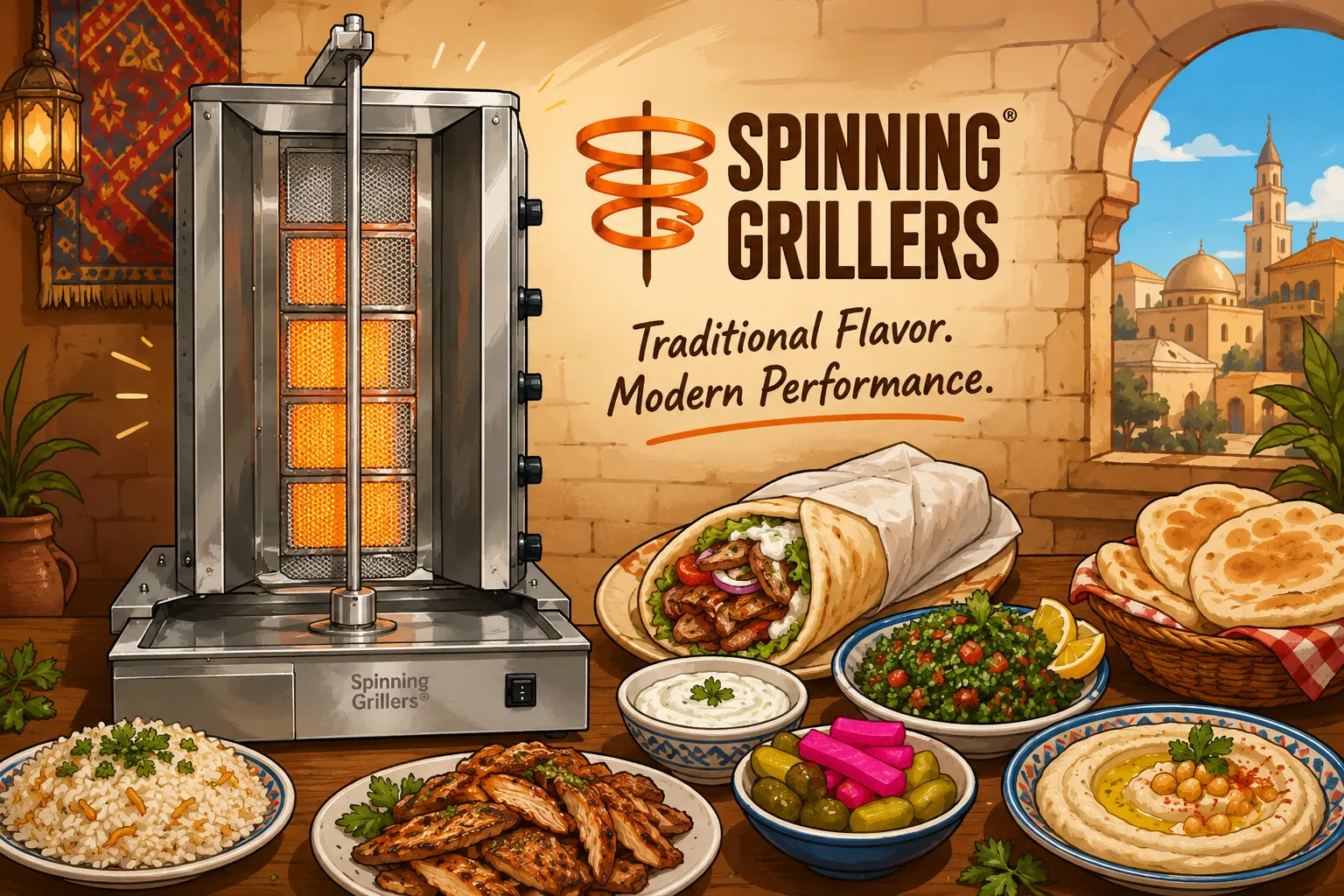
Spinning Grillers developed the AutoFalafel® with these requirements as the starting point: universal fryer compatibility, NSF/ANSI 8 certification, fully removable stainless steel components, and programmable digital controls that allow operators to set a quantity and step away. It is designed as a working kitchen tool, not a showpiece.
Details are available at spinninggrillers.com. If you have specific questions about how the machine would fit into your existing setup, their team can advise based on your fryer configuration and daily volume.
Conclusion
The conversation about automatic falafel machines is not really a conversation about technology. It is a conversation about what you want your kitchen to be capable of.
If the goal is to serve great falafel to as many customers as possible, with the same quality across every shift and every service, then hand-rolling will eventually become the constraint that limits you. The machine does not improve the falafel — the chef does that. What the machine does is make sure that improvement is reproducible, scalable, and not dependent on how tired the prep team is by the end of a long day.
Middle Eastern restaurants that have made this investment tend not to go back. Not because the tradition of hand-rolling was not worth preserving, but because the machine preserved what actually matters — the recipe, the flavour, the standard — and freed the kitchen to focus on everything else.
Frequently Asked Questions
Does an automatic falafel machine change the taste of falafel?
No. The machine only shapes the mixture — it does not affect flavour, seasoning, or texture. Those qualities are determined entirely by the recipe and the ingredients the chef prepares beforehand.
Is it worth buying a falafel machine for a small restaurant?
It depends on your daily volume and how much time currently goes into hand-rolling. For kitchens producing a few hundred pieces a day, the payback period may be longer. For kitchens producing several hundred per service, the economics typically work well within the first year.
How consistent are the pieces produced by a machine?
Piece-to-piece consistency is one of the strongest arguments for machine production. Every piece is formed to the same weight and dimension, which means identical cooking times, uniform texture, and a predictable product across every batch.
Can I use any fryer with an automatic falafel machine?
The best machines are designed for universal fryer compatibility — able to position on either side of the fryer or adapt to a range-top setup. Confirm this before purchasing, as some cheaper models have specific fryer requirements.
What certifications should a commercial falafel machine carry?
In the United States, NSF/ANSI 8 is the key certification for commercial food service equipment. It confirms independent testing for food safety and sanitation compliance, which matters for health inspections and catering contracts.
How long does it take to learn to operate the machine?
Most commercial falafel machines require 30 to 60 minutes of basic training. No prior falafel-making experience is needed to operate the machine — the skill requirement is in preparing the mixture, not in running the equipment.
How do I clean an automatic falafel machine?
Machines with fully removable food-grade stainless steel components are the easiest to maintain. Disassembly, washing, and reassembly typically take 15 to 30 minutes for a well-designed machine, making it practical to clean between service periods.
What size falafel does a machine typically produce?
Standard commercial moulds produce falafel at approximately 4 cm in diameter. Many machines offer interchangeable moulds for different sizes or shapes — useful for kitchens that serve falafel across multiple menu items with different portion requirements.
Can the machine handle different falafel mixture textures?
Mixture consistency matters for machine performance. A mixture that is too wet or too dry will not form well. Most machine suppliers will advise on the ideal mixture texture for their equipment — it is worth asking before purchasing if your recipe produces a particularly wet or dry dough.
What is the difference between semi-automatic and fully automatic machines?
A semi-automatic machine requires the operator to manually feed portions into the shaping mechanism. A fully automatic machine handles both portioning and forming without operator intervention beyond loading the hopper. Fully automatic machines are faster and require less attention, but typically cost more.
















Sign in to leave a comment.