

Most companies have already tried AI. That part gets lost in all the noise about "adoption." The argument over whether to use it is basically finished. By 2026, roughly 88% of organizations say they use generative AI in at least one part of the business, and more than 80% of enterprises now run it in production rather than in a sandbox somewhere.
And yet. A PwC survey this year found that 56% of CEOs felt they got essentially nothing back from what they spent on AI. Both numbers are real at the same time. Nearly everyone is using it, and more than half feel like the money disappeared.
So the interesting question changed. It stopped being "should we use AI." It became "why does one company end up with a working system while the one next door has an expensive demo nobody opens after the launch meeting."
The gap is not the model
Here is the part people get wrong. When a project dies, they usually blame the model. Wrong model, not enough data, should have waited for the next version. Occasionally that is true. Most of the time it is not.
The model is maybe 10% of the work. A prototype that answers questions in a notebook is a nice afternoon. Getting that same thing to run every day, for real users, without leaking data or hallucinating a refund policy that does not exist, is a different job with a different skill set. That job is engineering, not prompt tweaking.
I have watched teams spend three months getting a demo to 90% accuracy and then discover the last 10% is where all the actual work lives. Edge cases. Users who type nonsense. The moment the model confidently says something wrong to a paying customer. None of that shows up in the demo. All of it shows up in production.
What actually separates the two
The teams that ship tend to do a few unglamorous things early.
They decide what "working" means before they build anything. Not "the AI is smart" but "it resolves 40% of tier-one tickets without a human, and it never quotes a price." A real target you can measure against, so you know when to stop tuning and when to keep going.
They build the boring plumbing first. Data pipelines that stay clean. A way to catch when the model drifts. Logging, so when something goes wrong at 2am you can actually see what the model said and why. This is the stuff nobody demos because it is invisible when it works.
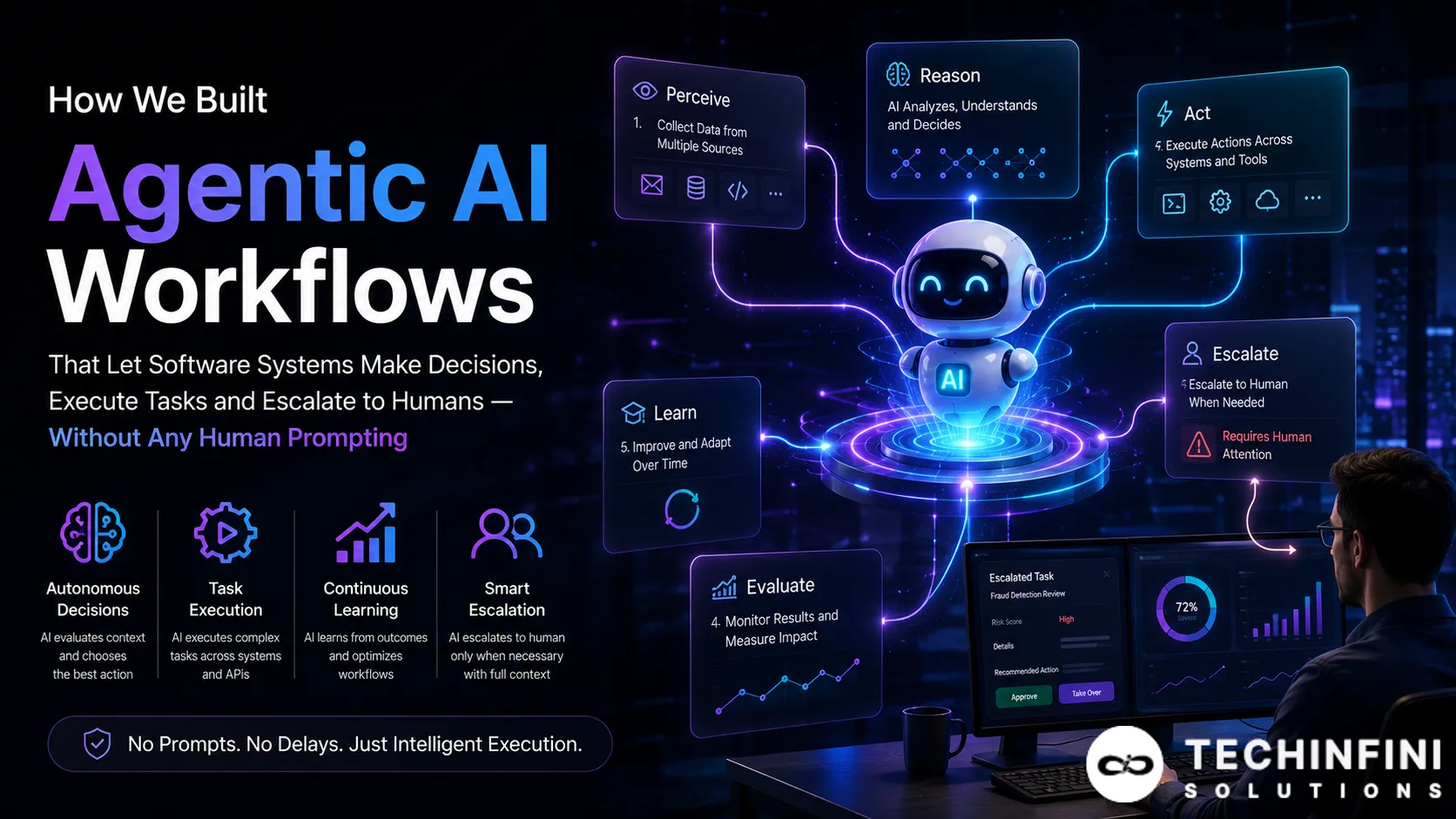
They keep a human in the loop where the cost of being wrong is high. Fully autonomous sounds great in a pitch deck. In finance, healthcare, or anything legal, a wrong answer with no human check is how you end up in a very bad meeting.
And they treat the launch as the middle, not the end. A model that was accurate in March quietly gets worse by September because the world moved and the training data did not. Somebody has to watch for that. If no one owns it, the system slowly rots and everyone wonders why the thing they were so excited about stopped being useful.
Build or buy the team
This is where the build-versus-partner decision comes in, and it is less obvious than it looks.
Hiring a full in-house AI team is expensive and slow. Good ML engineers are hard to find and harder to keep, and you often do not need all of them all of the time. You need heavy firepower during the build, then a smaller crew to keep things running. Paying senior salaries year-round for a workload that spikes and dips is a hard thing to justify to a CFO.
The alternative is working with a group that has already shipped this kind of thing before and knows where the bodies are buried. That is roughly the case for outsourcing your AI development to a partner who has done the messy production part more than once. The value is not that they know a secret model. It is that they have already made the expensive mistakes on someone else's timeline, so you do not repeat them on yours.
A decent partner should be comfortable across the whole span of work. Generative AI features. Custom model building and tuning. The security layer, because an AI system that touches your data is a new attack surface whether you think about it or not. Automation of the repetitive stuff that was eating your team's week. If a vendor only wants to talk about the flashy generative demo and goes quiet when you ask about monitoring and rollback, that tells you something.
What to ask before you sign anything
Skip the demo for a minute and ask harder questions. How do you handle the model being confidently wrong in front of a customer. What happens when accuracy drops three months in, and whose job is it to notice. How do you keep our data from leaking into someone else's training set. Can you show me something you put into production that is still running, not just a proof of concept that won an award and then got quietly shelved.
The answers separate people who have shipped from people who have only demoed. Anyone can build a prototype now. The tools got good enough that a smart intern with an API key can impress a room. Turning that into something a business actually runs on is still real work, and it is still where almost all the failures happen.
Which brings me back to those two numbers. 88% using it, 56% getting nothing. The gap between them is not talent or budget. It is mostly whether somebody treated the AI like software that has to run, instead of a demo that has to dazzle. That is the whole game right now.

























Sign in to leave a comment.