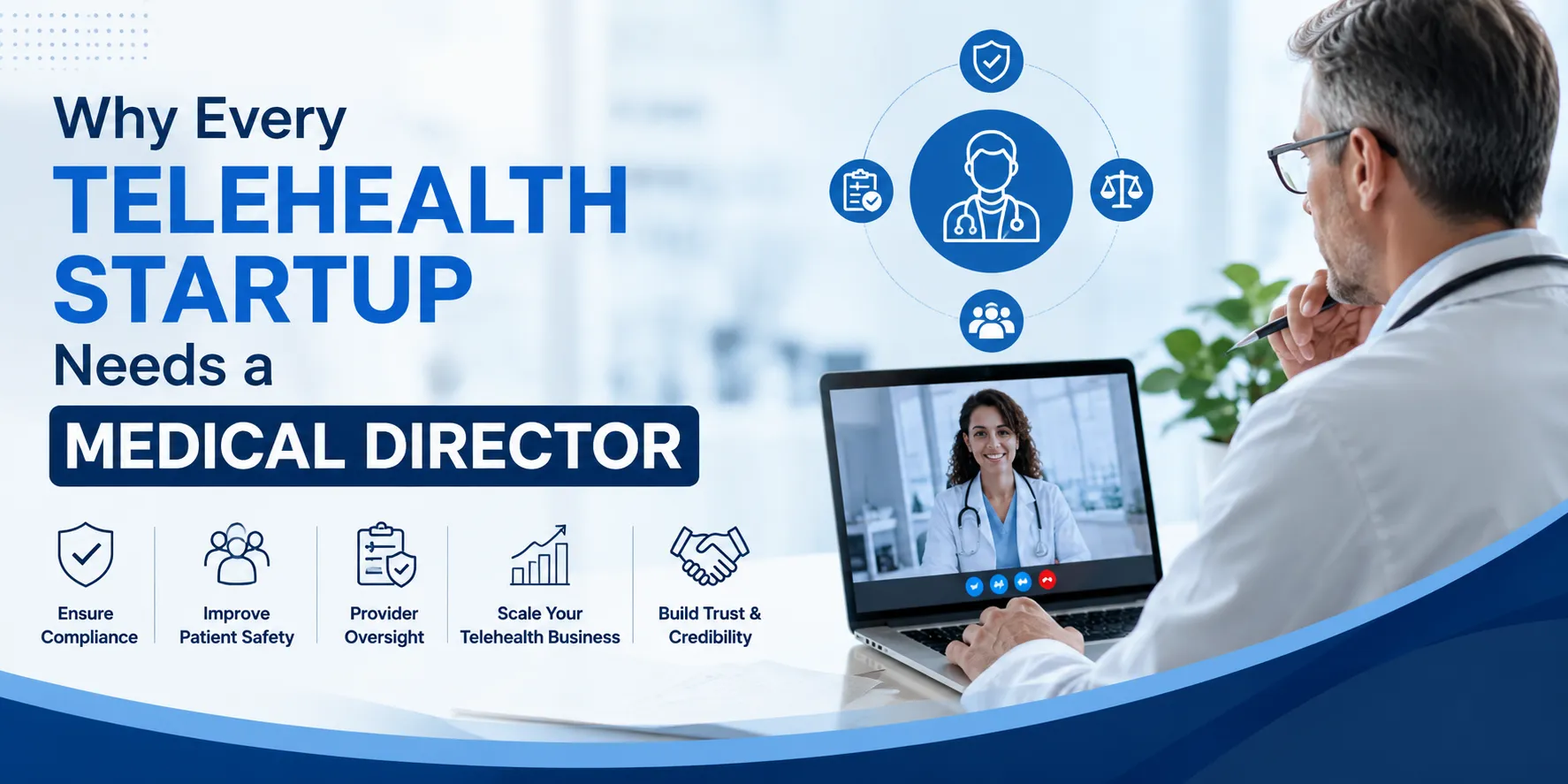


The telehealth industry has experienced remarkable growth over the past few years. Patients now expect convenient access to healthcare through virtual consultations, remote monitoring, and digital health platforms. As more entrepreneurs launch telehealth startups, one critical factor often determines long-term success: having a qualified medical director.
A medical director is much more than a regulatory requirement. They provide clinical leadership, oversee healthcare providers, ensure compliance with healthcare laws, and help maintain high standards of patient care. Without proper medical oversight, telehealth businesses may face legal risks, operational challenges, and reduced patient trust.
In this article, we'll explore why every telehealth startup should have a medical director from day one.
What Is a Medical Director?
A medical director is a licensed physician responsible for overseeing the clinical aspects of a healthcare organization. In telehealth, they provide medical supervision, establish clinical protocols, review provider performance, and ensure healthcare services meet federal and state regulations.
Depending on the business model, the medical director may also assist with:
- Clinical policy development
- Provider credentialing
- Quality assurance
- Risk management
- Compliance oversight
- Patient safety initiatives
They act as the bridge between business operations and clinical excellence.
Ensures Regulatory Compliance
Healthcare is one of the most heavily regulated industries. Telehealth companies must comply with numerous federal and state laws regarding patient privacy, licensing, prescribing practices, documentation, and physician supervision.
A medical director helps ensure compliance by:
- Creating compliant clinical workflows
- Reviewing healthcare policies
- Monitoring provider activities
- Ensuring proper documentation
- Keeping the organization updated on changing regulations
Without medical oversight, even small compliance mistakes can result in penalties, lawsuits, or loss of business licenses.
Improves Patient Safety
Patient safety should always be the highest priority for any healthcare organization.
Medical directors establish evidence-based clinical guidelines that help providers deliver consistent and safe care. They also review patient outcomes, investigate incidents, and continuously improve healthcare quality.
Their responsibilities include:
- Reviewing treatment protocols
- Monitoring clinical performance
- Supporting provider education
- Reducing medical errors
- Standardizing care delivery
Better oversight leads to better patient outcomes.
Supports Healthcare Providers
Healthcare professionals benefit from having experienced clinical leadership.
Medical directors provide guidance for physicians, nurse practitioners, physician assistants, and other healthcare professionals working within the telehealth platform.
They assist providers with:
- Complex patient cases
- Clinical decision-making
- Treatment protocols
- Documentation standards
- Continuing education
This creates a more confident and consistent healthcare team.
Builds Patient Trust
Patients are more likely to use a telehealth platform when they know qualified physicians oversee medical services.
A medical director demonstrates that the organization prioritizes quality care, ethical medical practices, and patient safety.
This trust helps improve:
- Patient retention
- Online reputation
- Referrals
- Brand credibility
- Overall satisfaction
Trust is essential for long-term success in digital healthcare.
Helps Scale Multi-State Operations
Many telehealth startups eventually expand into multiple states.
Each state has unique healthcare regulations, licensing requirements, and physician supervision rules. A medical director helps navigate these complexities while ensuring compliance across different jurisdictions.
They can assist with:
- State-specific regulations
- Provider licensing
- Clinical policy updates
- Multi-state expansion strategies
- Operational consistency
Proper oversight makes growth more manageable and sustainable.
Reduces Legal Risks
Legal issues can quickly become expensive for healthcare businesses.
A medical director helps reduce liability by implementing proper clinical governance, reviewing healthcare practices, and ensuring providers follow accepted medical standards.
Risk management includes:
- Clinical audits
- Incident investigations
- Documentation reviews
- Policy enforcement
- Provider evaluations
Preventing problems is always more effective than resolving them after they occur.
Enhances Clinical Quality
High-quality healthcare depends on continuous improvement.
Medical directors analyze patient outcomes, monitor provider performance, and identify opportunities to improve healthcare delivery.
Quality improvement efforts may include:
- Clinical audits
- Performance metrics
- Patient feedback analysis
- Treatment outcome reviews
- Staff education programs
Continuous quality improvement benefits both patients and providers.
Supports New Healthcare Services
Many telehealth startups eventually introduce services such as:
- Weight management programs
- GLP-1 therapy
- Mental health care
- Hormone replacement therapy
- Chronic disease management
- Preventive healthcare
Each service requires clinical oversight, treatment protocols, and regulatory compliance.
A medical director ensures these services are implemented safely and responsibly.
Strengthens Business Reputation
Healthcare investors, business partners, and insurance organizations often evaluate clinical leadership before working with a telehealth company.
Having an experienced medical director demonstrates professionalism, operational maturity, and commitment to quality healthcare.
This can help attract:
- Investors
- Strategic partnerships
- Healthcare providers
- Employer clients
- Patients
Strong leadership creates long-term business value.
Improves Clinical Documentation
Accurate medical documentation protects both patients and providers.
Medical directors establish documentation standards that ensure:
- Complete patient records
- Accurate diagnoses
- Proper treatment plans
- Regulatory compliance
- Better continuity of care
Good documentation also simplifies audits and reduces legal exposure.
Encourages Continuous Improvement
Healthcare regulations and clinical best practices constantly evolve.
Medical directors stay informed about new guidelines, emerging technologies, and updated treatment recommendations. They help organizations adapt quickly while maintaining compliance.
Continuous improvement allows telehealth startups to remain competitive in a rapidly changing healthcare environment.
Choosing the Right Medical Director
When selecting a medical director, consider:
- Active medical license
- Telehealth experience
- Multi-state healthcare knowledge
- Leadership skills
- Compliance expertise
- Strong communication abilities
- Experience developing clinical protocols
The right medical director becomes a strategic partner rather than simply fulfilling a regulatory requirement.
Final Thoughts
Launching a telehealth startup involves much more than building technology and hiring providers. Clinical leadership is essential for delivering safe, compliant, and high-quality healthcare.
A qualified medical director helps ensure regulatory compliance, strengthens patient trust, supports healthcare providers, reduces legal risks, and creates a foundation for sustainable growth. Whether your organization offers virtual primary care, behavioral health, weight management, or specialized telemedicine services, investing in experienced medical oversight is one of the smartest decisions you can make.
As the telehealth industry continues to expand, startups that prioritize strong clinical governance will be better positioned to earn patient confidence, meet regulatory requirements, and achieve long-term success.
Frequently Asked Questions (FAQs)
1. Is a medical director required for every telehealth startup?
Requirements vary by state and business model, but many telehealth practices need physician oversight to comply with healthcare regulations.
2. What does a medical director do in telehealth?
They oversee clinical operations, develop treatment protocols, support healthcare providers, ensure regulatory compliance, and maintain patient safety.
3. Can a telehealth company operate without a medical director?
In many cases, operating without proper clinical oversight can create compliance, legal, and patient safety risks.
4. How does a medical director improve patient care?
They establish evidence-based guidelines, review clinical performance, monitor outcomes, and promote continuous quality improvement.
5. Why is a medical director important for multi-state telehealth services?
They help ensure compliance with varying state regulations, support provider licensing, and maintain consistent clinical standards across locations.



























Sign in to leave a comment.