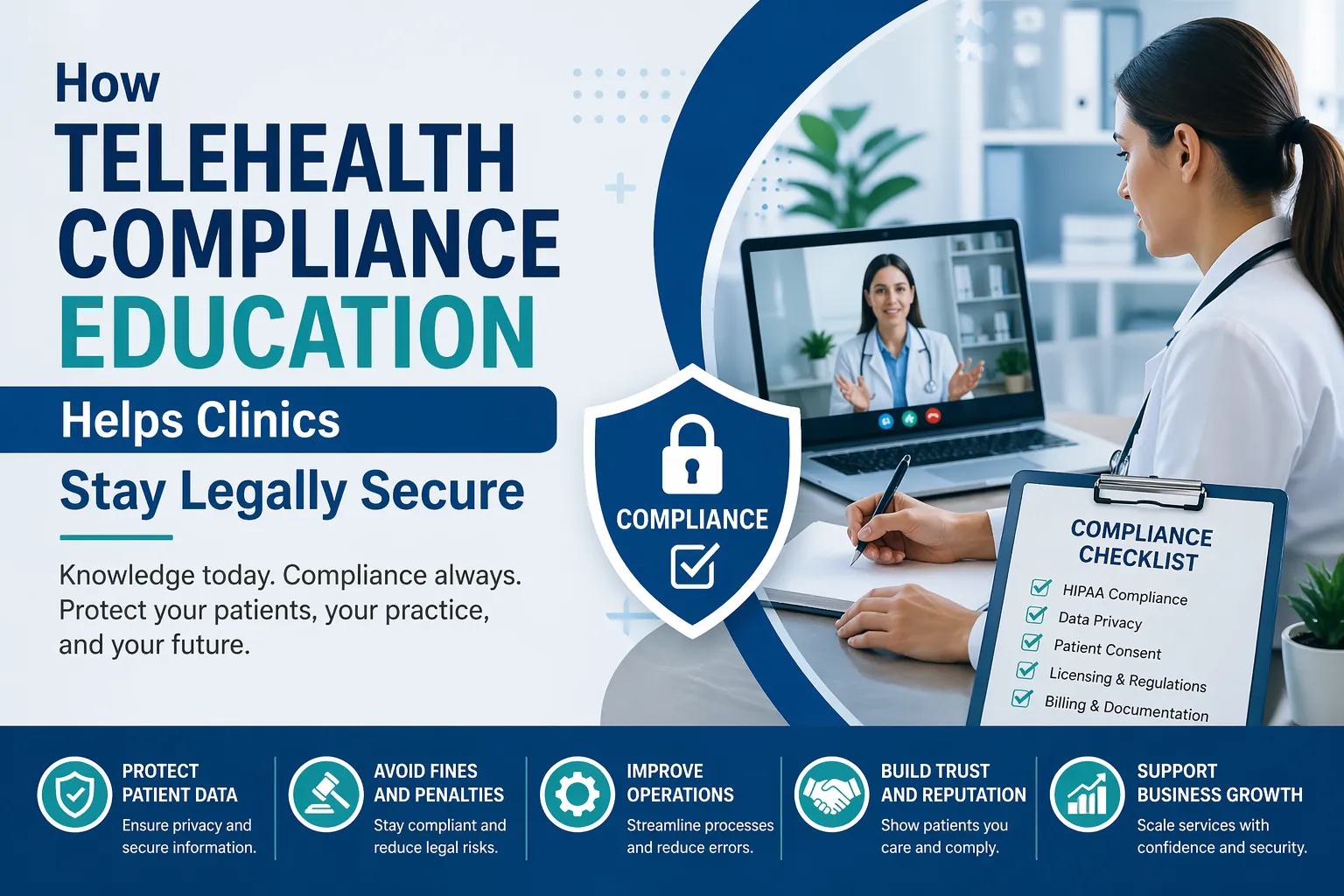

Telehealth has transformed the healthcare landscape, making it easier for clinics to connect with patients anytime, anywhere. However, with this convenience comes a complex web of legal and regulatory requirements. For clinics, staying compliant is not optional—it’s essential. This is where telehealth compliance education plays a crucial role in ensuring long-term success and legal security.
Understanding Telehealth Compliance
Telehealth compliance refers to following the laws, regulations, and guidelines that govern virtual healthcare services. These rules cover patient privacy, data security, licensing, billing practices, and ethical standards. Without proper knowledge, clinics risk facing legal penalties, fines, and even loss of license.
Why Compliance Education Matters
Telehealth compliance education equips healthcare providers and administrative staff with the knowledge needed to operate within legal boundaries. It ensures that everyone involved understands current regulations and how to apply them in daily practice. As telehealth laws frequently evolve, ongoing education becomes even more important.
Protecting Patient Data and Privacy
One of the biggest concerns in telehealth is safeguarding patient information. Compliance education teaches clinics how to follow privacy laws like HIPAA, ensuring secure communication channels and proper data handling. This reduces the risk of data breaches and builds patient trust.
Avoiding Legal Penalties and Fines
Non-compliance can lead to serious consequences, including hefty fines and lawsuits. Through proper training, clinics can identify potential risks and take preventive measures. Telehealth compliance education helps staff stay updated on legal changes, reducing the chances of costly mistakes.
Improving Clinical Operations
Educated staff are more confident and efficient in handling telehealth processes. From patient consent to documentation and billing, compliance training streamlines operations and minimizes errors. This leads to smoother workflows and better patient experiences.
Enhancing Reputation and Trust
Patients are more likely to trust clinics that prioritize privacy and legal standards. By investing in compliance education, clinics demonstrate professionalism and accountability. This not only protects the clinic legally but also strengthens its reputation in the competitive healthcare market.
Supporting Business Growth
As clinics expand their telehealth services, compliance becomes more complex. Education ensures that growth does not come at the cost of legal risks. With proper guidance, clinics can scale their services confidently while staying within regulatory frameworks.
Keeping Up with Changing Regulations
Telehealth laws vary by region and are constantly evolving. Compliance education programs keep clinics informed about new rules, helping them adapt quickly. This proactive approach ensures continuous legal protection.
Conclusion
Telehealth compliance education is not just a training program—it’s a safeguard for clinics operating in the digital healthcare space. By understanding and implementing compliance practices, clinics can protect patient data, avoid legal issues, and build a trustworthy reputation. In an industry where regulations are constantly changing, ongoing education is the key to staying legally secure and successfully delivering telehealth services.




























Sign in to leave a comment.