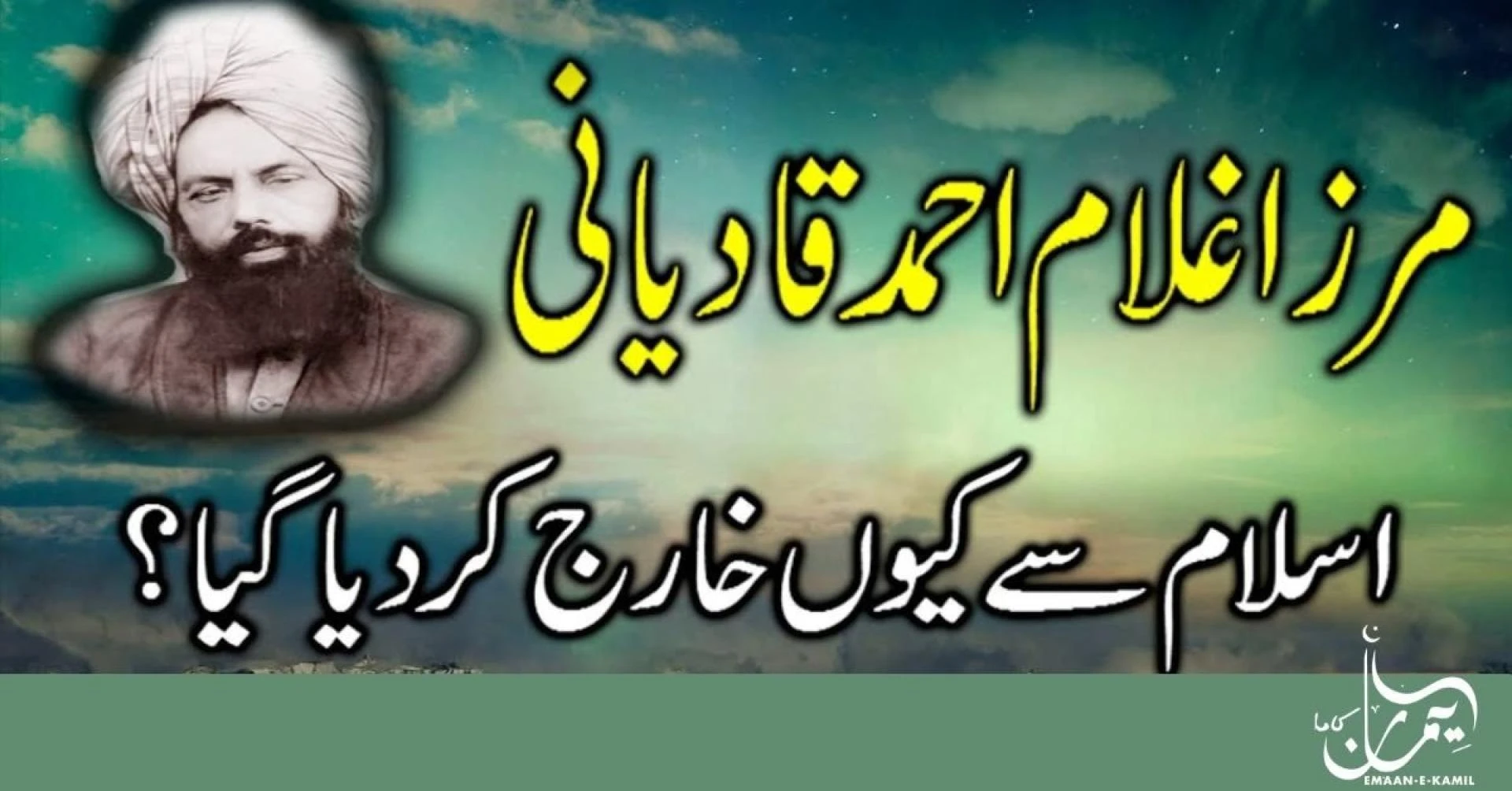

Islam is a complete way of life guided by the final revelation from Allah through the last Prophet, Hazrat Muhammad ﷺ. All Muslims around the world follow the Qur’an and Sunnah as the ultimate guidance, and they firmly believe that no prophet will come after Muhammad ﷺ. This is the fundamental reason why Mirza Ghulam Ahmad Qadiani’s claims are rejected by Muslims.
Mirza Ghulam Ahmad Qadiani declared himself as a prophet, claiming continuation of prophethood after Muhammad ﷺ. From an Islamic standpoint, this claim is directly contradictory to the Qur’an and Sunnah. Islam clearly teaches that Muhammad ﷺ is the Khatam an-Nabiyyin (Seal of the Prophets), meaning the final prophet. All Muslims, regardless of their sect or school of thought, hold this belief unanimously.
Hazrat Muhammad ﷺ is the Final Prophet: Proof from the Qur’an
The Qur’an explicitly mentions the finality of prophethood in multiple verses. One of the clearest references is:
“Muhammad is not the father of any of your men, but he is the Messenger of Allah and the Seal of the Prophets. And Allah is All-Aware of everything.”
(Surah Al-Ahzab 33:40, Sahih International)
This verse confirms that Muhammad ﷺ is the last messenger sent by Allah. The Arabic term Khatam an-Nabiyyin literally means the “Seal of the Prophets,” indicating completion, not continuation. After Muhammad ﷺ, no prophet can lawfully come, as the guidance for humanity has been perfected.
Another verse emphasizes the universality and completeness of his message:
“This day I have perfected for you your religion and completed My favor upon you and have approved for you Islam as your religion.”
(Surah Al-Ma’idah 5:3)
The perfection of Islam and finality of guidance leaves no room for a new prophet to appear after Muhammad ﷺ.
Proof from Authentic Hadith
The Hadith literature also clearly reinforces that Muhammad ﷺ is the final prophet. The Prophet ﷺ said:
“There is no prophet after me.”
(Sahih Muslim, Book 30, Hadith 5839)
“I am the last of the Prophets; there is no prophet after me.”
(Sunan Abu Dawood, Hadith 3771)
These statements leave no doubt among Muslims about the closure of prophethood. Any claim suggesting otherwise is viewed as contradictory to the core teachings of Islam.
Why Muslims Reject Mirza Ghulam Ahmad Qadiani
Mirza Ghulam Ahmad Qadiani’s claim of prophethood is considered false because it directly contradicts the Qur’anic declaration of finality. Muslims respect all prophets sent by Allah, but any claim of a prophet after Muhammad ﷺ is deemed invalid.
The rejection is not personal but rooted in theology and scriptural evidence. Accepting a prophet after Muhammad ﷺ would undermine the very foundation of Islam, which is based on the completeness and finality of Allah’s guidance to humanity.
Historical Consensus Among Muslims
Since the advent of Islam, scholars from all major schools of thought—Sunni, Shia, and others—have maintained that Muhammad ﷺ is the last prophet. This consensus has been part of Islamic creed for over fourteen centuries. It is not merely an opinion but a core belief that defines the Muslim identity.
Muslims worldwide view any new claims of prophethood after Muhammad ﷺ as heretical and inconsistent with the Qur’an and Hadith. This includes the claims of Mirza Ghulam Ahmad Qadiani.
The Role of Hazrat Muhammad ﷺ as the Seal of Prophets
The title Seal of the Prophets has multiple meanings. It signifies that Muhammad ﷺ:
- Completed the line of prophethood.
- Brought the final revelation for all humanity.
- Established Islam as a universal and everlasting faith.
This finality ensures that the guidance he brought is eternal and applicable for all future generations. Any claim contradicting this is rejected by devout Muslims.
Conclusion
In Islam, Hazrat Muhammad ﷺ is the last prophet of Allah, and this is supported by clear Qur’anic verses and authentic Hadith. The claims of Mirza Ghulam Ahmad Qadiani contradict these teachings and are therefore rejected by Muslims worldwide. Respect for prophets remains central to Islam, but recognition of finality ensures that the faith maintains its integrity and clarity.
For Muslims, the finality of prophethood is a source of unity, clarity, and guidance. Accepting Muhammad ﷺ as the Seal of the Prophets is essential for following Islam correctly and maintaining the continuity of divine guidance.
References:
- Qur’an, Surah Al-Ahzab 33:40 – Sahih International Translation https://quran.com/33/40
- Qur’an, Surah Al-Ma’idah 5:3 – Sahih International Translation https://quran.com/5/3
- Sahih Muslim, Book 30, Hadith 5839 https://sunnah.com/muslim/30/5839
- Sunan Abu Dawood, Hadith 3771 https://sunnah.com/abudawood/37/3771























Sign in to leave a comment.