

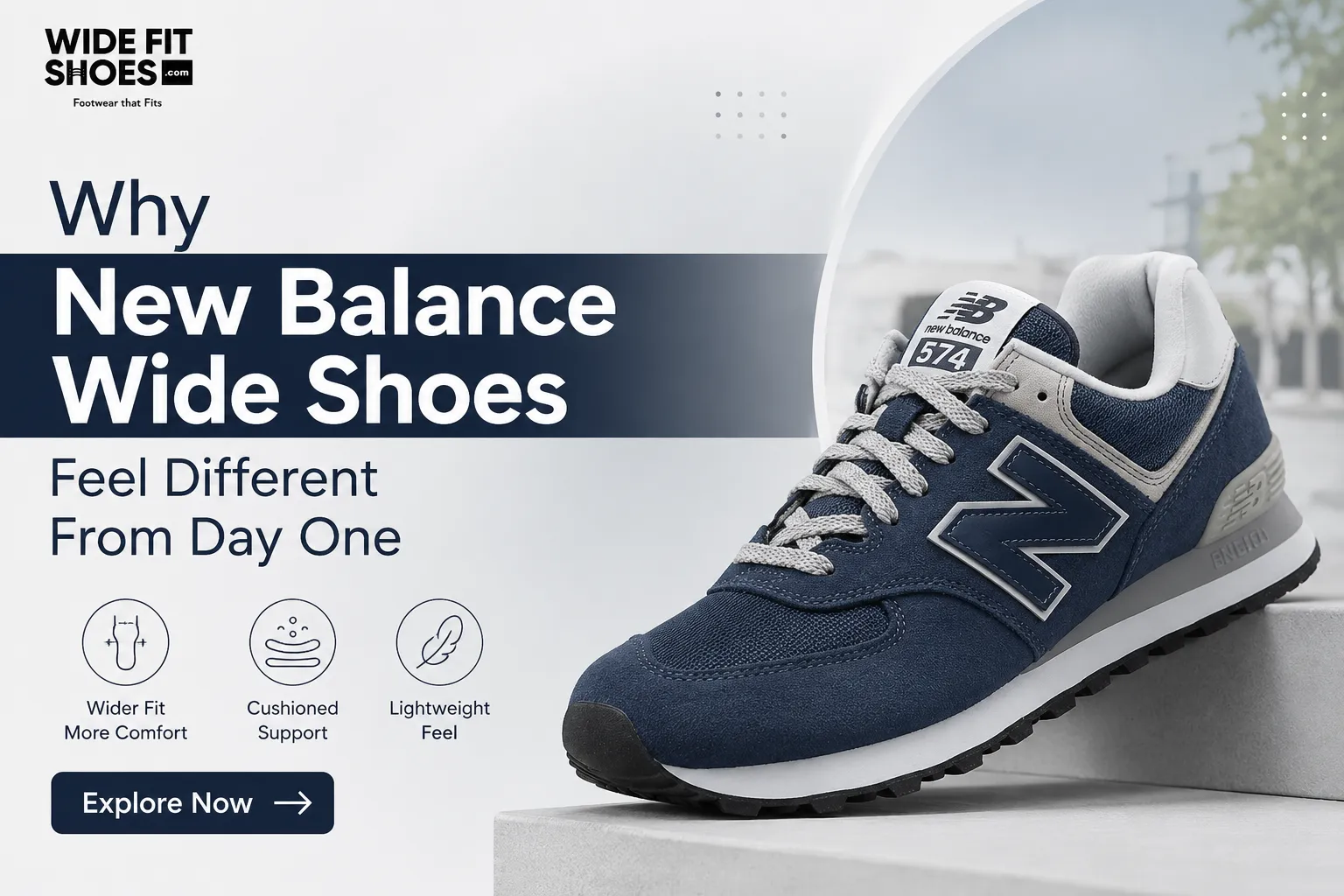
There is a specific moment that people with wide feet describe when they try on a properly fitted shoe for the first time. Not relief, exactly. Something closer to confusion. Like the shoe is not doing anything. No pressure on the bunion. No toe crowding. No sides gripping. The absence of discomfort is so unfamiliar that it takes a second to register as comfort. New Balance wide shoes produce that moment more consistently than most brands, and the reason is worth understanding before you buy.
Most athletic brands that offer wide options are doing so reluctantly. They build a shoe in a standard width and release a wider version as an afterthought, usually in limited sizes and even more limited colourways. The wide fit is an accommodation. At New Balance, width has been part of the engineering conversation for decades. That history shows up in how their wide shoes actually fit.
What New Balance Gets Right That Others Miss
The difference starts before the shoe is even stitched together. New Balance wide-fitting shoes are built on genuinely wider lasts, the foot-shaped moulds that determine a shoe's internal geometry. A wider last changes the shape of the toe box, the proportions across the forefoot, and how the upper sits against the sides of the foot. This is not the same as adding a wider zipper panel to a boot or stretching the fabric of a standard shoe. The geometry is different from the start.
For men and women who have spent years buying shoes a half size too long just to get a little extra room across the ball of the foot, the difference is immediately felt. The length is correct. The width is correct. The foot sits where it is supposed to sit, and the shoe works the way a shoe is supposed to work.
New Balance wide shoes for men and women come in a sizing range almost no other major brand can match. Men can access 2E wide and 4E extra wide across multiple categories. Women have D wide and 2E extra wide options in walking shoes, running-inspired styles, and everyday casuals. That depth of sizing means the people who have historically been underserved by footwear retail, those with bunions, hammertoes, swollen feet, diabetic foot changes, or simply feet that are proportionally wider than average, actually have real options to choose from.
The 574 and Why It Has Earned Its Following
The men's New Balance 574 has been in production since 1988 and shows no signs of slowing down. That longevity is not nostalgia. It is pure function. The 574 is built on a last that has always been more forgiving than most athletic shoes, and in wide widths, it delivers something genuinely rare: a shoe that looks like a classic lifestyle sneaker and fits like it was made for your foot specifically.
The men's New Balance 574 in wide width sits lower than performance runners, giving a stable platform that works for men on their feet for long stretches rather than running intervals. The ENCAP midsole, which combines EVA cushioning with a polyurethane rim, provides responsive support without the compressed-flat feeling that cheaper midsoles develop after a few months of daily wear. For men managing plantar fasciitis, arthritis, or general foot fatigue from work or walking, this combination matters more than any aesthetic consideration.
What Wide Fit Means for Common Foot Conditions
Wide fit construction is not just about comfort for people who happen to have wider feet. For a significant portion of the American population dealing with specific conditions, it is the difference between footwear that helps and footwear that makes things worse.
Consider what happens in a narrow shoe with each of these:
- Bunions get pressed from the side with every step. A wide toe box removes that lateral pressure entirely and stops the bunion from being loaded constantly throughout the day.
- Hammertoes need height as well as width. New Balance wide shoes with a taller, roomier toe box stop the curled toe from pressing against the upper and developing the calluses and soreness that narrow shoes guarantee.
- Diabetic feet require seamless, non-irritating construction and room for slight swelling. Several New Balance wide styles meet this with soft interiors and accommodating fits.
- Edema and foot swelling demand a shoe that works at the foot's largest size, not its smallest. Wide-fit uppers in materials that give slightly through-the-day handle this far better than structured standard-width shoes.
Finding New Balance Wide Shoes Without the Guesswork
Physical stores almost never stock the full New Balance wide width range. Two or three styles in limited colourways is the typical offer, and if your size is not on the shelf, that is the end of it. Wide Fit Shoes carries New Balance wide shoes across the full range of genuine width fittings with sizing guidance built in, so you confirm both your length and your width before ordering. Easy US returns handle the edge cases.
New Balance wide-fitting shoes feel different from day one because they genuinely are different from day one. Not different in a way that needs adjustment or breaking in. Different in the way that something correctly sized feels different from something you have been tolerating. That is worth trying.
























Sign in to leave a comment.