
Process contamination in pharmaceutical synthesis, electronics fabrication, and food production doesn't just cause quality failures; it triggers regulatory non-conformance, product recalls, and equipment replacement cycles that dwarf the cost of any material saving made at the procurement stage.
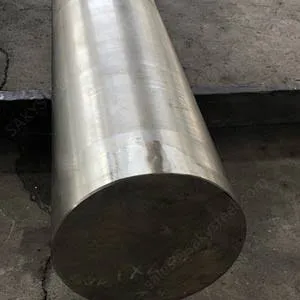
Nickel 201 round bars address this problem at the material level. Commercially pure wrought nickel with a carbon content capped at 0.02%, Nickel 201 delivers the contamination resistance, alkali stability, and process compatibility that high-purity industrial environments demand without the alloying additions that introduce secondary reactions in sensitive process streams.
What Are Nickel 201 Round Bars?
Nickel 201 round bars carry 99.0% minimum nickel plus cobalt, with all other elements held to trace levels and carbon strictly limited to 0.02% maximum. The low carbon ceiling distinguishes 201 from its near-identical sibling, Nickel 200. While Nickel 200 permits carbon up to 0.15% (which causes graphite precipitation at grain boundaries above 315°C and weakens the material), Nickel 201 stays phase-stable above 315°C. This is precisely why caustic soda service specifications mandate the 201 grade over 200 for equipment operating above that threshold.
Against corrosive media, the high-nickel base resists alkalis at all concentrations and temperatures, handles organic acids, and tolerates reducing environments that destroy chromium-dependent passive films on stainless steel grades.
Benefits of Nickel 201 Round Bars for Industrial Applications
High-purity process environments impose stringent requirements that most alloys cannot meet across the full range of operating conditions simultaneously. Nickel 201 addresses each core performance criterion:
High Purity for Sensitive Applications
At 99.0% minimum nickel content, Nickel 201 introduces no chromium, molybdenum, or other secondary alloying elements into the process stream.
- Pharmaceutical Manufacturing: Specified for API synthesis equipment, bioreactor fittings, and transfer piping where trace metal contamination triggers out-of-specification product events under GMP controls.
- Electronics Fabrication: Applied in chemical vapour deposition (CVD) components where surface metallic contamination at parts-per-billion levels causes device failures.
Excellent Corrosion Resistance
Caustic soda (NaOH) at concentrations above 50% corrodes standard stainless steel at rates requiring annual lining replacements. Nickel 201 handles concentrated $\text{NaOH}$ at temperatures above 100°C without measurable attack. This resistance extends to potassium hydroxide (KOH) and other alkali media. In food processing, the material tolerates alternating caustic and acid clean-in-place (CIP) cycles at 60–80°C without surface degradation.
Good High-Temperature Stability
Above 315°C, Nickel 201's low carbon content prevents graphite embrittlement. Caustic concentration columns, evaporators processing alkali solutions, and heat exchanger shells handling hot process fluids all benefit from this thermal stability. The material maintains its tensile properties (345 MPa minimum tensile strength in the annealed condition) through thermal cycles in industrial heat treatment.
Reliable Mechanical and Fabrication Properties
With an elongation at break of 40% minimum in the annealed condition, fabricators have ample working room to cold-form complex shapes without cracking. Nickel 201 accepts cold drawing, tube bending, and machining with standard tooling (though slower cutting speeds and positive rake angles improve tool life). Weldability with matching ERNi-1 filler presents no special difficulty, and heat-affected zone (HAZ) properties stay within specification without post-weld annealing.
Strong Resistance in Caustic Environments
Concentrated caustic soda service above 315°C is the primary application driver for Grade 201. Caustic evaporators, coolers, and alkali storage tanks in chlor-alkali plants, soap manufacturing, and alumina refining specify Nickel 201 for internal components. No common alloy matches this combination of temperature capability and alkali concentration tolerance at a competitive material cost.
Long Service Life and Low Maintenance
Documented service life for Nickel 201 equipment in chlor-alkali plants reaches 15–20 years in continuous caustic service. That track record eliminates the 3–5 year replacement cycle of stainless steel, drastically reducing direct material costs and facility shutdown time. High-purity semiconductor fabrication facilities report similar extended service intervals.
Industries That Use Nickel 201 Round Bars
- Chemical Processing: Alkali concentration and caustic handling systems account for the largest volume of Nickel 201 consumption.
- Food Processing: Specified for equipment contacting hot caustic cleaning solutions where stainless grades show accelerated attack.
- Electronics & Semiconductors: Used in chemical delivery systems, etch chambers and deposition tools with utmost sensitivity to contamination.
- Pharmaceutical Manufacturing: including synthesis vessels, distillation columns and transfer piping for active pharmaceutical ingredient (API) production.
- Aerospace & Defence: Non-magnetic, high purity structural components with strict mechanical and magnetic permeability requirements.
- Power Generation: Widely used in the internals of steam generators and components of heat exchangers where the corrosion resistance of pure nickel in high purity water and steam justifies the cost of the material.
Factors to Consider When Selecting Nickel 201 Round Bars
- Verify Grade Specification: Confirm the specification requires Nickel 201 (UNS N02201) rather than Nickel 200 (UNS N02200) for applications above 315°C to ensure phase stability at temperature.
- Assess the media conditions: Determine chemical concentrations, operating temperatures and the presence of secondary chemical species to properly anticipate material performance over time in the field.
- Bar Dimensions & Condition: Choose the proper bar diameter, overall length and surface finish (hot-finished or cold-drawn) so it’s suitable for your specific machining program and setup.
- Mechanical condition: Choose an annealed condition for ease of forming and optimum corrosion resistance, or a cold-worked state for added yield strength in heavy, load-bearing systems.
- Review Materials Standards: Take a moment before you buy to ensure that all is fully compliant to standard ASTM B160 for rod and bar items, plus your other dimensional standards.
- Ensure you have full traceability: Purchase from a reliable partner supplier that can immediately supply full heat traceability and EN 10204 3.1 certification, providing verifiable confirmation of chemical composition and mechanical test results.
Conclusion
Nickel 201 round bars are highly fabricable, resistant to caustic corrosion over 315 degrees Celsius, and can be used in high-purity and alkali-intensive situations due to a contaminant-free composition. Sangeeta Metal supplies Nickel 201 Round Bars in different sizes and specifications. Our Nickel 201 Round Bars are guaranteed to deliver the best performance for all your process requirements. These bars are delivered with full documentation on ASTM B160.




























Sign in to leave a comment.