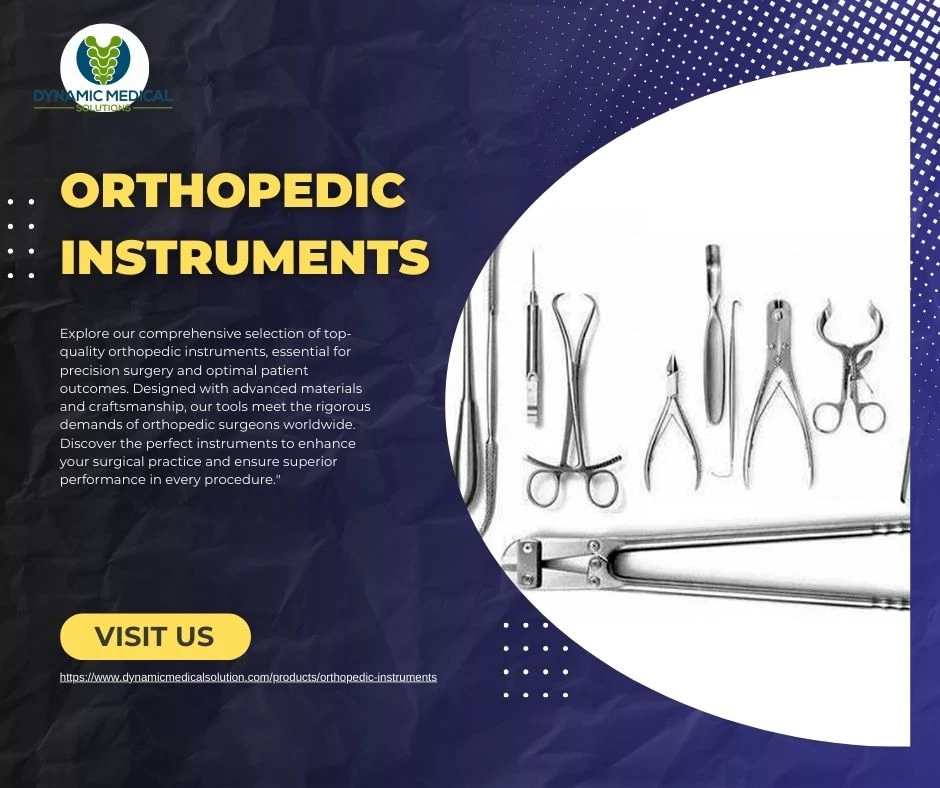

Imagine a skilled mechanic working on a car engine without the right tools. The job might be possible, but it would be slow, imprecise, and potentially lead to more damage. The same principle applies in orthopedic surgery, where success hinges on a specialized set of instruments known as orthopedic surgical instruments. These instruments are far more than just scalpels and clamps; they are the unsung heroes of the operating room, playing a critical role in achieving optimal patient outcomes.
Important Feature of Orthopedic Instruments
Precision and Accuracy:
Orthopedic procedures often involve delicate work on bones, joints, and soft tissues. Even minor miscalculations can have significant consequences. Orthopedic surgical instruments are designed to deliver the necessary level of precision and accuracy. For instance, bone saws come in various configurations, each suited for specific cutting tasks. Similarly, drill guides ensure accurate placement of screws and pins during surgeries. This precision minimizes complications and promotes faster healing.
Improved Patient Outcomes:
The use of specialized orthopedic instruments directly translates to better patient outcomes. Minimally invasive surgical techniques, facilitated by these instruments, lead to:
- Reduced Blood Loss: Smaller incisions minimize blood loss during surgery.
- Shorter Hospital Stays: Faster recovery times allow patients to return home sooner.
- Less Postoperative Pain: Minimally invasive approaches result in less tissue disruption and pain after surgery.
- Improved Long-Term Function: Precisely placed implants and efficient procedures promote better long-term joint or bone function.
Evolution and Innovation:
The field of orthopedic instruments is constantly evolving. New materials like biocompatible alloys and advancements in technology are leading to the development of:
- Minimally Invasive Tools: Smaller, more precise instruments allow for less disruption to surrounding tissues.
- Robotic-Assisted Surgery: Robotic arms enhance surgeon control and facilitate complex procedures.
- Patient-Specific Implants: Custom-designed implants using 3D printing technology offer a perfect fit for individual patients.
These innovations are transforming the landscape of orthopedic surgery, leading to even better patient outcomes.
The Surgeon\'s Right Hand:
While the skill of the surgeon is paramount, orthopedic instruments are an extension of their expertise. The right tools in the right hands allow surgeons to perform complex procedures with greater precision and efficiency. The collaborative selection of instruments, considering factors like patient anatomy and surgical goals, ensures the best possible outcome for each individual.
Conclusion:
Orthopedic surgical instruments are not just a collection of tools; they are a vital part of the equation in achieving successful orthopedic surgeries. From enabling minimally invasive techniques to promoting faster recovery times, these instruments play a crucial role in improving the lives of patients with musculoskeletal conditions. As the field continues to evolve, we can expect even more innovative instruments to emerge, further solidifying their importance in orthopedic care. For more details visit our website Dynamic medical.





























Sign in to leave a comment.