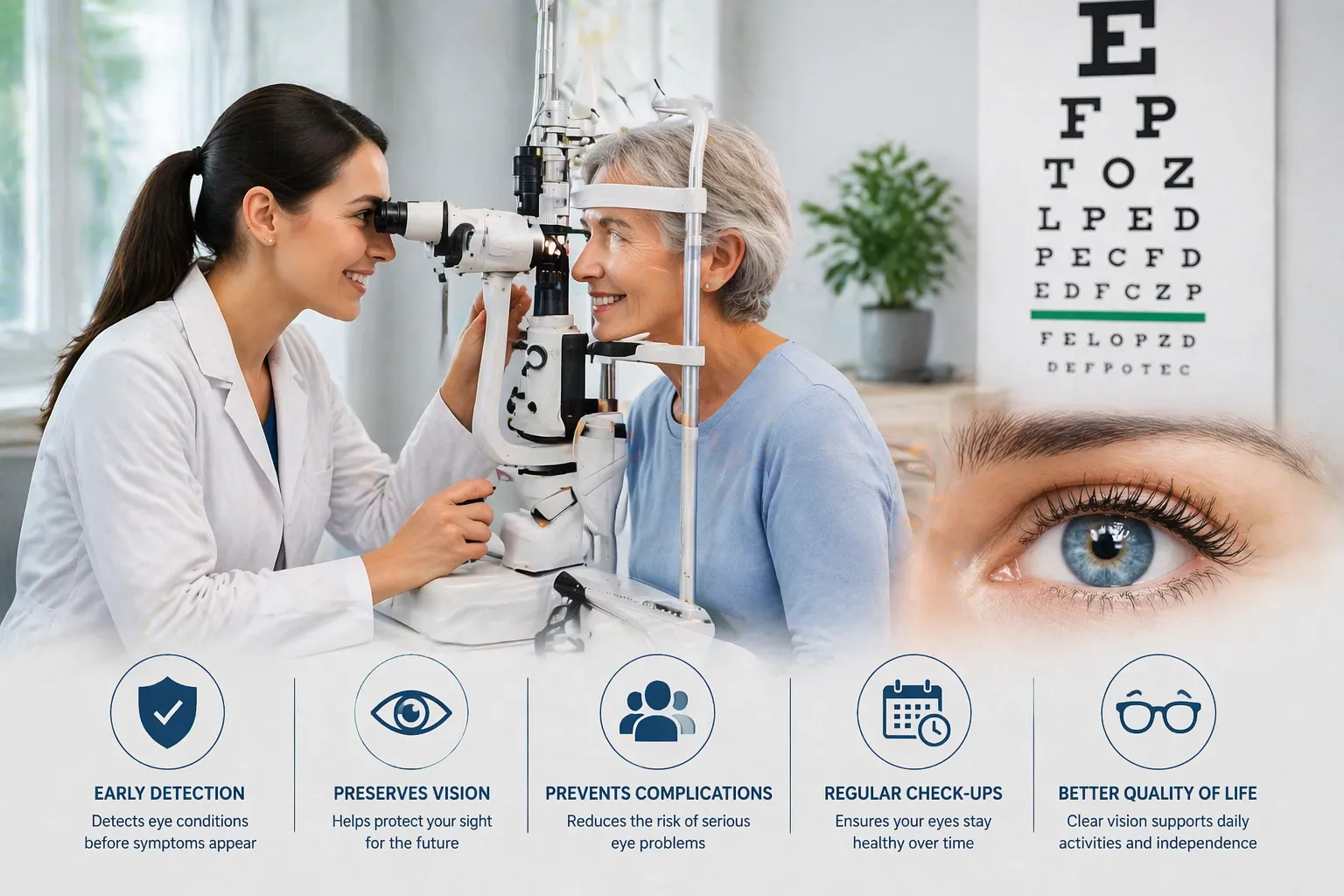

Most people visit a dentist twice a year, book an annual GP check-up, and think nothing of scheduling a routine blood pressure reading. Yet when it comes to ocular health, far too many adults let years slip by without a single appointment. The truth is, your eyes are among the most complex and vulnerable organs in your body — and the consequences of neglect can be profound, permanent, and entirely preventable.
Routine optical assessments are not merely about updating a spectacle prescription. A thorough visual health evaluation can reveal early signs of systemic disease, detect deteriorating ocular conditions before symptoms emerge, and ultimately safeguard your ability to see clearly throughout your lifetime. Understanding why preventive eye care matters — and acting on that understanding — could make a genuinely life-changing difference.
More Than Reading a Chart: What a Comprehensive Eye Examination Covers
Many people mistakenly assume that an optical check-up simply involves reading letters off a wall and walking out with a new lens prescription. In reality, a full ocular assessment, often referred to as a Vision and sight test, is a detailed clinical process that examines far more than just your ability to read small print at a distance.
During a thorough sight evaluation, a qualified optometrist will typically examine:
- Visual acuity — how clearly you can see at varying distances
- Intraocular pressure — elevated levels may indicate glaucoma risk
- The health of the retina, optic nerve, and surrounding blood vessels
- Peripheral (side) vision, which can deteriorate silently without notice
- Eye muscle coordination and focusing ability
- The anterior segment — including the cornea, lens, and eyelids
- Signs of macular degeneration, cataracts, or diabetic retinopathy
This level of detail transforms a standard spectacle test into a meaningful health screening — one that no preventive care routine should overlook.
The Silent Threat: Conditions That Develop Without Warning
One of the most compelling arguments for regular visual health checks is the nature of many serious eye conditions — they develop silently. By the time symptoms become noticeable, significant and irreversible damage may already have occurred.
Glaucoma
Often called the 'silent thief of sight', glaucoma is a leading cause of irreversible blindness in the UK. It gradually damages the optic nerve — usually due to increased pressure within the eye — without causing pain or noticeable changes to central vision in its early stages. Regular intraocular pressure checks and optic nerve assessments during a comprehensive ocular evaluation are the primary method of catching this condition before it causes permanent harm.
Age-Related Macular Degeneration (AMD)
AMD affects the central portion of the retina and is the primary cause of visual impairment in people over 50 in the United Kingdom. Early detection through retinal imaging significantly improves outcomes, as interventions are far more effective when the condition is identified at an early stage.
Diabetic Eye Disease
People living with diabetes are at substantial risk of developing diabetic retinopathy — a condition where elevated blood sugar damages the delicate blood vessels supplying the retina. Shockingly, many individuals are unaware they have type 2 diabetes until an eye specialist detects characteristic changes at the back of the eye during a routine appointment.
Your Eyes as a Window to Overall Health
Perhaps the most remarkable aspect of a professional visual assessment is its ability to reveal conditions that extend well beyond ophthalmology. The blood vessels visible in the retina are the only ones in the human body that can be observed directly and non-invasively — making them a uniquely valuable diagnostic window.
During a detailed retinal examination, an optometrist may detect early signs of:
- Hypertension (high blood pressure) — identifiable through changes in retinal blood vessel appearance
- High cholesterol — which can produce a distinctive arc around the cornea in younger patients
- Multiple sclerosis — sometimes first flagged through optic neuritis
- Thyroid disorders — which may cause protruding eyes or eyelid abnormalities
- Brain tumours and neurological conditions — detectable via changes in optic disc appearance or visual field defects
- Cardiovascular disease risk factors — observable through arterial narrowing patterns
In these instances, a visit to your optician becomes far more than a spectacle prescription appointment — it becomes a potentially life-saving health check.
How Often Should You Have Your Eyes Tested?
The recommended frequency for a routine sight appraisal varies depending on age, personal risk factors, and family history. General guidance from UK optical health bodies suggests:
- Children: every year, particularly during the critical visual development period
- Adults aged 16–70 with no known risk factors: every two years
- Adults over 70: annually, due to increased risk of age-related conditions
- Those with a family history of glaucoma or AMD: more frequently, as advised by a professional
- People with diabetes: at least once a year through the NHS diabetic eye screening programme
- Contact lens wearers: annually, or as directed by their optometrist
It is worth noting that even if your eyesight seems perfectly fine, this is not a reliable indicator of overall ocular health. Many significant conditions cause no noticeable visual disturbance until they are well advanced.
Why Children's Visual Health Deserves Special Attention
The visual system continues to develop actively until around the age of seven or eight. Undetected problems during this critical window — such as a squint, amblyopia (lazy eye), or uncorrected refractive error — can interfere with learning, social development, and confidence. Unfortunately, young children cannot always articulate that they are struggling to see, making early and regular examination by a qualified practitioner absolutely essential.
Studies consistently show that a significant proportion of children with undiagnosed visual difficulties are misidentified as having learning or behavioural challenges, when the root cause is simply poor eyesight. A straightforward eye health assessment can change the trajectory of a child's educational experience entirely.
Digital Screens, Occupational Demands, and Modern Vision Strain
Modern life places extraordinary demands on our visual system. The average UK adult now spends more than nine hours per day looking at screens — a reality that contributes to a growing incidence of digital eye strain, dry eye syndrome, and headaches. While these symptoms are not always indicative of serious pathology, they can significantly impact quality of life and productivity.
Regular visual health evaluations allow an optometrist to identify whether occupational or digital screen use is contributing to discomfort, and to recommend tailored solutions — whether that involves a specific lens prescription, blue light filtering coatings, or personalised advice on working habits and screen ergonomics. For those experiencing persistent irritation or inflammation, exploring modern treatments for dry eye and blepharitis can provide valuable insight into advanced care options and symptom management strategies.
NHS Entitlement and Who Qualifies for a Free Sight Test in the UK
In the United Kingdom, certain groups are entitled to a free NHS-funded eye assessment. Knowing whether you qualify removes one of the most common barriers to accessing this important care. You may be eligible if you are:
- Under 16, or under 19 and in full-time education
- 60 years of age or older
- Registered as partially sighted or blind
- Diagnosed with diabetes or glaucoma
- Considered at risk of glaucoma (i.e. aged 40 or over with a close family member diagnosed with glaucoma)
- In receipt of certain means-tested benefits, such as Universal Credit or Income Support
- A prisoner on temporary licence
Even for those who do not qualify for an NHS-funded test, the modest cost of a private optical examination is a small price to pay for the peace of mind and clinical insight it provides.
Taking Action: Small Steps That Protect a Lifetime of Clear Sight
Preventive optical care is not a luxury reserved for those with existing vision problems — it is a fundamental component of responsible health management for everyone. The combination of ageing populations, increased screen time, rising rates of systemic disease, and the silent nature of many serious eye conditions makes routine professional evaluation more important today than ever before.
The simple act of booking a regular comprehensive eye examination — and committing to it as part of your annual health routine — could protect your sight, flag an undetected systemic illness, and ensure that any changes to your visual system are caught and managed at the earliest possible stage.
























Sign in to leave a comment.