
Introduction
In today's competitive educational landscape, students, parents, educators, and institutions are increasingly seeking reliable indicators of quality and performance. With countless schools, colleges, and universities offering diverse programs and learning experiences, identifying institutions that truly excel can be challenging. This is where independent educational assessments play a crucial role.
Among the most respected names in educational assessment in India, QS I-GAUGE has established itself as a trusted benchmark for academic excellence, institutional quality, and continuous improvement. By combining global best practices with a deep understanding of the Indian education ecosystem, QS I-GAUGE provides credible, transparent, and comprehensive evaluations that help stakeholders make informed decisions.
Understanding QS I-GAUGE
QS I-GAUGE is an independent education rating and assessment system designed specifically for Indian schools, colleges, and universities. It leverages the expertise and global reputation of QS Quacquarelli Symonds, the organization behind the internationally recognized QS World University Rankings.
Unlike traditional rankings that often focus on a limited set of indicators, QS I-GAUGE evaluates institutions across multiple performance parameters, providing a holistic picture of educational quality. The framework has been carefully adapted to reflect the realities and requirements of the Indian education sector while maintaining internationally recognized quality standards.
The Need for Independent Educational Assessment
The education sector has evolved significantly over the past decade. Institutions are no longer evaluated solely on academic outcomes; factors such as teaching quality, infrastructure, employability, research, innovation, diversity, and student experience have become equally important.
Independent assessments help:
- Provide objective evaluations of institutional performance.
- Enhance transparency in the education sector.
- Assist students and parents in making informed choices.
- Encourage institutions to pursue continuous improvement.
- Establish benchmarks for quality and excellence.
As stakeholders increasingly prioritize accountability and quality assurance, trusted assessment systems have become essential components of modern education.
What Makes QS I-GAUGE Trustworthy?
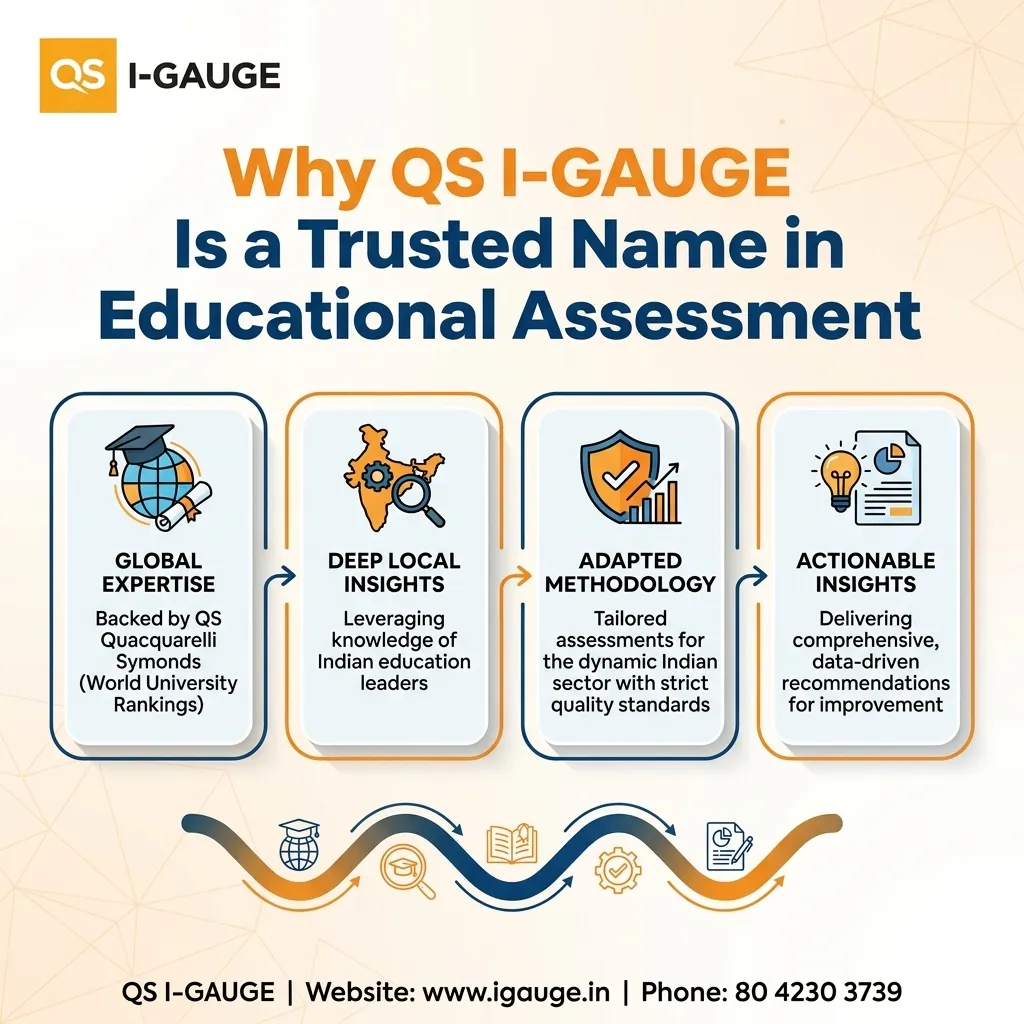
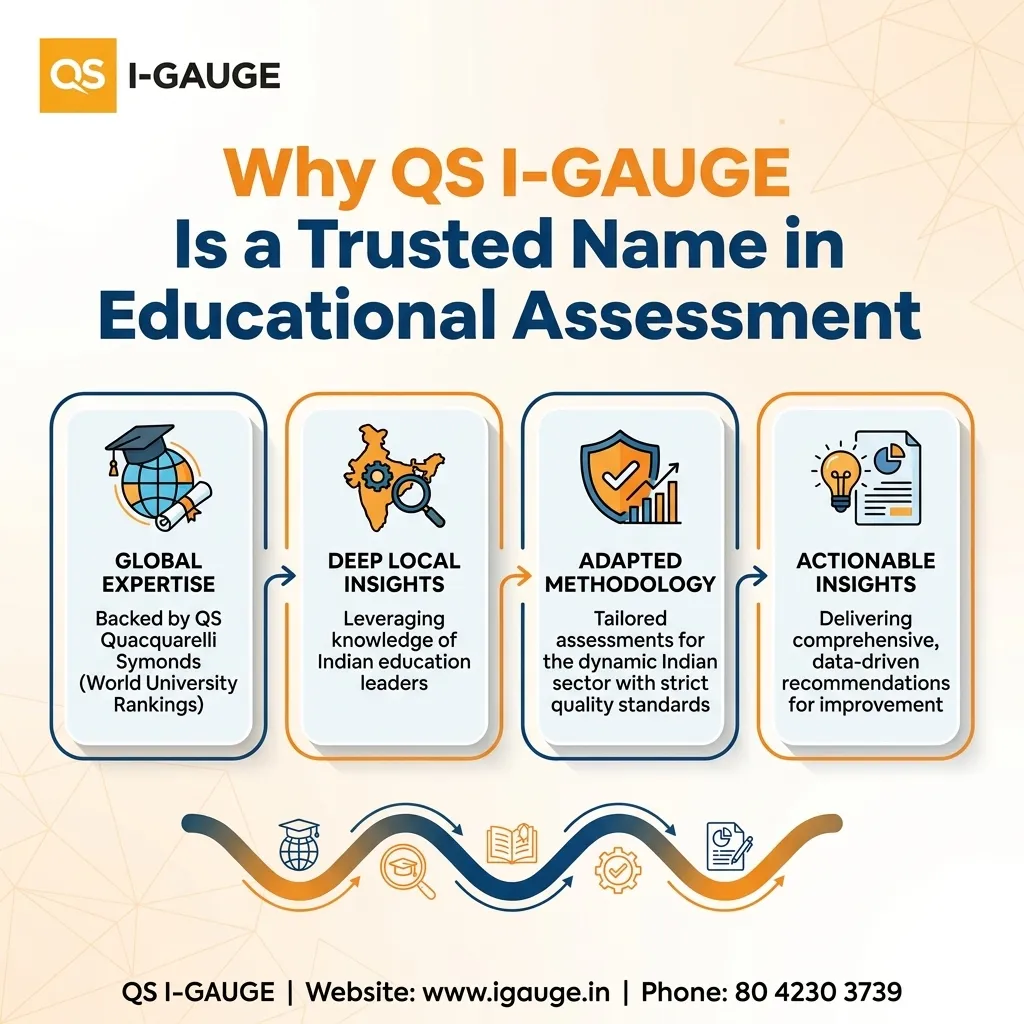
1. Backed by Global Expertise
One of the strongest reasons behind the credibility of QS I-GAUGE is its association with QS Quacquarelli Symonds, a globally recognized authority in higher education assessment and rankings.
QS has decades of experience evaluating educational institutions worldwide, and this expertise forms the foundation of the QS I-GAUGE framework. Institutions assessed by QS I-GAUGE benefit from internationally informed evaluation methodologies that align with global standards of excellence.
2. Tailored for the Indian Education Landscape
India's education ecosystem is unique, with diverse institutions serving students from various cultural, economic, and geographical backgrounds.
QS I-GAUGE recognizes these realities and has developed assessment criteria that address the specific challenges and opportunities within the Indian context. This localized approach ensures that institutions are evaluated fairly while maintaining rigorous quality standards.
3. Comprehensive Assessment Framework
A key strength of QS I-GAUGE lies in its multidimensional assessment methodology.
Rather than focusing on a single metric, institutions are evaluated across a broad range of parameters, including:
- Academic development
- Teaching and learning quality
- Employability and career outcomes
- Faculty quality
- Infrastructure and facilities
- Research and innovation
- Governance and leadership
- Social responsibility
- Diversity and inclusiveness
- Student satisfaction and engagement
This comprehensive approach provides a more accurate reflection of institutional performance and effectiveness.
4. Independent and Transparent Evaluation
Trust is built on transparency, and QS I-GAUGE places significant emphasis on maintaining an objective and unbiased assessment process.
The evaluation involves rigorous data collection, verification procedures, expert reviews, and evidence-based analysis. Institutions are assessed using clearly defined criteria, ensuring consistency and fairness throughout the process.
This commitment to transparency helps build confidence among students, parents, educational leaders, and policymakers.
Benefits for Educational Institutions
Enhanced Institutional Credibility
A strong QS I-GAUGE rating serves as an independent validation of an institution's quality and achievements. This recognition strengthens credibility among prospective students, parents, industry partners, and academic communities.
Continuous Improvement Opportunities
The assessment process provides institutions with detailed insights into their strengths and areas for improvement.
By understanding performance gaps and benchmarking against established standards, institutions can implement targeted strategies to enhance quality and competitiveness.
Stronger Brand Reputation
In an increasingly crowded educational marketplace, differentiation is essential. A recognized quality rating can significantly enhance an institution's reputation and visibility.
This can contribute to higher student enrollment, stronger stakeholder trust, and increased industry engagement.
Improved Strategic Planning
The data-driven insights generated through assessments help institutional leaders make informed decisions regarding academic programs, infrastructure investments, faculty development, and student services.
Benefits for Students and Parents
Reliable Decision-Making Support
Choosing the right institution is one of the most important decisions in a student's academic journey. QS I-GAUGE ratings provide valuable information that helps families evaluate educational options more effectively.
Greater Transparency
Independent assessments offer a clearer understanding of institutional quality beyond marketing claims and promotional materials.
Students and parents can gain confidence knowing that ratings are based on verified performance indicators and objective evaluation processes.
Better Educational Outcomes
Institutions committed to maintaining high-quality standards often provide stronger learning environments, better student support services, improved employability opportunities, and enhanced overall experiences.
Driving Excellence Across Indian Education
One of the most significant contributions of QS I-GAUGE is its role in fostering a culture of excellence across the education sector.
By encouraging institutions to evaluate their performance against established benchmarks, the assessment process motivates continuous innovation and quality enhancement.
As more institutions participate in independent evaluations, the overall standard of education improves, benefiting students, educators, employers, and society as a whole.
This positive cycle of assessment, improvement, and recognition contributes to the long-term development of India's education ecosystem.
Supporting Global Competitiveness
As Indian educational institutions seek greater international recognition, quality assurance becomes increasingly important.
QS I-GAUGE helps institutions align with globally recognized standards while addressing local priorities. This balance enables schools, colleges, and universities to strengthen their international reputation and attract opportunities for collaboration, research, and student mobility.
By promoting globally relevant quality benchmarks, QS I-GAUGE contributes to the growing competitiveness of Indian education on the world stage.
The Future of Educational Assessment
The future of education will be shaped by innovation, technology, employability, sustainability, and student-centered learning. Assessment frameworks must evolve alongside these changes.
QS I-GAUGE continues to support this transformation by providing institutions with actionable insights, meaningful benchmarks, and quality-focused evaluation systems that remain relevant in a rapidly changing educational environment.
As expectations around educational quality continue to rise, trusted assessment systems will play an even greater role in guiding institutional development and supporting informed decision-making.
Conclusion
In an era where quality, transparency, and accountability are essential, QS I-GAUGE has emerged as a trusted name in educational assessment. Its combination of global expertise, localized understanding, comprehensive evaluation methodologies, and commitment to transparency makes it a valuable partner for educational institutions across India.
By helping institutions measure, improve, and showcase their achievements, QS I-GAUGE supports the pursuit of academic excellence while empowering students and parents with reliable information. As India's education sector continues to evolve, trusted assessment frameworks like QS I-GAUGE will remain instrumental in shaping a stronger, more competitive, and quality-driven future.




























Sign in to leave a comment.