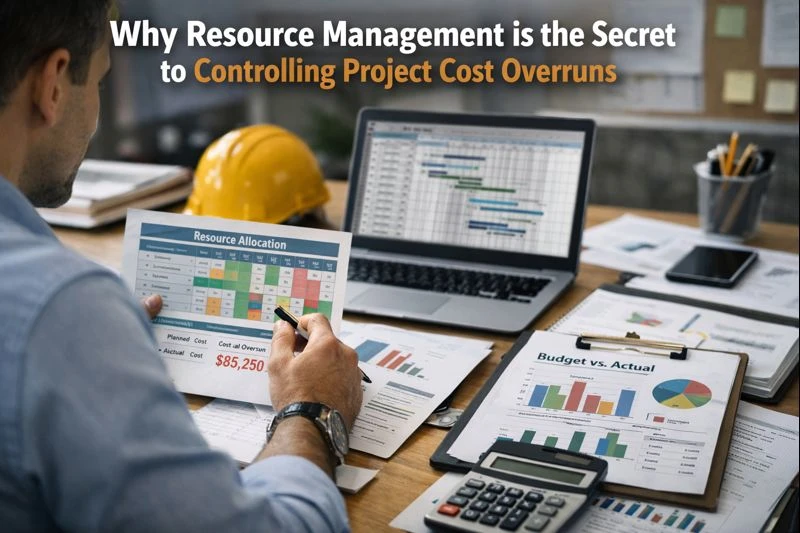

Project managers in 2026 face a familiar yet evolving enemy: the budget overrun. Even with the best intentions, projects often drift into the red due to overlooked variables and shifting labor markets. The primary culprit is rarely a single catastrophic event, but rather a series of small, unmonitored leaks in how people are utilized. This is where resource management becomes a strategic advantage rather than an operational afterthought.
To stay profitable, companies are increasingly turning to advanced resource management solutions to keep their budgets intact and ensure every billable hour is accounted for. Managing costs is no longer just about tracking receipts, but it is about mastering the human element. When paired with resource management software like eResource Scheduler, leaders can move from reactive firefighting to proactive financial control. The result is fewer surprises, tighter planning, and projects that stay financially healthy from kickoff to closure.
Before diving into tactics, it is important to understand why cost overruns are so common and how smarter resource decisions can prevent them.
Why Do Projects Lose Control of Costs So Easily?
Cost overruns are often blamed on poor budgeting, but the real issue usually lies deeper in how resources are planned and tracked. Many teams start with a solid budget and still fail because assumptions made early on do not hold up during execution.
Some of the most common reasons include:
- Limited visibility into who is working on what
- Inaccurate effort estimates that ignore real capacity
- Unplanned overtime that drives up labor costs
- Constant task switching that reduces productivity
Without a structured approach to resource management, project managers are forced to rely on spreadsheets and gut instinct. That approach does not scale, especially when teams are distributed and juggling multiple priorities.
This is why project cost management today is tightly connected to how effectively resources are forecasted, assigned, and monitored throughout the project lifecycle.
Why Manual Planning Fails in the 2026 Business Environment?
The days of relying on static spreadsheets or whiteboards are long gone. In 2026, the speed of business requires agility that manual systems simply cannot provide. Spreadsheets are prone to human error, and they are outdated the moment they are saved. If a project manager in one department books a developer, and another manager does the same on a different sheet, you have a resource conflict that will eventually lead to delays and increased costs.
How does fragmentation create budget chaos?
When information is siloed across different departments, it is impossible to get an accurate picture of the total project spend. Manual updates often happen weekly or even monthly, which means by the time you realize you are over budget, it is too late to fix it. This lag in communication is a primary driver of project failure. You need a single source of truth that reflects changes the second they happen.
Where manual entry leads to expensive errors
A single typo in a labor rate or a miscalculated formula in an Excel sheet can lead to a project bid that is tens of thousands of dollars off the mark. When you automate the data flow, you remove the risk of these clerical errors. Modern firms require a system that integrates with their financial tools to ensure that the cost of every hour worked is reflected accurately in the project budget.
How Resource Management Creates Financial Clarity Early On?
One of the biggest advantages of resource management is the ability to spot financial risks before they turn into real losses. Cost control starts long before execution. It begins during planning, when teams align demand with actual capacity.
How does better planning prevent budget leaks?
When resource plans are built on real availability and skill data, estimates become more realistic. A structured resource allocation system helps teams:
- Assign the right people based on skills and cost rates
- Avoid overbooking high-cost specialists
- Balance workloads across teams to reduce burnout
- Forecast future hiring or subcontracting needs
By aligning work with capacity upfront, organizations gain stronger project budget control. They know where money will be spent and why. Tools like eResource Scheduler make this process easier by connecting schedules, costs, and utilization in one view.
This early clarity dramatically reduces last-minute staffing changes that often inflate budgets.
What Role Does Labor Cost Management Play in Cost Overruns?
Labor is typically the largest expense in any project-based business. Even small inefficiencies can add up quickly when multiplied across weeks or months.
How does resource management keep labor costs in check?
Effective labor cost management depends on visibility and accountability. Resource management systems track planned versus actual effort, making it easier to identify when work is drifting off course.
Key benefits include:
- Monitoring billable and non-billable time
- Reducing excessive overtime through balanced workloads
- Identifying underutilized resources before costs escalate
- Supporting data-driven decisions on staffing adjustments
When managers can see utilization trends in real time, they can intervene early. Instead of reacting after budgets are exceeded, they can rebalance work and protect margins while keeping teams productive.
Where Resource Cost Optimization Makes the Biggest Impact?
Cost optimization is not about cutting corners. It is about using resources more intelligently. This is where resource cost optimization becomes a strategic lever rather than a financial constraint.
Many organizations discover cost savings in unexpected places once they adopt structured resource management practices:
- Assigning junior staff to suitable tasks instead of defaulting to senior roles
- Reducing reliance on expensive contractors through better forecasting
- Minimizing idle time caused by poor handoffs between teams
- Avoiding rework by ensuring the right skills are assigned upfront
After two major planning phases, organizations often integrate resource management software like eResource Scheduler into ongoing delivery to maintain this balance. With accurate forecasts and real-time data, cost optimization becomes a continuous process rather than a one-time effort.
Conclusion: Turn Your Resources into Profits
Managing a project budget in 2026 is a high-stakes balancing act that requires the right data at the right time. By focusing on how you deploy your most valuable asset, your people, you can stop the tiny leaks that lead to massive cost overruns. It is not about working harder, but about working smarter with the tools you have.
Want to see how resource management software can transform your project margins? Start your 14-day free trial on Eresource Scheduler and see how the approach works in practice.
Frequently Asked Questions-
1. What is resource management in project cost control?
Resource management involves planning, allocating, and tracking people and skills to ensure projects are delivered within budget while maintaining productivity.
2. How does resource management reduce project cost overruns?
It improves forecasting accuracy, prevents overutilization, and provides real-time visibility into labor and project costs.
3. Is resource management only useful for large organizations?
No. Small and mid-sized teams benefit just as much, especially when managing multiple projects with limited resources.
4. How does labor cost management fit into resource management?
Labor cost management focuses on tracking effort, utilization, and cost rates to control the largest portion of project expenses.
5. Can resource management tools adapt to changing project scopes?
Yes. Modern solutions allow teams to adjust allocations quickly while keeping budgets and timelines aligned.



























Sign in to leave a comment.